Retrospective Review: A History of Violence, by Kuniva

by Apu

HOV

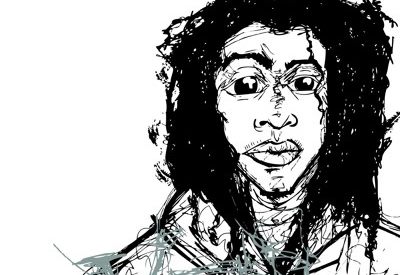
On December 16, 2014, Kuniva released his official debut studio project, A History of Violence. It followed a long stream of mixtapes (Retribution, the Midwest Marauders series, and the Lost Gold mixtape). Unlike the music that was on the mixtapes, Kuniva used all original production (primarily handled by Block Symfany, a production team composed of Rio Da Ghost and T.Boyd out of Michigan), and made actual fleshed-out songs, rather than just long verses and freestyles. Overall, it’s a very solid solo offering. It set the stage for him to grow and dig deeper in his later material.

The best part of this project to me is how Kuniva put it together. It sort of sounds like he sequenced the album very deliberately. The first 4 tracks seem like they’re from the perspective of a younger, more rowdy Kuniva. Those tracks tend to celebrate the street life. It opens up with the posse cut “Michiganish”, featuring Aftermath artist Jon Connor, Mass Appeal’s Boldy James, and Detroit legend Guilty Simpson. It starts things off fairly simply, being a competitive cypher of sorts. The following few songs, “Born Like This”, “Where I’m From”, and “Baileys In Bangkok,” all have a similar sort of vibe. They’re cocky and rowdy. They sound a little ironic and tongue in cheek, almost as though Kuniva was trying to rap the way a younger kid would rap. The content and the way it’s done makes me think he was talking about the street life, from the perspective of a kid living it, rather than someone reflecting on it.

Then comes “Derty Headz”, which is a very powerful song dedicated to fans of his and D-12. It has an anthemic hook and verses that drop all sorts of history about his career. He talks about Proof recruiting him for the group, the beef they’ve had, and the adversity they’ve faced from within since Proof passed. This song is the major turning point in almost every way. Here, flashes of reflection and maturity start to show up. From track 6 onwards, it seems to shift to his perspective now as a man nearly 40 years old after having seen massive success with his group, mournfully reflecting on the hard times in life but looking ahead with a drive to keep moving now that he’s out. “Light Work” and “Where The Hoes @?”, both offer fiery production and strong verses delivered with the hunger and confidence of a man who has seen his fair share of hardship. The title track, which is quite possibly the most personal and poetic song Kuniva has ever released, has him speaking on his past up to the point when Proof was murdered in chilling, almost uncomfortably rich detail, his voice oozing pain over him reflecting on it, and the album ends on “Shoutout”, which sounds like where he’s at now, looking forward into the future with hope after everything he’s been through.

The music on this project is good. There’s no denying that Kuniva is a strong rapper and has been doing nothing but improving since D-12 World. His delivery has become a lot more convincing and his writing has gotten sharper. The production is great too. Block Symfany (and Enrichment, on the title track) were able to provide Kuniva with a backdrop that deviated from the typical D-12 sound. It gave Kuniva the chance to step out of that style and develop his own identity, which is something that he hasn’t had the chance to really do much in the past outside of his Retribution mixtape. I think the first half of the album is a little shaky and unfocused at points, but every song from “Derty Headz” onwards is great. The title track might be one of my favorites of the entire year of 2014, period.

However, what really makes the album good is how it lives up to its name of being a “history”. Kuniva put the album together to actually make it almost like a song-by-song history of his life, from rapping competitively at the Hip-Hop Shop and living in the streets, to when D-12 were at their peak, and ending it with an adult perspective on life. It’s really special, because oftentimes artists don’t do that kind of thing when putting their projects together. You generally hear about Kendrick and the like putting their albums together in a manner like that, but honestly, Kuniva managed to pull off an album concept as well as anybody else. Even if it wasn’t fully intentional, he still clearly had an idea of progressing the sound and content of the project in a way that made sense, as opposed to putting the songs together in an arbitrary order and releasing it onto iTunes. That, to me, is what really makes it good, and not just another hip hop album.

Album Review: deM atlaS – mF deM

by Dustin

mfdem

6.75/10

Among alternative hip-hop heads, MF DOOM is basically a household name. Though the rapper and producer has been relatively quiet for years, most fans still eagerly anticipate new material from the vaudeville villain no matter how rare. Apart from a handful of features, DOOM’s last release of substance was his production work on NehruvianDoom alongside young rapper Bishop Nehru… Don’t get too excited however, as mF deM is a bit of a tease in these regards. All DOOM instrumentation on this release has been heard before.

Don’t let that discourage you though as this project also has an emcee delivering brand new bars. This of course is Minnesota native and Rhymesayers Entertainment signee, deM atlaS. DeM draws influence from a wide variety of musical artists, and really has the potential to create a unique sound. He’s young, but he’s already got a vocal presence on the mic that can’t be matched by some veterans.

So what happens when pairing him with production, albeit previously released, by a hip-hop legend? You get a release with some really lovely highs.

deM atlas seems to be at his best on this tape when utilizing his singing voice. There’s something about deM that feels similar to Camu Tao’s later works at times. On tracks like “Grbge Trsh” he’s energetic, expressive, and stays engaging by conveying emotion excellently. There are many moments on mF deM that are in line with this stylistically. “Nervosa” and “Its Over, Im Dead” being two of the key high points. Even when not singing deM maintained his vocal presence over the majority of this release. When he’s on his game, he’s an absolute pleasure to listen to and super unique.

Unfortunately consistency seemed to be an issue.

Tracks fell flat during moments when deM slipped back into a more conventional delivery; moreover, there were times where he felt quite derivative of other Minnesota based rappers. These songs are still quite listenable, but the stood out as a step below some of the other material being offered up over the course of the album.

To put it in the most cliche way possible, the production is what it is. There’s not really much more to say about these instrumentals that hasn’t already been said, since they’ve been available since the beginning of time itself. Some are fantastic, some are fairly repetitive; basically there’s nothing out of the ordinary for DOOM production.

deM’s voice worked quite well on most of the beats, but it definitely felt as if he was forced to carry the album due to the instrumentation being fairly played out. As a full listen, this album will feel much more fresh if you’re not familiar with MF DOOM’s production catalogue.

Perhaps deM atlaS didn’t “find himself” on this project, but he did a good job of creating songs that are pleasant listens. His potential definitely shows, and deM seems like an artist to watch going forward. Don’t let the score at the top of the page put you off of listening, either. It seems like the kind of album that will have a decent amount of replay value, even if not the most consistent.

Album Review: clipping. – Wriggle

by Dustin

wriggle

7.25/10

You might assume that involvement with the critically acclaimed Hamilton would keep Tony Award winning actor and rapper Daveed Diggs from being involved with clipping for the present. Fortunately, assuming that would be completely incorrect! Daveed Diggs, William Hutson, and Jonathan Snipes joined forces once again to craft Wriggle, a six track extended play follow up to 2014’s CLPPNG.

Strap yourself in…

As one would expect with a clipping. project, Wriggle is abrasive. Though the instrumentals feel less noise heavy than their last full length projects, it’s significantly darker in tone than CLPPNG. Wriggle at times sounds absolutely evil, yet it has some of the groups most accessible work. Hutson and Snipes did an excellent job at setting up the atmosphere of the EP, creating a tightly cohesive twenty minutes of unnervingly addictive and angry instrumentals.

Look at all the folk runnin’, marathon,
Like they ain’t got baggage, carry-ons,
Killin’ is the best medicine, diagnosis,
Got death on his breath, halitosis.
(Shooter)

Diggs comes in on this project as sharp as ever. His development as a rapper shines on the tracks “Shooter” and “Wriggle”. As usual, he flawlessly flows atop of the harsh and dense instrumentation. At times his furious rapid fire delivery was on full display, particularly on the aforementioned title track “Wriggle”. His more poetic writing style took a bit of a backseat here (aside from on the track “Our Time”), but it didn’t hold his performance back. There’s not much else to analyze about his performance on Wriggle, aside from the fact that it is consistently very good.

Rarely does Daveed Diggs falter while working with clipping., and that holds true on this project.

She stops by the window of the Walgreens,
Her mascara a mess of a mask,
Gonna pull out a tissue but instead pulls out a phone for a text,
And the flask rattles round in the purse,
A reminder that medicine is already there for the taking,
And the snap when she puts the cap back,
She’s convinced is the sound of her heart breaking.
(Our Time)

Wriggle also boasted an impressive list of features for a short project. Those familiar with Deathbomb Arc affiliated artists will be excited to see another Signor Benedick the Moor collaboration (along with Antwon) on the track “Back Up”. Cakes da Killa, Nailah Middleton, and Maxi Wild also provided their efforts to the tape. With Wriggle clocking in at a modest twenty minutes in length, there was the potential for a poor feature to stand out; however, every artist brought something worthwhile.

As a side note, Cakes da Killa’s “Hot Fuck No Love” appearance may be one of the most sexually graphic verses since Gangsta Boo rapped on Run the Jewels’ song “Love Again”. It fit absolutely brilliantly on the song for this very reason.

The only real downside to Wriggle is that it is short. This is completely reasonable though, as clipping. announced a full length album to come later this year via Sub Pop and Deathbomb Arc. Wriggle serves to hold fans over, and it does that job well. The twenty minutes of gritty, angry, hyper-sexual, and violent lyrics offers up plenty of content to digest in the meantime.

With that in mind, if you approach this expecting something overly substantial you might be disappointed. As a collection of songs leading up to an album release though, clipping. has remained as interesting as ever.

Album Review: FLANCH – FLANCH

by Dustin

flanch

8.75/10

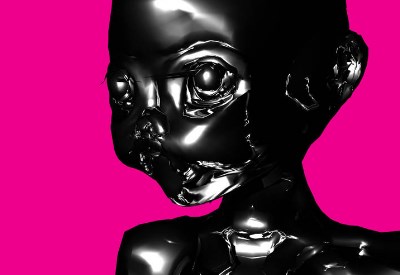
Enter FLANCH, Peter Timberlake and Ben Peterson’s music and visual project. The sixth release on Darling Records, FLANCH is an ambitious project to say the least. It took risks to create something that could stand alone as unique.

These risks were certainly worth taking.

Topically, FLANCH is rooted in stressing confusion brought as a byproduct of social changes; moreover, there is a strong emphasis on how this impacts the individual at a multitude of levels. Primarily the focus seems to be on the conflicting nature of losing ones religion after being deeply entrenched in its values. There’s also an apparent battle between the diminishing religiosity and an active lust for hedonistic pleasures (relative to the previously rooted religious values) in the individual.

No discretion, and no protection,
Just hold your breath and hope for death,
Before the soul’s possession.
(graace)

It should also be noted that this intersection of belief and non-belief is quite personal. Peter Timberlake, the main producer behind FLANCH, was a devout Christian for many years before entering his currently faithlessness. Though the vocals were provided by a plethora of artists, Timberlake’s message and vision was not lost.

To add to the thematic richness of this album, blurring lines between the offline and online worlds are also explored. FLANCH observes how the internet as a creation has completely changed the way we live and the way that interpersonal connections are made; however, there is also an awareness that it’s far easier to be allured by smoke and mirrors. When exploring these places it’s not in a negative tone, but rather caution towards something not fully understood.

I met you online, and I like your pictures,
But I don’t know if you’re a real person,
Don’t play with my heart anymore.
(tender)

While these thematic elements are quite expansive, they do not get lost within each other. FLANCH does an amazing job at finding balance by blending elements together. The end result was a spectacularly cohesive album. FLANCH is the type of album that will warrant more than a single listen to digest everything that is happening at once. Fortunately the music is absolutely addictive.

The production on FLANCH is really quite magnificently terrifying. The futuristic and experimental nature of the instrumentation leads to some beautifully off-kilter moments. Fitting of the topics at hand, FLANCH sounds audibly anxious, lost, and haunting. At times the production feels near other worldly, like the alien offspring of electropop and experimental glitch-hop.

The vocals, provided by an array of guest artists, were also quite interesting in the overall picture of this album. Vocal performances playing off of the religious themes felt suitably larger than life. At times the vocals stepped away from the human and were edited to feel genderless, synthetic, and mostly robotic. The sonic dichotomy was utilized creatively, with vocals placed together in a way that played amazingly well into the topic of on-and-offline worlds melding.

It should be mentioned that the singers and emcees on this project really helped make it special. It feels like their talent could be easily lost in everything else that was going on with this album, so it felt important to give them their credit as well. FLANCH seemed to be as much a collaborative project as it was a debut for FLANCH as an outfit.

FLANCH packs an insurmountably thick sounds into a short listen. The music is out of left field, wondrous, and emotional. The album is thematically engaging, and challenging enough to keep the listener coming back for more. Admittedly it might not click for everyone, nor does it seem like it’s supposed to; however, what FLANCH has delivered may hold up as one of the most creative, outside-the-box projects of the year.

Album Review: Blueprint – Vigilante Genesis

by Dustin

VG

8/10

How suitable that we’d close out May with a review of a new Blueprint project. Blueprint, of course, was our featured artist at the start of the month. The veteran underground emcee has teamed up with longtime collaborator Aesop Rock to deliver this brand new EP, Vigilante Genesis.

Though it weighs in at a modest nineteen minutes, Vigilante Genesis is anything but short on content. Rather than being a collection of assorted songs, this project is basically a miniature concept album. Taking elements from hip-hop culture and the murder mystery genre, Vigilante Genesis follows a story of a graffiti artist looking to bring justice upon those who mistakenly murdered a fellow tagger. Each track adds a piece to the tale, building a world much like an old-school story-based radio show.

When these greedy motherfuckers try to take what I love,
I write ‘greed’ in red ink, let it drip like blood,
Punk-ass security, they circle in shifts,
Seemed like five minutes but I time it at six,
And I done come too far to go out like a bitch,
So I chill behind a dumpster, hit my target, and dip.
(Vigilante Genesis)

Putting the story aside for a moment, Blueprint as a rapper shows up as sharp as ever. He felt very engaged in the story, providing a fitting first person narrative to match the tone of the story. As a general rule Blueprint is quite charismatic on the mic, and this is true for Vigilante Genesis. His writing was sharp, but at the same time never detracted from the concept just to complete a grander rhyme scheme. He’s straightforward in all the proper ways, which lead to a simple-to-follow listen.

Abstract has a longstanding place in hip-hop, but the route Blueprint took definitely worked most efficiently for this kind of concept.

He tearing up like “oh shit, I thought you was dead”,
Nah man, you and your mans killed the wrong kid,
I could kill you now for the sake of revenge,
Or you can come with me and tell the cops what you did.
(Ten Paces)

Aesop Rock provided the production for Vigilante Genesis, and those familiar with his instrumental work would be able to recognize this instantly. The beats feel like they could fit seamlessly within either of his last two solo releases. The production matches very well with Blueprints vocals, and maintains consistency throughout the entirety of the EP.

Aesop did a lovely job at setting the mood, and Blueprint knocked it out of the park with his slick story telling.

As a whole, this is a can’t-miss EP if you’re a fan of Blueprint’s work. Perhaps it’s a little bit of an adventure away from what he usually does as an artist, but he pulls it off well. General hip-hop fans will most likely enjoy this tape as well. The story is easy to understand, but interesting enough to hold the listeners interest; moreover, this is probably Blueprint’s most accessible tapes in terms of overall sound. Give it a listen, it may just be one of the top projects of 2016 by year’s end.

Album Review: Koi Child – Koi Child

by Dustin

koic

8.5/10

Australia may not come to mind when talking about hot spots of hip-hop, but perhaps that’s about to change. The land of Vegemite and Milo has produced one of hip-hop’s most exciting new acts, Koi Child. They aren’t your stereotypical hip-hop outfit though, in fact they’re far from it. Originally two separate acts (Kahikoi and Child’s Play) Koi Child is a seven man outfit consisting of emcee Cruz Patterson, saxophonists Christian Ruggerio and Jamie Newman, trombonist Sam Newman, drummer Blake Hart, bassist Yann Vissac, and Tom Kenny on the keys.

Though this self-titled release is the debut record by the group, they’ve been turning the heads of fans and musicians for the past couple years. More specifically, they caught the attention of Tame Impala’s Kevin Parker. After being invited to open for Tame Impala at select Australian shows, Koi Child also landed Parker as executive producer for this project.

Interestingly, as a side note, it was apparently recorded in some degree of isolation on an island… An island that had to be reached by packing all their gear by boat. It’s quite the unique backstory, to say the least.

The effort was worth it though, as the end product was quite special.

One of the big reasons this album is special is the instrumental work. Live instrumental work seems to be vastly underused in hip-hop; however, with Koi Child being stacked with talented instrumentalists, it can be found in abundance in their music. At times the ensemble wasn’t afraid to let the vocals take the back seat and have all the focus be on the instrumentation. These instances of pure instrumentation set a gorgeous atmosphere for the listener, and did not detract from the listening experience in any way.

That being said, Koi Child’s resident emcee certainly added something special to the album as well.

When Cruz Patterson was allowed to take center stage he often ran away with the show. Though his vocals were often drowned in an unconventional psychedelic reverb, Patterson’s lyrics and delivery were very reminiscent of old-school hip-hop (perhaps aided by throwback references to artists like MF DOOM and DJ Premier). He fit in seamlessly with the funky jazz sound provided by his band mates. It should also be noted that his energy on the mic was undeniable. Every bar was delivered with a captivating passion and excitement, which was clearly needed to keep up with complex instrumentation backing his rhymes.

It’s been a while since I looked into the future,
Write myself a letter, say “hey man, you used to,
Love MF DOOM and watch cartoons,
You’d be eating Frooty Loops in the afternoon”.
(Adventures for the Capsule)

To get too critical of this project would involve significant nitpicking, but perhaps it would be fair to say that the group played it too safe at times. It doesn’t take away from the album at any level, but it seemed as if Koi Child could have the ability to produce an even grander sound. Admittedly, this is less of a criticism and more a comment on what they could create going forward. The potential they displayed was incredible, and it’s easy to imagine them being capable of putting out something groundbreaking in the future.

With that being said, if this does happen to be a one-off effort from the group, there certainly will not be any disappointment either. The end product was beautiful, atmospheric, and worthy of high praise.

Album Review: Mr. Lif – Don’t Look Down

by Dustin

mmrlif

7.5/10

Mr. Lif, one of the earliest members of the now defunct Definitive Jux record label, has been on somewhat of a hiatus… His last solo release came way back in 2009, but the time is finally right for his return to hip-hop. He has found a new home on the independent powerhouse Mello Music Group, which plays host to his fourth solo album, Don’t Look Down.

Lif has a reputation of quality, with all of his prior releases receiving critical acclaim. While many musicians lose a step when being away from their art for an extended period of time, Don’t Look Down continues this trend of excellence from Mr. Lif. The underground veteran has seamlessly picked up where he left off, delivering a pleasurable listen.

Don’t Look Down may not knock your socks off, but you will not walk away from it disappointed.

Well I’m sitting at my table now, hands crossed, blast off,
Thinking about some opportunities that I had passed on,
Hindsight is 20/20, thinking isn’t helping any,
Drinking will just serve to end me.
(Everyday We Pray)

Lif’s rapping was really enjoyable on this album. His writing is as strong as ever, and can be quite unique in structure. He’s not afraid to switch between poetic approaches, personal analysis, and even to delve into the more abstract. Don’t Look Down is the type of album that deserves multiple listens, if for no reason other than to digest the lyrics. As is the case with most emcees who came up in the same scene as Mr. Lif, his style can be pretty dense; moreover, Don’t Look Down has relatively quick pacing, so there will undoubtedly be things you miss on the first play-through.

That is to say, if the record doesn’t click with you on the first listen, don’t be afraid to give it another chance. It may only be 36 minutes long, but Mr. Lif packs an incredible amount of content into this running time.

I used to look up at night and see the sky,
Now I am the sky,
Now the planets I,
Used to use a telescope to see,
Are a part of me,
I’ve got Saturn in my arteries.
(Don’t Look Down)

Some of the production on this record is very reminiscent of the early 2000s Definitive Jux sound. “Whizdom” in particular has a wonderfully unorthodox instrumental. It manages to be head-nodding and addictive while simultaneously sounding like an ink-jet printer grinding out a thirty-two page university paper. That being said, Don’t Look Down does take on a more conventional approach at times as well. There is enough variation to keep the album sounding fresh throughout while not losing cohesion.

It should also be mentioned that every single instrumental compliments Mr. Lif’s vocals nicely. He clearly had a concrete direction in mind during beat selection, and it shows in the final product.

While Don’t Look Down may not exactly be comparable to I Phantom, it is a glimpse at a more mature Mr. Lif and should be approached with that in mind. It’s a very easy album to enjoy. Don’t Look Down is short, content dense, and while it’s certainly alternative, it still seems like an easy album for new listeners to jump into. For longtime fans, it will be a pleasure to hear new material after a long hiatus, especially since he delivers so well with this release.

Welcome back Mr. Lif.

Apu Rambles: FreeBeat42 (Give the Producer Some)

by Apu

fsfsdf

I don’t know if it’s just me being an illiterate idiot or not, but I get the sense that a lot of producers don’t get the credit that they’re due. I can’t tell you how many times I’ve been involved in an exchange like the following:

Person: “Yo man check [generic rapper] out, he’s awesome”
Me: “Oh cool, play something for me”
Person plays a song with a mediocre rapper over a beat hot as Satan’s STD-infected dick while taking a piss
Person: “Pretty sick, right?”
Me: “I guess. I thought the guy was pretty whatever”
Person: “Shit, really? The beat is fucking crazy!”

Wow, I should become a playwright, I obviously have a knack for dialogue… Anyways, yeah. People listen to a song and love it because of the work that the producer put in, and the rapper whose name is on the song will get all the credit for the song. This has been happening for basically the entirety of the last decade that I’ve been listening to hip hop music, and might have been happening since even before that. I wouldn’t know though. There aren’t too many people in the general public who’ll say “Wow, I gotta find out who produced this track!” This trend doesn’t apply exclusively to hip hop either, pop music fans are probably the biggest offenders. “Hip hop heads” are different, they love to know who produce tracks because they understand that the producer is an instrumental element of the music that they listen to, pun intended. However, actual “hip hop heads” make up a small percentage of music listeners, and are probably even a small percentage of people who listen to hip hop regularly.

It’s something that I think most people don’t really think about unless they themselves make music (and even then, you’ll get the divas who don’t give a shit and attribute all of their success to their “talent”, which tends to be wailing into a mic over great beats and relying on the engineer to fix the audio).

When it comes to bands, I find that people will praise the band as a unit. Listeners will talk about how ill a guitar solo or drum solo is when it comes on, so even though the lead singer will still probably get the most notoriety, the other members do get their praise at points. Re-read that sentence and ridicule me about how obvious it is that I don’t know shit about bands. When a song is produced by someone other than the artist who “makes” the song and there’s an instrumental interlude, people don’t say “oh shit, listen to what the producer just did”. And I know some people will say “well, playing an instrument isn’t the same thing as producing something with a program so it’s not like it’s as impressive as a band member getting a solo”. Sure, it’s not the same as playing an instrument. That doesn’t change the fact that producing is really hard to do if you want to make actually good, professional-sounding beats to compete with the best of them. You need to be able to come up with catchy melodies in your own head, decide on which instrument sounds will fit the melodies the best, create a drum-line, make sure to fill the beat with sounds so that it doesn’t sound empty and amateur, add more to break up hooks and verses, chop samples in clever ways so they don’t become loops of the original…and that’s just what I know about.

I’m not a producer, so there’s sure to be more that I’m not aware of.

It doesn’t help when people like Lupe Fiasco talk about how producers get paid too much. Remember when he called out “overcharging producers” on Twitter? Sure, some producers charge a lot of money, but is that really any different from a rapper charging a lot for a guest verse? A guest rapper offers what he can to the song, which is vocals, and a producer offers what he can to the song, which is a beat. A rapper who starts getting famous and raps with other higher profile rappers charges more, and a producer who works with higher profile rappers charges more. It’s the same principle. Actually, on second thought, it’s not, because you can make a good album without any guest rappers on it, but if you can’t produce, I don’t really think you can make an album worth shit without the help of producers.

Without producers, rappers would be rapping acapella, maybe with a beat made from hitting a table or something at the most, but overall it would just be mainly vocals. I imagine that would become very monotonous, and people wouldn’t bother listening. There would be a lack of variety that can only come from different beats, and there would be a huge element missing in the emotional attachment of the music to the listeners. There’s a reason why people love listening to beat tapes but nobody really gives a fuck about acapella versions of albums… Unless they want to throw the vocals onto another beat.

You know, one that a producer made.

Not to mention, there are countless rappers who have said something along the lines of “I listen to the beat and do what it tells me”. A beat sets the tone, and can elicit a reaction in an artist that helps him or her think of what to write. I don’t know. If I, as stupid as I am, can understand that, I don’t get why Lupe can’t. Maybe he was just in his one of his “I’m gonna rap the ‘Obama is the real terrorist’ line over and over for 20 minutes, the crowd will love that!” moods. All I know is that “Overcharging producers. You’re not the rappers who have rapped on your beats. #Needed2BeSaid” can easily be flipped to “Overpaid rappers. You’re not the producers who have given you the backdrop on which you write, flow, perform, and essentially use to become famous, as opposed to just talking flatly in a vague rhythm with nothing behind your voice. #Needed2BeSaid”. Wait, I think that’s over 140 characters. God damn it.

I imagine it must be frustrating to the producers a lot of the time. Obviously they’re getting paid, and they’re earning plaques and awards for their work on albums. Sure, that’s nice, but I’m sure that if somebody is actually serious about their work, they most likely want to be at least recognized for it. I’ve read some complaints about producers putting tags on their beats. I don’t get that particular complaint. I sure as shit get irritated when DJs get a bit overzealous when tagging mixtapes, but I’m personally all for producer tags. If it’s something like the ones that Bangladesh, J.U.S.T.I.C.E. League, or Alchemist use, then I don’t think that it should be a problem. Nothing too loud or intrusive (unless you’re Just Blaze, in which case, you fucking deserve to have a loud tag, especially because what you hear after the tag plays is going to be absolutely sick 9 times out of 10). Something that can even add to the atmosphere of the beat (see J.U.S.T.I.C.E. League’s tag on Nas’s “No Introduction”). Or even something that plays almost like a small interlude before the song even comes on, like Mr. Porter’s “You get more for your money when you fuck with Mr. Porter” thing. That sort of thing doesn’t even get in the way of the song that’s about to play, it’s just an introduction. Anything that’s put in the beginning or end of the beat. I personally think that a producer should have a tag on at least one beat that they contribute to a rapper’s album. If there are other beats by the same producer, they don’t really need a tag in my mind (but it wouldn’t hurt). At least one though, so that it’s clearly put out there for everyone to know that that producer worked on the album. Even if it’s a collaboration album between a producer and a rapper, people really are just going to pay attention to the rapper. It doesn’t matter if the name of the producer is next to the rapper’s name, because the one that they hear talking to them is the rapper. If the producer has their name verbally stated on the track, or even just some sound effect that remains consistent throughout the music you work on with various artists, people will hopefully recognize it and make the association between his beats on different albums, and could possibly even start appreciating him.

Hearing the name on the song is a lot more effective than just crediting the producer in the liner notes, especially in an age where people don’t generally buy physical copies of albums.

I don’t want to make it seem like I’m giving producers more credit than rappers for making good music. You’re never going to hear me say that. When I listen to hip hop, I generally check more for what the rapper is saying than I do the beat. I only really pay attention more to the beat when it’s something absolutely mind-blowing, or when the rapping sucks. But the producer needs to provide the canvas for the rapper to be able to write what they write. At the same time, it’s the rappers who ultimately decide what direction they want an album to go in. They add the charisma needed for people to really become invested in the music. They write and recite the words that we all react to. Being a profitable off rapping is probably more difficult to do than doing so by being a good producer basically because of how the market works; rappers are always looking for beats, but if someone hears a rapper who sounds like other people they don’t get taken as seriously as they could. Producers are given a lot more wiggle room generally as far as the sounds they can use. Nobody really gets upset at a producer for making a beat for a pop artist, but everyone gets mad at a rapper for collaborating with the same artist. Ultimately, what I’m trying to say here before going on about 7 different tangents in one paragraph is that good hip hop music is the result of both rapper and producer. They go hand in hand. If one existed without the other, hip hop wouldn’t have become what it did, and there’s nothing that anyone could say against that.

But the rapper gets his due. I think it’s about time the producer does too.
Album Review: Flatbush Zombies – 3001: A Laced Odyssey

by Dustin

3001

7/10

This review is late. So very late. It would have felt wrong to ignore this album, though, so here we go…

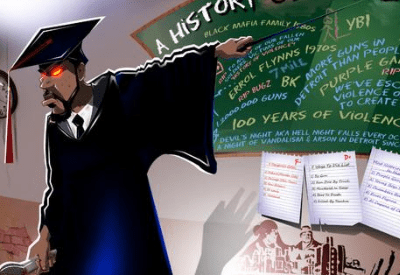
3001: A Laced Odyssey is the long-time-coming debut studio album from New York based hip-hop trio Flatbush Zombies. This debut would come nearly three years after releasing a couple of mixtapes which stirred up quite a bit of buzz and helped establish a loyal fan following. Somewhat spectacularly, 3001: A Laced Odyssey sold 28,000 units in its first week. This may not sound like a lot, but for a self-released independent record it is wonderful.

You may now be asking yourself, what did this album do to be able to sell so well? And the answer is, lots of things! Most importantly the Zombies as a group established their sound on this record. While their mixtapes were well received, they were fairly chaotic. 3001: A Laced Odyssey is an incredibly cohesive album on all fronts. As a group, the three rappers build off of each other in more of a team-like fashion than fans have seen before. Even the production meshes beautifully from track to track.

This new found tightness is no doubt a product of the artistic evolution Zombie Juice, Erick the Architect, and Meechy Darko.

Zombie Juice perhaps shows the most signs of growth as an artist on 3001: A Laced Odyssey of the three group mates. Juice, at times, has been the victim of critical panning for not being able to keep up with his group-members in terms of flow or vocal presence. Fortunately, he definitely seemed to work hard at correcting these errors on this album. There are still times where Juice feels slightly weak on a track next to Meech and Erick, but the difference is not as noticeable here as it was on the Flashbush Zombies’ mixtapes.

Every day, live it like it’s it for me,
Black on black in time with my roots this is my ghetto symphony,
Shout out to my fam and my homies, we making history,
Never had a degree, but the streets made me a sicker breed.
(Zombie Juice – The Odyssey)

Erick the Architect displayed progression as both a producer and vocalist on this album. His instrumental work was solid, and probably his most most important contribution to the project as a whole. The beats are smooth, rely less on sampling, and fit together very cohesively. It was clear that he had direction when constructing the atmosphere for 3001: A Laced Odyssey. His writing still may not be the best of the group, but Erick has strengthened his vocal delivery which was a pleasant surprise.

Streets full of wolves so my appetite grew
I was hungry for this rap shit way back in high school
(Erick the Architect – A Spike Lee Joint)

Meechy Darko did about what you would expect if you’ve listened to other Flatbush Zombies’ music. His verses are punchy, gritty, and sinister sounding. He did a good job at scaling back his ultra-gruff delivery when needed, as 3001: A Laced Odyssey is a smoother sounding album than previous Zombies material. He didn’t show as much improvement as Erik or Juice, but this isn’t necessarily an issue as he was the Flatbush Zombies member with the strongest vocal presence prior to this release.

My only mission is to burn in hell and not in prison,
That’s why I’m spitting shit that make Jesus question religion,
This fan told me her parents said I sound like the devil,
To me I sound like a poor black kid from the ghetto.
(Meechy Darko – The Odyssey)

3001: A Laced Odyssey is not without its flaws. For example, Meechy Darko’s attempt at shock humor felt a little forced occasionally. That’s not to say that he should have avoided it entirely as subtle horrorcore influence has always been present in Meech’s writing, but there was the odd moment where these lines felt out of place relative to the song. As mentioned earlier, Zombie Juice also came up short on a few tracks; however, none of his underwhelming moments really stood out as terrible.

The absolute worst part of the album is probably the multiple minutes of fan messages on the last song. Admittedly it was cool for the first listen, but after that it felt like a nuisance. It would have been better suited as a whole separate outro track rather than part of a song, entirely for skipping purposes.

These things considered, 3001: A Laced Odyssey is an all-around solid debut album. For new fans, it’s a focused listen that serves as a wonderful entry point into the Flatbush Zombies’ catalog. Those who have followed the group since their mixtape material might be surprised by the more relaxed sound, but that hopefully will not deter them from listening. There are most definitely still areas that the group could improve, but 3001: A Laced Odyssey has laid a sturdy groundwork for future albums.

Apu Rambles: I Just Sold Out

by Apu

Sellout

So I was on Twitter a little while ago, and I saw Tech N9ne tweet out one of those “instead of a picture, I’ll post a screenshot of words” Instagram posts, because I guess fuck the ability to use something like TwitLonger or something. The basic gist of the post was “The people who are upset with you changing are comfortable with remaining stagnant” which is something that Tech has been sort of saying ever since basically The Gates Mixed Plate. Ever since that album, Tech has sort of had elements to his music that, to certain fans, may seem like he’s catering to the mainstream. He gets backlash from his fans based off of the people who he chooses works with and the sound of a few of his songs. I had retweeted the message with something along the lines of “I wish more people thought this way instead of being too afraid of their idiot fans to change at all,” and earlier today I felt as though 140 characters was not enough to thoroughly explain my thoughts.

Now, make no mistake. There’s a lot of artistic decisions that Tech makes that I can’t bring myself to behind. Tech does make a lot of music that he likes to defend by saying “I’m a partying dude, so I’m gonna make party music!” The only problem is, most of this “party” music, at least the songs that came out after The Gates Mixed Plate, tends to be dry and forced. Before and on Gates, the party songs he made had a much more carefree sound to them. They were simpler and catchier. Songs like “Caribou Lou,” (obviously) “Yeah Ya Can,” and “Let Me In” had a more natural, loose feeling to them than nearly every party song since hasn’t had. “No K” is the only one I can think of that feels more like those songs. Also, “Dwamn” is quite possibly one of the worst songs I’ve ever listened to. That shit doesn’t make me want to move or party or anything. It’ll probably be what I play when I get the balls to kill myself. He seems like he’s trying way too hard to make music to party to, and honestly, I don’t know of anyone who really parties to songs like “Dwamn”. Plus, he and Travis O’Guin signed that guy who sounds like a poor man’s The Weeknd (and is a culprit of a portion of what I talked about in my last rant, You’re All Boring, Stop Putting Out Music Please. Just read that so I don’t have to go too deep into detail about why I dislike him). I like essentially all of the music I’ve heard by The Weeknd. To be fair, that adds up to about 4 or 5 songs, but still, it’s not like I’m biased against that style of music. He just can’t pull it off because he sounds like he’s Justin Timberlake on Mickey Mouse Clubhouse after inhaling helium. I’m not entirely sure if that turns women on but I’m sure that if I were to ever fuck to one of his songs I’d probably have the erectile issues of a man 30 years my senior. Or an internet porn addict, since apparently watching too much internet porn may lead to erectile dysfunction…not that I would know from firsthand experience or anything… But yeah, in recent years Tech has definitely been making decisions that are sort of questionable to me. Wow, I ended that almost like a high school paper with the concluding sentence and everything to sum up what the body paragraph was about. I should write an email to my old English teachers and tell them that they actually did teach me something and end the paragraphs in that email with concluding sentences to drive the point home.

I’m fairly certain I know what some of you may be thinking, but I’m not criticizing those songs and Diet Weeknd for being indicative of Tech N9ne selling out. My issues lie with Tech and Strange trying to almost guilt their listeners into liking them or blaming us for not being suited for the music, when I’m pretty sure I’ve made it clear that I enjoy party music and it’s just the music being bad. Tech wanting to branch out is a totally fine thing. I actually encourage that. I want to see artists be more ambitious. I want to see them succeed. Tech has been rapping for way too long to not see success, and I’m very glad it’s finally coming to him. I’m happy that he has the opportunity to work with artists who he’s always wanted to work with. That’s all great to me. In order to get to where he’s gotten and stay there, though, he’s had to make some compromises in his music. He’s made music that sounds like it was made to fit into the current landscape of mainstream hip hop. However,just because a rapper has decided to make music that sounds like they’re trying to get a bit of radio play doesn’t mean that they’ve gone soft or they’re selling out or anything. If that’s selling out, then what the fuck was Biggie doing with songs like “Hypnotize” or “Another” on his second album? He followed up a rough, rugged debut album with a double album where there was at least 3 songs on each disc that sounded like it was an attempt for radio play. And even his debut had “Big Poppa” on it!

Sidenote, “Big Poppa” has to be one of my favorite songs ever. I forget the specifics because I was anorexic at the time so there’s not much that I remember from late 2012 – mid 2013 (too much info?), but me and one of my best friends at the time had a ton of fun just randomly quoting the song at the most inappropriate times. We ruined a fair amount of actual deep discussions by doing that. Unfortunately, he found himself a girlfriend and broke off his friendships with everyone who wasn’t his girlfriend’s friend, because he’s beyond whipped to the point where he’s lost his own self and essentially become a second vessel for her incredibly controlling, spoiled, entitled, and whiny personality… and that’s not just me being jealously girlfriendless or misogynistic. I’d hang myself with a cheese wire before I let myself be that fucking pathetic. Even the girls who we hang out with feel the exact same way as I do about them. But still, we had some good times being idiots.

So yeah. Just because something is radio-oriented doesn’t make it a bad thing. What’s the point of making music if nobody is going to hear it? For the love of the music? How are you supposed to do something for the love of it if you can’t eat and support yourself so you’re in a position to afford the luxury of loving it in the first place? I swear, it’s like hip hop fans don’t take into account anything at all if their favorite rappers don’t do exactly what they want them to do. If a rapper DARES to try something new, then fuck them! The rapper’s selling out! He’s not the same! I want to hear the exact same album being made again and again because that’s the only way I know that he’s staying pure! Underground only! No pop singles, no radio play, I want to keep the music all to myself! No exposure, only sellouts get exposure! Selling out isn’t hip hop! Jesus Christ, it’s just music. Maybe it’s because there is an overabundance of bullshit and fans don’t want their favorite rappers to get involved, but honestly, it’s not like you’re going to lose your job just because a rapper you listen to made a radio single or two. Open your fucking mind up a little bit.

Now, it’s a different story when a rapper decides to just become some bubblegum act like it seemed like Ludacris was doing for a few years before he put out Ludaversal (which ended up being his best album out of the last few he had released). Don’t do what Redman did on Reggie (although I guess he had a decent excuse; he didn’t want to give Def Jam the sequel to his biggest album so he just gave them that and left the label). I’m also not saying you should compromise your actual ability on the song. But if it’s just a song or two on your album with a sound that’ll get the public at large listening it shouldn’t matter, especially if the rest of the album is nothing like the singles, but is instead some sick, raw shit. That way you can even trick listeners who think they’re going to get more of what they heard on the singles, and introduce them to some really good music that they wouldn’t have heard otherwise. And if you really put the effort into doing so, you can make a poppier single still sound really good. You can also format your album it in a way where it’ll still make sense for it to be on your album. You can have it be surrounded by songs that help the transition a bit…there’s plenty that can be done if the proper thought goes into it. Like I said before, just look at what Biggie did and you should probably be fine, since the singles on Life After Death were pretty fucking poppy compared to the rest of the album, but the album overall is still considered a classic.

And then we have these bitter old rappers talking about how much hip hop sucks nowadays. Of course, not everyone is like that; DJ Premier once said something along the lines of “I’m into boom bap. That trap shit, that’s cool, the kids can do that and I respect that, but I’m not doing that”. That’s the right way to think about it if you ask me…not that anybody did…nobody asks me anything…Anyways, the way Premier is going about it is how everyone should go about it, in my opinion. The OGs expect the newer rappers to respect their way of doing hip hop, while they bash the newer rappers’ way of doing hip hop. Why would a kid ever respect an old man ranting about why they suck? It makes absolutely no sense. It’s even worse because the OGs aren’t doing anything to help the kids. Old rappers: stop talking about what’s so wrong with kids doing hip hop these days. You’re going to do nothing except make the kids disillusioned with what you did. No kid is going to want to be like a grumpy old man. They’re going to do shit their way and put less stock into what you did because they don’t like you as people. Guys, if you’re so concerned about the state of hip hop, why don’t you take an up and coming rapper under your wing and mold them into something that could be really special? They could take the best of what’s going on now and under your tutelage they could implement some of what made old school hip hop so amazing and create a fucking classic. Case in point: Kendrick. untitled unmastered. had the whole “I mixed jazz with trap” thing going on. He blended the old and the new and made what will probably end up being the best project of 2016. Only difference is that Kendrick never really had an OG take him under his wing before he started doing the shit. But still, he’s a pretty good example of what could happen if the new and old collaborated instead of stayed at odds with each other. Come together. Push forward. Help make current mainstream rap better, cover more ground. Don’t just stay stuck on “yeah the underground is all that’s worth listening to” when a lot of underground artists (not all! Lots of rappers from the underground are fucking incredible) are just retreading the roads that you paved, staying stagnant and not innovating the way that you did.

I’ll end it on that sickeningly, disgustingly positive note, because I don’t want to ruin the moment. Bye bye!