Rajin Rambles: Personal Top 20 Rappers (Part 2: 10 to 1)

by Rajin

list1

Welcome to part two of my top 20 rappers list. Last week in part one, I covered slots 11 to 20. You can check it out here in case you missed it. I’m going to be covering slots 1 through 10 this week, if it wasn’t already obvious. Sorry in advance.


10. Scarface
Favorite album: The Fix
Favorite song: “It’s Not A Game”
Scarface has my favorite voice in hip hop. Aside from it being exquisitely deep, it conveys layers and layers of pain and frustration in a way not many others in hip hop do. The soul that Face puts behind his voice is almost overwhelming at times. Face’s music (both solo and as part of the Geto Boys) was quite different from what most rappers were doing at the time. While tons of rappers went around trying to make you believe that they were crazy because they killed people, Face was dealing with psychosis and bipolar disorder, successfully convincing the listener that he was indeed unwell. Not to mention, he is one of the most consistent rappers as far as his albums go. Album to album (as far as his actual LPs go, not the My Homies projects) he doesn’t have any that are really glaringly bad. His solo career spans over 25 years, so to be an artist with that sort of longevity where more often than not a listener already knows any album that comes out is going to be good is a hell of an achievement.

9. Sean Price
Favorite album: Mic Tyson
Favorite song: “Jail Shit” (featuring Rock)
I don’t really know what I can say about P that hasn’t been said in excess in the last 2 years. I got into him through Random Axe, as I was (and still am, of course) really into Black Milk. Immediately Sean stood out to me, which is already an impressive feat, given the fact that he was rapping next to Guilty Simpson. It took me until the summer months of 2015 immediately preceeding his death to actually get out of my rut and listen to his solo discography and the first Heltah Skeltah album.

Sean was a skilled rhymer but he wasn’t a “rappity rapper” and never once pretended to be. He relied on the content of what he was saying, and how he said it. Everything that Sean said sounded tough, especially as he aged and his voice got rougher. He had a vibrant sense of humor, but he always kept his lyrics grounded by being able to sound threatening when saying something hilarious. This skill really developed when he started his solo career. As Ruck he would often have standout verses but when he started rapping under his government name, it was like he became himself to the fullest, and it created something special. He saved Duck Down nearly single handedly, and once you listen to Monkey Barz there is no confusion as to how he did it.

8. Ice Cube
Favorite album: AmeriKKKa’s Most Wanted
Favorite song: “Hello” (featuring MC Ren & Dr. Dre)
I really wanted to start this off with a very dated “Are We There Yet” joke but I couldn’t bring myself to do it.

Anyways, Cube is arguably the most essential “political” rapper. While what he rapped about wasn’t strictly about politics, he included a ton of social commentary in his music that brought to light the struggles of living in Compton. He spoke about street life in an incredibly descriptively. Not in a typical story-telling way, mind you. It was more in how he said what he was saying. His delivery was aggressive and he generally wrote from a point of view perspective, so his stories were more like his inner thoughts during his experiences rather than him just recounting what he’s been through. It was a revolutionary style, as (to my knowledge) most storytelling in hip hop was based on rappers speaking on past experiences rather than acting out events as though they were currently happening. Cube was also one of the first ultra-aggressive rappers that I can think of. He took the aggression displayed by acts like Public Enemy and elevated it to a whole new level, often shouting at the top of his lungs. He channeled passion and anger into his music like no one before him, being a clear influence on other passionate rappers such as 2Pac, Eminem, and Killer Mike.

7. Raekwon
Favorite album: Only Built 4 Cuban Linx…
Favorite song: “Criminology” (featuring Ghostface Killah)
Raekwon arguably has the greatest solo debut album in all of hip hop history. Only Built 4 Cuban Linx… is a beautifully done concept album. It established himself as one of the greatest storytellers to grace hip hop, which is something that has not changed in the entirety of his career. He is with a raspy delivery that makes him sound like a grizzled vet telling stories of his war days, and the ability to make anything sound dramatic via hyperbolic analogy and unheard-of slang. In addition, with Only Built 4 Cuban Linx… Pt. II, he managed to do what no other rapper has been able to do by getting good post-Wu-Tang Forever RZA beats pulling off the “sequel to a classic” that so many try but ultimately come up short on.

While he has struggled with a few of his non-Cuban Linx albums, albums such as Shaolin Vs. Wu-Tang and The Wild, have managed to be very enjoyable releases. The thing about Rae is that his skills have never shown any sign of declining. While some of his albums have been underwhelming, his rapping has never been the weak point of any project he’s been involved in. To this day he is perhaps the only person who can say some of the ridiculous stuff he says and have it sound carelessly, luxuriously cool.

6. Rakim
Favorite album: Don’t Sweat The Technique (with Eric B.)
Favorite song: “When I B On The Mic”
There is not a single rapper in this day and age who doesn’t have Rakim in his or her DNA. His influence on hip hop very often taken for granted these days. I don’t think most in my generation even give it a second though. However, if anybody cares about hip hop in the slightest, they need to always keep in mind: Rakim completely changed the writing style in hip hop. Before Rakim, rap music was NOT the writing-driven genre that it is now. He broke past the simplistic rhythms and rhymes, and brought the concept of the multi-syllabic rhyme, complex vocabulary, and laid-back delivery (used to put the main focus on listening to words rather than vibing to the mood) to the table.
There’s really not much else for me to say. Aside from the originators, Rakim is hands-down the most important figure in hip hop for his essentially ubiquitous influence on the genre.

5. Black Thought
Favorite album: How I Got Over (by The Roots)
Favorite song: “When The People Cheer”
Black Thought is one of maybe 3 rappers I can think of who have gotten consistently better with each passing year of their career without exception. There’s really not much more that I can say past that, either. He started out as a good emcee, but nothing really special, and matured like scotch in a barrel for the next decade and a half until he became someone whose verses were jaw-dropping. His delivery got more powerful as his voice changed with age, his flow got more impressive, his pen got sharper…he took his time and became something special. He had room to grow and he took full advantage of it, then burst past it. And this is a smooth curve upwards. There has been no discrepancies whatsoever. He’s become the rapper where it’s almost annoying how you already know he’s going to steal the show on a song with someone else and it won’t even be a contest. It’s awesome.

4. Pharoahe Monch
Favorite album: Desire
Favorite song: “Agent Orange”
As half of Organized Konfusion, Pharoahe Monch was vastly ahead of his time. He was using flows that I don’t think anybody else at the time had even conceived. To this day, they sound fresh, and some of them actually still sound ahead of our time now. He broke his flow up, fell into non-traditional pockets, rhymed like a maniac, and told very creative stories alongside Prince Po, such as speaking from the point of view about a fetus that is about to be aborted on “Invetro” and of course, speaking as a bullet on “Stray Bullet” (the beginning of the trilogy that would also include “When The Gun Draws” and “Damage”, both solo Pharoahe songs). As a solo artist he unfortunately suffered from Rawkus’ complete inability to function as a label with even C-grade management, with uncleared samples in “Simon Says” halting the production of Internal Affairs (making it a very expensive album to buy these days, one that will probably be my most treasured CD when I can afford to buy it). He has since recovered, however, and has released several great projects since then. He continues his own personal innovation, both conceptually and musically. To my recollection he’s looking to start a band. If it ends up happening, I’m very interested to see where he goes next.

3. Redman
Favorite album: Dare Iz A Darkside
Favorite song: “Noorotic”
Redman is potentially the most charismatic emcee that I have ever heard. Since his appearance on the Hit Squad song “Headbanger,” Red has had an infectious delivery, off-kilter flow, and ridiculously funny lyrical style that immediately made him stand out. His flow, along with that of fellow Hit Squad members Das EFX, seemed to signal the end of the stereotypical simple ‘80s flow and rigid delivery, as he played with different patterns and sounded much looser, yet more dynamic. He threw one-liners out like they were nothing, and spent no time on letting them sit before moving on to the next one to keep the listener engaged and entertained the entire time one of his songs was being played. Being that he was a student of EPMD, he has always had a funky sound to his music. Whut? Thee Album is quite possibly the funkiest east coast album ever made; it sounded almost like the east’s response to the growing popularity of g-funk in the west, done with a rougher edge that tends to come with the east sound.

Red’s charisma has allowed him to do what lots of other boom bap-heavy rappers from the early ‘90s hasn’t been able to, and he has made his sound still feel fresh, even while doing very little to change his overall vibe; Due to his utterly buoyant personality, he can make beats that could be classified as dated sound current, and these days he’s begun to feel like that stoner uncle who relentlessly cracks jokes every time you see him..

2. Ghostface Killah
Favorite album: Supreme Clientele
Favorite song: “Mighty Healthy”
Album for album, Ghostface Killah is the most consistent rapper of all time. Out of 12 albums, he’s released only one that I didn’t feel a majority of tracks on, that being Ghostdini: The Wizard of Poetry.

Since the beginning of his career, Ghost has had a way with words that nobody else from Wu-Tang Clan has, besides maybe Raekwon. The way Ghost writes, it’s almost like he can’t help himself but tell stories and paint pictures. It’s almost like his default, which is something I don’t think I can say for any other rapper. He’s absurdly descriptive, and the dynamic nature of his delivery just adds to it. His delivery is just so powerful; it’s part of what separated him from the rest of the Wu-Tang Clan. It’s a lot more soulful than that of any of the other members, and it allows him to express vulnerability and passion just as easily as it does anger and toughness like the rest of the group. This ability serves to further engage the listener in the stories that he tells by making it more relatable and playing our sympathies, as well as exhibit a huge amount of diversity in his music.
The way his artistry has matured is very commendable too. He has matured far better than how most other rappers do, because he’s allowed his style to grow more thoughtful the same way a person should as they age. His albums since Twelve Reasons To Die have all displayed an evolution into a more cinematic style, done as though the producers aren’t just producing albums, but rather scoring movies, and he’s reciting scripts rather than lyrics. While they may not match his classics Ironman, Supreme Clientele, and Fishscale, it is the perfect direction for him to go in.

1. Eminem
Favorite album: The Marshall Mathers LP
Favorite song: “The Way I Am”
Surprise.
Everyone knows Em. There’s no need to go in depth. In his prime he was the sharpest, wittiest rapper I have ever heard. I don’t think another rapper has ever had a run like he did from 1999-2002. Since returning from a mid-to-late ‘00s slump due to opiate abuse, he managed to once again make good albums like Recovery, Hell: The Sequel with Royce, and The Marshall Mathers LP 2 (which does not deserve its title, no matter how much I love the music). There is absolutely no telling where he’s going next, which is both exciting and terrifying.


And that’s that. You probably could have guessed most of those, based off what I’ve written in the past, but now my top 20 list is official…at least for the next couple of days before it changes, like it did even during the process of writing these pieces.

Rajin Rambles: Personal Top 20 Rappers (Part 1: 20 to 11)

by Rajin

top20

I was thinking sometime in mid-January about how I didn’t yet have a top 10 rappers list, like most other hip hop bloggers do. Naturally, upon realizing this, I decided to make a list and got very carried away with it. I ended up with a top 20 list, and we decided to split up to make it easier to sit through. Here’s the first part of my top 20 list, where I’ll be covering slots 11 through 20.

Trigger warning: There will be rappers whose inclusion (or lack thereof) and placement may be deemed blasphemous by some. Viewer discretion advised.


20. Big Pun

Favorite album: Capital Punishment
Favorite song: “Fast Money”
In Pun’s short run, he was arguably the best lyricist doing it. He was pushing boundaries in rhyme that few had done by then. He was capable of making entire lines rhyme, and he seldom compromised content while doing so. His rhymes would come one after another nonstop; there are rappers a third of Big Pun’s size who don’t have nearly the breath control that he had. All of this isn’t to say that Pun was just an exceptional battle rapper making songs. He was full to the brim with charisma, which set him apart from many other rappers. His mic presence reminds me of a more energetic, livelier Biggie. His style on Capital Punishment would prove that he was as capable of making a horrorcore street tale or a smooth radio hit as he was making a typical lyrical song. By being able to do this, he managed the rare feat of making an album as long as 24 tracks that didn’t feel like it was too bloated, while still keeping a cohesive feel to it. His career was far too short and it would have been interesting to see him develop even more as an artist.

19. DMX
Favorite album: It’s Dark and Hell Is Hot
Favorite song: “Stop Being Greedy”
DMX prays a lot, and barks even more.
But in his early career, there was a hell of a lot of good material in between all of that. He somehow managed to release two arguable classic late-90s hardcore rap (borderline horrorcore) albums in the same year — during a time when Puffy was dancing around and stealing samples that would end up forcing him to pay an obscene amount in royalties — and have them each go multi-platinum. DMX’s music was completely raw and animalistic, which I think was part of the allure. He appealed to the side that most of us hide under our inhibitions; the side that contains the pure rage that most of us are forced to stuff down due to social norms and/or the risk of being put on Worldstar, as well as the wounds that we tend to cover up. Everything about his music was completely genuine. Unfortunately, it seemed like this ran dry by X’s fourth or fifth album, and well-documented drug and legal problems started to get in the way of X’s career. He hasn’t been able to fully recover since, however, that doesn’t diminish the brilliance of his first three albums.

18. Killer Mike
Favorite album: R.A.P. Music
Favorite song: “Reagan”
Mike is essentially the modern-day Ice Cube. His delivery, style of social commentary, and even artistic sound (at least on R.A.P. Music, produced by El-P) is reminiscent of those in Cube’s early career. However, Mike does actually go deeper into politics than Cube ever really did. Given his real-life experience working in elections since his youth, Mike has true insight into the political system that he so often tears to shreds, both in the booth and out. This sets a clear distinction between him and other political rappers, as many just tend to rap about conspiracy theories that they think their audiences want to hear about. Aside from just that, Mike actually knows how to make good music, again differentiating him from most other political rappers. He mixes wisdom with attitude and passion, and creates art that compels you to listen, as opposed to dull lectures over Snowgoons beats. His passion bleeds through his music, and creates one of the more powerful deliveries in hip hop currently. I do feel like he didn’t fully realize his potential until he met El-P, but once he did, he was finally able to take part in something special, both R.A.P. Music, and Run The Jewels (possibly my favorite duo).

17. Method Man
Favorite album: Tical
Favorite song: “The Purple Tape” (featuring Raekwon & Inspectah Deck)
Arguably the standout member of the Wu-Tang Clan on Enter The Wu-Tang, Method Man has had a very distinct mic presence from the beginning of his career. The duality of his delivery, where it’s chill and laid back yet at the same time menacingly raspy, has always been compelling to me. He can rap softly into the mic so he may seem relaxed but it’ll sound like he’s growling at you. That hazy, blunted-out growly style is the perfect complement to Redman’s ADHD. His style is best heard in a group setting where he can just sit back and steal the show on a song, however, as a solo artist, he has had difficulty being able to translate that into full albums. Tical was a classic, and while his other LPs are decent for the most part, they have not lived up to his potential. However, he has remained very consistent as an emcee, with no real declines in his skill to be noted. He can still handily take a track like it’s nothing.

16. Big L
Favorite album: Lifestylez ov da Poor & Dangerous
Favorite song: “Danger Zone” (featuring Herb McGruff)
I don’t generally like the idea of listing rappers with such a small body of work on top artist lists, but I really couldn’t help myself with L (and Pun, for that matter). Lifestylez ov da Poor & Dangerous is nuts. There’s really not any more to say about it. It’s one of my favorite albums. While there wasn’t much to it beyond just straight emceeing, his raw skill was at least a decade advanced. He sounded so effortless the way he slaughtered every verse and his punchlines were hilariously ruthless. If he was allowed to grow, there is absolutely no doubt in my mind that he would have been a LOT higher up on this list. Big L was the dictionary definition of emcee to the highest degree.

15. Xzibit
Favorite album: Restless
Favorite song: “Losin’ Your Mind” (featuring Snoop Dogg)
Xzibit is one of the first rappers I started listening to once I started listening to hip hop. From the first time I listened to him, I found myself drawn to his voice; since I was just starting out with hip hop, I had never heard a voice on a song as gritty and raspy as his. Xzibit was always one of the edgier west coast rappers that I’ve heard. It was almost like he was an east coast rapper who just happened to rap over Mel-Man’s Dr. Dre’s style of production rather than boom bap. Xzibit very rarely spits a weak verse. He always comes with a raw power and conviction in his voice, and he’s got a great knack for hilariously aggressive one-liners. His choice of production tended to be a bit spotty; while he would end up with plenty of songs over killer beats, his albums would always have several songs that came up short with their production. Regardless of the fact that he never did that classic that he was very well capable of making, he is a great and far-too-underrated emcee.

14. El-P
Favorite album: I’ll Sleep When You’re Dead
Favorite song: “The Full Retard”
Since this is just about rappers, I won’t talk too much about El’s production (at least not yet…*wink* [or not]). However, I will say that El’s diversity as a producer is directly reflected in his rapping. He is an immensely creative emcee. His lyrical style is such that a listener can hear what he says and take a different meaning from it than the next person who hears it. He keeps things open-ended and words his lyrics in very unique ways. The progression of his style from his days in Company Flow to the Def Jux days was interesting to see, as he went from someone who was very influenced by EPMD’s style of rapping (particularly Parrish) to someone who started ignoring conventional pockets and just rapped the way he wanted to. That style got too chaotic at times on Fantastic Damage (if there’s a pun there it wasn’t intended), but he refined it and perfected it by the time I’ll Sleep When You’re Dead was released.

As El’s career progressed with Run The Jewels, his mic presence started to change. Perhaps it was a result of recording with Mike, who has the dynamic voice he has, but by their second album he had developed a tangible cockiness in his voice that makes it almost impossible to not enjoy any of his verses on their brag tracks, and it’s only becoming more prevalent.

13. Nas
Favorite album: Illmatic (shockingly)
Favorite song: “Represent”
There isn’t very much that needs to be said about Nas, honestly. He started his career out with what a great number of people would argue is the most legendary and essential hip hop album of all time. Even if he had released terribly weak albums like I Am… and Nastradamus for the rest of his career, that would still be enough for him to be comfortably placed in top 25 lists at the minimum. However, he has still released a handful of great albums aside from Illmatic, and to this day sounds hungry when he pops up on guest spots. His work speaks for itself.

12. Busta Rhymes
Favorite album: When Disaster Strikes
Favorite song: “So Hardcore”
From the start of his career, as early as “Scenario”, Busta Rhymes has been a legendary guest artist. It seems like every year he’s featured and throws everybody for a loop over how easily he makes taking over a track seem. He’s got an off-the-wall charisma and a delivery that can go from wacky, to smooth and carelessly confident, to as big and powerful as his gut arms at the drop of a dime. And that’s not even mentioning his wide variety of flows that never fail to catch listeners off guard. As an emcee there are not many who can out-rap Busta Rhymes.
Busta is one of the greatest rappers without a top-to-bottom classic to his name. For somebody who has a reputation for stealing the show every time he’s on someone else’s song effortlessly, he tends to be unable to translate that to full-length solo albums. They generally have a lot of great songs interspersed with dull, meandering songs, which leads to albums that are overlong and bogged down by filler. However, that’s not to say that all of his albums are bad; his first three in particular are fun listens and generally embody everything that people love about him. With a bit a tweaking, each of them had potential to be a classic album.

11. Kool G Rap
Favorite album: 4,5,6
Favorite song: “Blowin’ Up In The World”
I wasn’t alive during Kool G Rap’s prime, while he was recording with DJ Polo and even his first solo album, but I wouldn’t be surprised if he was considered the best rapper ever at that point. He had studied the quintessential lyricists at the time like Rakim and Big Daddy Kane, and upgraded basically everything to become a whole new monster. The tricks he was pulling with his lyricism and his flows in the late ‘80s and early ‘90s were so intricate that in 2017, the age of the underground rappity rapper overcompensating for mumble rap, I can feel more astounded by what he was doing than what is going on now in many cases. His gritty, soulful delivery is what sets him apart. He’s got a deep voice and it very much added to his presence, especially on the mafiaso rap he started delving into as a solo artist. His commanding presence made it incredibly easy to believe that crime lord character.

Speaking of his which, G Rap wasn’t just an innovator as far as flow went. He is essentially the originator of mafiaso rap. He was the one who opened the flood gates for rappers like Raekwon and Biggie to come and start telling the sort of crime stories that they told. I feel like, just because he has slowed down his output, he doesn’t get much of the credit that he deserves among people my age, which is ridiculous. Kool G Rap is in the styles of more rappers than you would think.


That’s it for now. Stay tuned for the rest of the list, coming in a week or so (depending on when Dustin decides the site could use another fluff piece out of me that contributes nothing to our growth).

EP Review: CURTA – CLICK BAIT

by Dustin

clickbait

7.75/10

CURTA is a two man band consisting of CURTA on the mic and 4Digit on the instrumentals. Are you confused yet? Don’t be. Much like many assume Slug’s stage name is “Atmosphere” (poor Ant), the same situation happened with CURTA. People saw an emcee jumping around on stage an it was assumed he was the only one under the namesake. So he adopted the name, and his excellent producer took on the title of 4Digit for easier crediting. It’s a beautiful compromise, and they do create all CURTA music together as a team. Truth be told, the music is a thousand times more notable than the slightly tricky name situation for one simple reason: it is really good. Their new EP – coming via FilthyBroke and Hello.L.A – is no exception to this either.

Also, it’s called CLICK BAIT, which is potentially the most culturally relevant album name in the last couple of years.

The production on CLICK BAIT is its most intriguing, and difficult to describe, feature. The overall vibe is inherently hip-hop, but the instrument selection is some sort of delectable electronic chaos. It feels reminiscent of Hellfyre Club’s sound through their early 2010s reign, or perhaps the long lost sonic cousin of 2005 Definitive Jux. It is strange. For instance, the song “Sky High” featuring Serengeti’s alter-ego Kenny Dennis (which should be noted as an amazing feature) has an instrumental that sounds like an acid trip through the scariest carnival imaginable; moreover, every single track on CLICK BAIT has a beat that is equally as interesting. On a short listen like this, that is a wonderful thing to be able to claim. It makes the overall listen feel much more fleshed out than one would expect from a six track release and aids in listener engagement.

With such involved production, there is always a worry about the emceeing on top of it; artists run a very real risk of their voice getting lost behind the lush backdrop. This is not the case on CLICK BAIT however, the rapping is charismatic and manages to blaze its own trail. This is a band, after all, and they’ve got the chemistry to back up that label.

With that in mind, the rapping on CLICK BAIT isn’t going to blow you away with technical prowess or hyper-intricate eight syllable rhyme patterns. Nor are you going to find disgustingly catchy hooks on this project. Let’s be honest though, that style of delivery would be way too boring over 4Digit’s darting electronic production style. Instead, the CURTA style is one of a smooth-yet-strained emotional punchiness. His intensity matches that of the instrumentation, the lyrics hit surprisingly hard, and very rarely does he misstep. His rap style shares similarities with that of an artist like Soul Khan, and has a palpable tension behind every line. His rapping is the exact style this sort of music calls for, and the complimentary nature between instrumentals and their paired vocals is a delight.

As with most EP releases, the only real issue with CLICK BAIT is that it is a bit of a musical cock-tease. The songs plow full steam ahead, but never quite take flight like you would see in a long-play album. This isn’t a criticism of the music itself, quite the opposite actually; the tracks on CLICK BAIT are so enjoyable that it is nearly disheartening when it ends. As mentioned, this is standard drawback for any really good EP, but it is worth noting nonetheless.

At the very least, this small packet of music from CURTA is more than enough to spark interest in the duo. It might end just a little sooner than one would like, but every moment on the release is enjoyable and well worth the listen.

Qualchan’s Mixtape: 2017 Freshman Wishlist Edition

by Qualchan (intro by Dustin)

crazyeyes

In our ever growing quest to bring you new and interesting content, we’ve expanded our horizons and enlisted a wonderful artist from Seattle to bring you a guest curated playlist of up-and-coming hip-hop talents. That artist is Qualchan. Qualchan is a unique personality who will talk your ear off about alternative music, ignorant music, the Anticon era, and is finally tuned with various scenes in hip-hop.

With that in mind, who else could even put together the perfect “XXL Freshmen 2017” (come at us XXL, this is ours now) wish-list-slash-play-list? No one. It’s the perfect choice. We’ll let the playlist do most of the talking, but Qualchan has also hit us with a little summary of his thoughts on the artists he’s included in the mix.

Kick back and enjoy.


First of all, the playlist can be found here. Now, onto the rest.

Qualchan. Seattle. I’ve been into hip-hop since ’92. I’ve also been into drugs and DJ Screw since ’03. And I’m bringing you people to watch out for in 2017.

Sauce Walka and Sancho Saucy are my two favorite rappers right now. Coming out of Houston, Texas they bring a sense of excitement and real danger that no other rapper has right now. They are really in the streets. Everyone associated with their sauce factory label are great, especially Sosamann. He signed to Taylor Gang a while back, and had a verse from 21 savage on his latest song. I’m sure he’s going to be doing really big things, and he and The Twinz are going to drip across the charts.

Go Yayo from Fort Worth, Texas is another guy on the come up in 2017. he recently signed to Soulja Boy’s SODMG… So expect to see him punch Chris Brown on Instagram sometime soon.

Famous Dex outta Chicago has been on for a minute, but I think his best period as an artist was the summer and fall of 2015. It was a tough choice between “Back Now” (on the playlist) and “Shooters,” but Famous Irv (just Irv now) brings the heat. Be on the lookout for bro to blow up this year.

Warhol.ss is also from Chicago. He brings an upbeat and wild energy, and the visuals for “Speed Racer” are great! Cole Bennette really brought his “A” game to this one. It’s such a great song.

Thouxanbanfauni is the only Atlanta rapper I really fuck with right now. “Who U Testin” goes in.

Usually by time I get to Ski Mask the Slump God, the weed and ‘tussin have kicked in. “Gone” is the perfect song to get lost in. He & smokepurpp are both from Florida and are really blowing up right now. ‘purpp’s “Ski Mask” gets me super hype before work.

If none of these guys make it onto XXL’s Freshman list, then I am done.

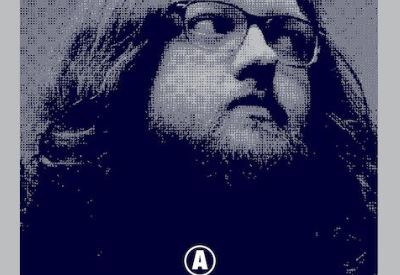
Album Review: Jonwayne – Rap Album Two

by Dustin

rapalbumtwo

8.5/10

For a handful of years Jonwayne was an incredibly prolific underground artist. As an instrumental genius he dropped wave after wave of beat tapes, video-game inspired soundtracks, and rare odds-and-ends that fans happily ate up. Once moving into the rap scene, his series of Cassette mixtapes sparked interest among the alternative rap community; Jon’s rich voice and subdued delivery paired excellently with his Dilla-inspired production. Stonesthrow, his label at the time, seemed like the perfect home for his style. This culminated in his 2013 debut studio rap album, accurately named Rap Album One. Though it seemed as if Jon was still finding his voice on that record, the potential was evident and it was met with generally positive reviews. It seemed as though Jonwayne was destined for big things.

However, not all career paths can be so beautifully lineal. Jon’s mental health and lifestyle choices, namely those involving alcohol, quickly caught up to him. Things soured at Stonesthrow, leading to his departure. After battling through these issues and bringing a semblance of order back to his life, Jon would reintroduce himself to the music scene in 2015 with Jonwayne is Retired and Here You Go. A rap extended play, and a two part beat tape series respectively. After a little more waiting and teasing Rap Album Two found its way to eager ears on February 17th 2017.

As it turns out, the delay for Rap Album Two was well worth it. This record is easily Jon’s most personal work, and the lyrics offer a deep insight into his emotions, feelings, and the struggle of someone recovering from addiction. Though these are topics that have been explored extensively in various genres, Jonwayne makes it special by offering a sense of solidarity to those dealing with the same issues as himself; the most impressive part of this is that Jon manages to present what he went through without seeming as if he was purely seeking sympathy. The lyrics on Rap Album Two are bluntly honest, and he puts his own faults and shortcomings on full display.

The writing style on this album is also quite unique. There are times where Jon abandons conventional rap structures and is more in line with written and spoken poetry. The rhyme structures aren’t always laid out in a simple couplets patter, and his focus is very rarely on multi-syllable schemes. This can take a bit to get used to, but ultimately it’s a refreshing journey away from the expected.

And on the way I know I gave away some friends,
And every day I wish that we could speak again,
But every time I wanna make it right I freeze up,
and the visions of the shadows of my demons who went out of sight,
They went out of sight,
Until now.
(Out of Sight)

Unsurprisingly, the instrumentation on Rap Album Two is superb. Jonwayne established himself long ago as one of the many talented producers to build on the influence of Dilla. The thriving west coast beat scene offered the perfect incubation environment for his style, and it has blossomed on this album. Jon’s production has always had experimental elements mixed in with more classic hip-hop sounds, but he’s finally achieved a sense of balance between the two. The beats are rustic glory updated for modern times. They fit his spoken poetic rap style wonderfully,

And that’s the thing about Rap Album Two. None of the tracks on this album jump out as better than the rest of the group. They all pay together perfectly, and the album is best experienced as a long play. Every song has its place, and they transition very well.

I just cancelled my tour,
I just woke up in bed,
I had last nights dinner on the sheets,
I had a burning in my throat I couldn’t swallow,
I had shuffled to the mirror and saw death over my head,
If i was sleeping on my back I would’ve died,
Jameson in my blood,
Jameson in my eyes,
Jameson on my mind,
I know I need to stop,
But if I’m flying, it’s Jameson on the ride,
This how I’m making money but a cost to my life.
(Blue Green)

There are some moments on Rap Album Two that feel slightly out of place. “LIVE From The Fuck You” and “The Single” in particular are uncharacteristically humorous in the midst of an incredibly serious album. That being said, they do serve a bit of necessary comic relief to cut the tension. Aside from that, Rap Album Two is a juggernaut of cohesion. Jonwayne’s all encompassing creative control shines through on this album, and a meticulous attention to detail is evident. Though none of the songs really jump out on their own, Rap Album Two is a powerful complete listen. It’s the kind of album that seemingly needs to be listened to in its entirety; moreover, it’s also the perfect length for this sort of release at 44 minutes.

Rap Album Two feels like a modern album that captured some of the magic of rap’s golden era. The emotional connection Jonwayne is able to establish with the listener far outweighs any of his technical flaws on the mic. If you’ve been through any kind of struggle in your life, which most have, this album will offer some degree of solace. And it is an absolutely gorgeous listen, if not one that is a little challenging. Welcome back, Jon, and thank you for the album.

A Thank You: One Year of Extraordinary Nobodies

by Dustin

1yr

It’s not often I step back from writing and approach the blog in a first person narrative. I usually leave that to my awesome co-writer and his (sometimes) monthly column. It’s just not my style; however, this is the kind of special occasion that calls for it. Exactly one year ago we went live with our first article. Since then we’ve published dozens of articles, interviews, reviews, and editorials entirely self-funded. Though it has been mentally tiring and an absolute grind at times, being able to look back on what we’ve accomplished over the past year is so incredibly fulfilling. More importantly however, it is also very humbling. Without the support of some incredible people, we would have probably just fallen by the wayside as another failed music blog. Our success may seem small to many, but to myself and the rest of the team here is an absolute thrill. I don’t think any of us really knew how to project goals onto this site, but somehow it still blew our expectations out of the water.

Anyway, before I get carried away I’d like to thank some people for their support and contributions over the past year. We strive to produce high quality content, but without these individuals none of that would have mattered.

First and foremost, thank you to the artists and individuals who’ve shared their voice with us on interviews: Kash, Swish, MCrv, Lightning Pill, and Michael J. Collins of FilthyBroke Recordings. You were all incredible to work with and I cherish those interviews dearly. I wish you all the best of luck in your careers, and I do hope that we get to work together going forward. You all had a brilliant lack of apprehension when speaking with us, and it was very much appreciated. Once again, thank you.

I’d also like to give a very special thank you to Fatt Father and his management team for providing us with our first ever interview just over a month after we started as a website. As fans of your music, you lending some time to us was a massive motivator to pursue further interview opportunities and continue to grow as a blog. Really, I can’t even begin to describe how much that meant to us. It was like being a kid in a candy store, only I got to interview one of my favourite underground rap artists. I don’t think myself or Apu will ever forget how exciting it was to get the answers back for that interview.

I’d also like to thank some individuals who regularly show support by spreading our work or putting us in contact with artists. In particular, everyone at IHeartNoise, Nick at Darling Recordings, Michael at FilthyBroke Recordings, Qualchan, and many others who have shared our articles. You are all truly the best.

Thank you to both Walter Gross and V8 for trusting us with your projects before they released to do some early press. This is something I hope we get to do more of in the future, and it was very genuinely a lot of fun.

Of course I have to thank my team here at the site as well. Apu, your articles are great – stop being a little shit about the quality of your own work. I’m glad you write here, and that I get to work with one of my only friends who likes hip-hop on this site. Emily, you’ve been an amazing friend for as long as I’ve known you and you’re equally good as a part-time site editor. One day we’ll pay you for your work. Maybe. If you ask nicely (and if we’ve, y’know, turned a profit ever). I’m truly fortunate to get to do this with two people I like so much.

And most importantly: thank you to everyone who regularly reads this site. Some of you have commented, emailed in, and contacted me on twitter, and it’s always a blast to interact with you. We hope you continue to rock along with us, and that our content quality can continue to improve for you.

Here’s to another great year!

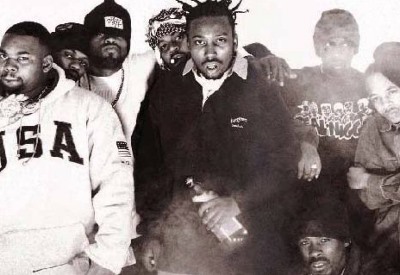
Apu Rambles: The Wonder of Rap Groups (and Their Possible Shortcomings)

by Apu

wu

I’ve always found rap groups to be interesting. And with that I’ve just won the award for the most generic opening sentence in a written piece for January 2017.

Music made by a good group (keyword: GOOD) can be the coolest thing you hear all day. It’s crazy hearing vastly different personalities colluding, bringing different perspectives, styles, and presences to a track while completely complimenting each other. Many times it can be more exciting to listen to a group than a solo artist; the constant change in performers keeps things fresh in a way that may not always happen when listening to a solo artist. You don’t know which group members will be on which track, or what each member will bring to the table. There’s a support system in the form of friendly competition, where each member pushes the other to go above and beyond, leading to some rappers having the best verses of their careers on group songs. And group music is different than posse cuts. While posse cuts can bring together huge rappers to make great songs, the vast majority of the time, there’s not nearly the sort of unity and fluidity that there is on group music when the mic is passed.

It’s a simple fact. Hip hop would not be where it is now if it were not for rappers forming crews and making music together. Whether it be the earlier years with Sugarhill Gang introducing hip hop to wider audiences, to Run D.M.C., the Beastie Boys, Public Enemy, NWA, Geto Boys, the Wu-Tang Clan, Onyx, Westside Connection… The list goes on and on. They were a staple of hip hop in the golden era, and remained to be a driving force in hip hop well into the ‘00s.

I don’t know why they were so big in the formative years, especially compared to now; maybe having a crew onstage helped hype crowds up while performing more effectively than having just a single rapper, leading to better shows and subsequently wider acclaim and greater success. Perhaps that’s why rappers still go up onstage with hypemen, even when they may not need one to help out when the main performer needs to take a breath. Whatever it may have been, there’s nothing quite like seeing a group together. There’s also nothing quite like seeing a group implode after the first album or two because of success changing the approach to making music, causing chemistry to fade and beef to ensue.

I personally think that the biggest contributing factor to a group’s greatness is chemistry. There has to be a foundation for the sound that a group will use, especially when members develop themselves as solo artists with sounds that deviate from the group sound. Take, for example, the Wu-Tang Clan. RZA created that dark, soul-sampled boom bap with Enter The Wu-Tang. However, given that Wu always meant to branch out to become solo artists, the following solo albums each had a different tone from the debut group album. Tical was more bassy and smoked out, Return To The 36 Chambers was muddier and more twisted, Only Built 4 Cuban Linx was more piano and string-driven resulting in a Mafioso tone, and Ironman was more driven by R&B and lighter soul samples. Aside from Liquid Swords, which was fairly similar in tone to Enter The Wu-Tang, they all had their own sound to them to reflect the personality and charisma of each member outside of the group.

However, when they reunited to do Wu-Tang Forever, they went back to a similar style as Enter The Wu-Tang: heavy soul samples and more classic boom bap. Sure, the sound had advanced, but the overall tonality still screamed Wu-Tang as a whole, as opposed to more Raekwon or Ghostface. They had the production base offered by RZA, which meant that other producers like 4th Disciple or Inspectah Deck had a blueprint to follow.

Of course, having that base meant that the subsequent group albums (and even solo albums) were prone to the flaws that came with the failures of RZA. Being that RZA was the de facto leader of the group, him losing beats in a flood ended up creating issues for Wu as time went on. After that, RZA’s decision to change his production style with his Bobby Digital persona made The W and Iron Flag sound off-putting. By the time A New Tomorrow came around, RZA sounded totally uninterested in making music; it seemed he would rather score movies and help Cilvaringz be a cunt.

But he was still the leader of the group, so they had to follow him.

It was a similar situation with D-12. D-12 has two members who produce: Mr. Porter and Eminem. While Proof was the spiritual leader of D-12, as well as musical when they were doing mixtapes and features, Eminem clearly led the group on the albums. Devil’s Night sounded almost like it could have been called The Marshall Mathers LP 1.5: Introducing D12. That’s not nearly even close to being a bad thing – that album is a classic to me. However, it did end up being a bad thing for them on D-12 World. Most of the songs that Eminem produced did not follow a D-12 kind of style. They were like less-gangster G-Unit beats, much like Encore’s production. The only possible exceptions to this are My Band, Bitch, and Come On In (which ended up sounding more like a Mr. Porter beat). Mr. Porter’s beats were perfectly suited to D-12, and showed a potential evolution in their sound from Devil’s Night that could have been very cool, as it was grimy but sillier and jazzier at the same time. Em’s leadership, however, prevented that sound from being explored more aside from songs that Em wasn’t even on. Had he passed leadership to Mr. Porter, the album may have sounded more like Barbershop and I’ll Be Damned and less like Leave Dat Boy Alone and Get My Gun.

While pure democracy in a group would likely lead to no progress at all, one person can’t be the leader for the entirety of the group’s albums. There needs to be a constant passing of the baton. Otherwise the leader may end up running the group into the ground. It seems RZA has finally understood that, because he’s given Ghost the wheel for the next Wu album. Given Ghost’s artistic style with live jazz instrumentation on fairly recent albums like Twelve Reasons To Die I & II, Sour Soul, and 36 Seasons, it will likely be a breath of fresh air for the group, rather than the aimless plodding of RZA’s production on A Better Tomorrow. I’m personally expecting it to be their best in 2 decades.

Groups without chemistry just don’t work. I already know I’m gonna get shitted on by underground hip hop fans, but I personally don’t think Slaughterhouse is demonstrates good group dynamic. Each member is a very talented emcee in his own right (although fuck Joe Budden for life for beating a woman into having a miscarriage). However, there is no feeling of unity among them. Every song that they do sounds like a posse cut. As I stated above, a posse cut can be cool, but if you’re gonna be a group, you have to sound like a unit. It’s weird too, because Joe Budden and Joell Ortiz do back and forth every once in awhile, but they don’t sound natural doing it. Nearly every song either boils down to a cypher that may or may not have a hook in it or an emotional track with each member just saying their piece and not trying to tie themselves into the rest of the group; oftentimes the verses may only share emotion in common and can be about completely different things which throws off the mood of the track. A group needs to have chemistry, otherwise it just doesn’t work. Unfortunately, Slaughterhouse doesn’t have much of it.
Slaughterhouse are also too similar to each other, which oddly doesn’t help their chemistry.

Another part of what makes some groups successful is the roles that members play. When Slaughterhouse do music together, everyone does essentially the same thing in a song. There’s no variety. You need some rappers to be the tough talkers, the more grounded members, and what is quite possibly the most important role: the clown. It can get tiresome to hear so many rappers talking about similar street subjects all the time; you need an ODB to your Wu-Tang Clan or a Sean Price to your Boot Camp Clik (RIP to both) to add some comic relief. The role that guys like them played helped to distinguish the groups from most other hardcore underground groups.

Everyone wants to be the toughest or most lyrical, and people get lost in the mix of everyone else trying to do that. When you put together a group of people trying to be tough or lyrical, that effect may get even worse. Throw a clown in there (who still has skills, mind you), and suddenly your presence becomes more impactful. You have someone who can still spit with the rest of the members, but is spewing clever, witty one-liners and creating a different reaction than the listeners get from listening to the other members. But it’s a fine line; you have too many members who clown around and you’re viewed as a comedy rap group, nothing to take seriously. So a group needs to be diverse, but still maintain similarities enough to where there’s still chemistry.

Groups are wonderful for hip hop. They’re a healthy mix of competition and brotherhood. I wish there were more groups out now; you’d think that with the increased usage of the internet in hip hop music that there would be more groups linking up from city to city, but for some reason that’s not the case. These days it’s always a wonderful treat to see a group either reunite, especially if they haven’t done music in years. With things in hip hop seeming to go back to the way they were (that’s a topic for another time, I don’t feel like opening that can of worms for the basement-dwelling stuck-in-the-90s hip hop nerds to feast on), perhaps we’ll see more groups being formed.

Album Review: Kuniva – A History of Violence Vol. 2

by Apu

hiv

8/10

Coming back from doing a tour with a couple of his group members and stealing the show more often than not on D-12’s Devil’s Night Mixtape, Kuniva has gone solo again with the follow up to his official debut, A History of Violence. Released about a year later than originally planned, this project was pushed back until 2016 because of his work with D-12.

Before I go any further, I advise all 3 of you who are reading this to check my recap of A History of Violence (Vol. 1). I promise I’m not saying this [entirely] as a plug for views!

The first thing that can be said about this album is that overall, it is much more powerful than its predecessor. It’s evident even from the release of the lead single, “Dear Uncle”, that Kuniva approached making this album from a totally different perspective. It’s more heartfelt, thoughtful, and passionate. There’s nothing here that has the sort of carefree, almost ignorant attitude of “Born This Way” or “Where I’m From.” The entirety of the album is more mature and artistic. The two years Kuniva spent working on this left him a more seasoned artist, let alone emcee.

With this project, Kuniva put a larger focus on songwriting, more so than just rapping and lyricism. In fact, the straight “lyrical miracle” lyrics are less prevalent on many of the songs; for the most part, he opted towards writing songs with a message and focused less heavily on the rhymes and wordplay. That is probably my biggest gripe (well, actually, my only grip) with the album…and even then, it’s not really that big of an issue, because it’s not like Kuniva dumbed anything down, and there were still several instances where he did come with the battle lyricism that he’s known for. He’s shown the caliber of his lyricism on each of his previous projects, and just shifted focus on this. There was less room for it. He had something that he wanted to make sure he got across this time, and didn’t risk sacrificing the message with unnecessarily complex rhymes or metaphors.

The hooks are noticeably stronger, more present, and in many cases more melodic than they were on Kuniva’s previous material, which is artistic growth that I’m personally very glad to see. A stronger hook is what separates a good rap from a good song. He also started playing with his flow a bit. He had shown flashes of implementing double time flows on D-12’s comeback song “Bane” but since then kept it a little simpler on the D12 mixtape. However, from the very first track on this project onwards, we get to hear him weave in and out of different pockets in a way that I honestly didn’t expect. His flow has become crisper, and he’s managed to make it sound as though it’s both more precise and more relaxed at the same time.

Kuniva also started using his delivery to add to the buildup of his verses to give a more dynamic feeling towards the songs. On many of the tracks, he would start adding more of an edge to his voice as the verses went on, which helps keep the listener not simply engaged, but nearly clinging onto the words he’s saying. The majority of this album consists of very personal music, detailing the difficulties he’s had in his life as vividly as the best of them. His delivery matched the pain that is written so well that you would think he was sitting in a psychiatrist’s room recounting it as opposed to just rapping pre-written lyrics into a mic. I firmly believe that Kuniva’s delivery is one of the most impactful out right now. At times on this project his delivery, paired with the intensity of the stories he told in his lyrics, could figuratively kick you in the stomach.

My son’s looking up to me more, watching my every move,
Trying to mimic his dad, I try not to show him my tool,
He’s asking questions now, fuck I’m supposed to do?,
Finally told him what happened to Bugz and Uncle Proof,
The pain of explaining the real, leave you with screws loose,
To be able to watch your homie murdered on Youtube.
(Mama I Tried)

That’s not to say that the entire album is full of heavy subject matter. Songs like “Ride Slow,” “All I Know,” and “Trouble On My Mind” serve as Kuniva’s way of giving the listener something easier to listen to. At the same time, they still manage to capture the [relatively] lighter side to Kuniva’s life, rather than being just filler tracks for people who don’t want to listen to such serious music. They detail Kuniva’s life on the block, largely leaving aside the topics of personal strife and police brutality. They definitely don’t feel out of place though; in fact, they make the album feel more fleshed out. Block Symfany and Mr. Porter do a great job at offering production that flows well from track to track, and making each song settle in well. Each of these tracks, incidentally, are the only tracks with guest rappers on them. I personally feel as though Kuniva’s verses on these tracks vastly overtake the guest verses, who were strong in their own right. I do want to say that I’m relieved that the chemistry between Denaun and Kuniva still exists, and I look forward to the Brigade project that they announced in the outro of “Trouble On My Mind.”

The final track, “End of the Beginning,” has a small interlude between verses where Kuniva mentions how he’s found that people don’t really know that he’s his own person outside of D-12, and that he needs to show people who he is by himself. The production (offered by Block Symfany and Mr. Porter) help separate him from the devious D12 sound overall, and allow him to develop his own persona through his soul-bearing delivery and lyrics, which have become possibly the most vivid and deep out of anyone in his group aside from the obvious member. If there was something he could have released that would show people what he has to offer, this is it. This is the project that he needed to get people to stop using their bias against his group as a reason not to take him seriously. He succeeded in creating a cohesive project that puts on full display who he is as an artist and emcee. It is not a perfect album, but he has cemented who he really is behind his group persona, and he can keep building from there, which is what the phrase “end of the beginning” seems to imply.

Too often, you’ll see somebody release a sequel to an album and have it be essentially the same thing. No advancement in sound, no change in content…nothing different is offered. It’s basically just an excuse for an artist to not evolve and come with the cop-out of “but…but yeah but this is just the next part, it doesn’t make sense to change anything!” This album is a sequel done right. Kuniva uses this album as an opportunity to expand on what he was talking about in Vol. 1. He carries more of a narrative throughout it, aided by the interludes. It’s almost like he had the first disc serve as the prelude to his life story, where he gave bits and pieces, and he decided to dig deeper on this. While the lyricism may not be as complex, as a full body of work Vol. 2 absolutely dwarfs Vol. 1, and stands by itself as a great project.

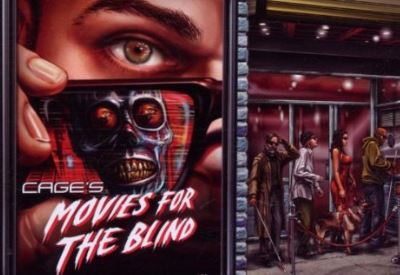
Retrospective Review: Movies for the Blind, by Cage

by Dustin

mftb

Halloween is always a fun time of the year. The kiddos are out in spooky costumes collecting enough candy to become diabetic at eight years old, young adults are out in costumes slutty enough to make a stripper wince, and everyone is generally just out to have a good time. More importantly for this site however, there’s also a huge array of horror themed hip-hop out there to fit the mood of the season. We’re not talking about struggle-Juggalo horrorcore however. What we want to discuss is the artists that went deeper, combining horror elements with conventional hip-hop to create near-movie like albums.

Welcome to Extraordinary Nobodies’ first ever Halloween Week, where we will have a look at four of our favorite horror inspired albums for an entire week leading up to Halloween (though surely you have figured that out by now).

The first album on the menu is perhaps the least Halloween-flavoured of the bunch, but it’s got one foot firmly planted in the horror genre. Cage’s Movies for the Blind, released in 2002, combined shock rap with New York hip-hop in a way not many had attempted. Though he’s probably most notorious for a short lived beef with rap megastar Eminem, Cage’s first two releases are regarded by many as underground classics. Movies for the Blind started it all, and it’s a record that will leave you feeling utterly disgusted in the best way possible.

Lyrically, Movies for the Blind is the ultimate channeling of rage, drug abuse, and mental illness into bar after bar of tantalizingly shocking lines. Setting the tone is an album opener with Cage expressing an unbridled affinity for PCP and destruction. The album doesn’t quit either, with jump-scare like lyrics woven into even the most New York sounding tracks to keep you on edge. No content is off the table on this record. Murder, suicide, and violence find themselves as staples on what is a freak-show of atrocities. Dips into the norm are rare, but when they do happen it serves as a necessary break from the amazingly grotesque images Cage paints with his words.

Blue collar to corporate blessed the unfortunate,
Like when I put my foot down that bitch still aborted it,
Stuck the canister under my jacket like the lucky one,
‘Uh, sir you can’t leave with that,’ bitch this my fucking son!
(Too Much)

Unlike Hell’s Winter, which saw Cage take a more introspective approach to his music, Movies for the Blind lacks any form of self-awareness. It is an album with an emcee at his most unhinged, unloading rage and hate at anyone who will listen. It’s beautifully executed, and forces you to feel a level of discomfort that most horrorcore albums simply haven’t been able to achieve.

His charisma is also undeniable. It gets to the point that he nearly comes across as a sociopath.

I’m a suicidal failure, look my life’s a failure,
I can’t make it in rap, even my birth’s an error,
Do what I can to catch a quick death,
But I’m meant to be here and that’s the fuckin’ hell I live with.
(Suicidal Failure)

Interestingly, the production on Movies for the Blind is relatively subdue and typical for the underground New York scene at the time. The album featured production primarily by DJ Mighty Mi, but also the likes of El-P, Necro, and Camu Tao (plus a handful of others). With the lineup, it’s no surprise that the sound is so distinctly east coast. Movies for the Blind fools you into nodding along with the gritty production, while throwing lines about suicide and death in your face. The contrast is absolutely wonderful to experience; moreover, the instrumentals are brilliantly cohesive throughout.

Movies for the Blind may not be the ultimate Halloween record, but there are qualities to it that definitely make it a terrifying listening. It’s quite interesting how this album plays out like a series of short snuff films. It’s more disturbing than scary, but it remains as grimy today as it was 14 years ago upon release. Movies for the Blind is also a gem from a time where Definitive Jux and Eastern Conference (the latter of which would release the album) were just beginning to take over the New York underground scene. Whether you’re interested in records from that era, or just looking for something gory to celebrate Halloween, Movies for the Blind remains an underground classic that is wholeheartedly recommendable.

Not for the faint of heart, however.

Album Review: Danny Brown – Atrocity Exhibition

by Dustin

ae

9/10

If you’re a hip-hop fan and you don’t know who Danny Brown is, there’s a good chance you’ve been living under a rock since 2011. The Detroit emcee is known as quite the character, bringing an insurmountable level of energy to every song he touches. After jumping to Warp Records, Danny has finally released his follow up to 2013’s Old. Atrocity Exhibition.

And yes, that is a Joy Division reference.

On this record, Danny Brown is a rock-star in every sense of the term. He’s a boisterous character with no fear of expressing his affinity for drugs and alcohol; however, the beauty in Atrocity Exhibition is his ability to explore the consequences of the lifestyle he lives. Danny may be one of the few rappers who will boast about his drug use on one track, and then turn around and smack you with the honest truth about the problems this causes him on the next. Lyrically, he is completely on point. Atrocity Exhibition still has the same zany personality that made XXX and Old unique, but it’s also a highly introspective release. His lyrics are upfront and truthful, depicting a lifestyle that many couldn’t begin to imagine.

Everybody say, you got a lot to be proud of,
Been high this whole time, don’t realize what I done,
Cause when I’m all alone, feel like no one care,
Isolate myself and don’t go nowhere,
Smoking blunt after blunt, ’til my eyes start burning,
Hennessy straight got my chest like a furnace,
Drowning frustrations in a ocean of sin,
Thinking irrational, I have no emotions.
(Downward Spiral)

What stands out most about Danny Brown’s vocal performance on this record though is his flow. The man can rap on anything, plain and simple. For example, both the opening track “Downward Spiral”, and the song “White Lines” both have instrumentals that sound as if they should be impossible to ride… Yet, Danny finds a way to make it sound as easy as breathing. It’s really something to behold, and his ability to do this is on display here more than any previous album.

Which brings us to the instrumentation itself.

The production on Atrocity Exhibition is a really a unique experience. Provided by the likes of Paul White, The Alchemist, and a few others, the instrumentation on the album is unlike any other. There are elements to the production which feel distinctly Detroit, yet the overall sound is so off-the-wall that it’s hard to Atrocity Exhibition to any single influence. There are tracks like “Downward Spiral” that feel so heavily influenced by Joy Division (as the title would lead one to believe), and then more conventional instrumental like “Pneumonia”.

In the broader sense, everything works well together even with the vast stylistic variation. It feels hectic in a good way, and that’s exactly what’s to be expected from Danny Brown.

Atrocity Exhibition is special. It’s special first and foremost because it’s a great album, but there’s also something wonderful about seeing Danny Brown realize his potential. His previous releases have all been good in their own respect, but Atrocity Exhibition feels like so much more. It’s the type of album that pushes boundaries without being recklessly abrasive. Its execution is brilliant in the sense that it’s experimental, yet familiar enough to appeal to a larger base.

So my task,
Is inspire your future with my past,
I lived through that shit,
So you don’t have to go through it,
Stepping stones in my life,
Hot coals,
Walk with me.
(Hell for It)

Atrocity Exhibition may feel like a fever dream, but it is one that you will never want to wake up from. As a hip-hop fan, this record is a can’t miss album. Danny Brown has released one of the most engaging, unique, and gritty records of 2016. It’s certainly worth your time, and potentially album of the year material.