A Thank You: One Year of Extraordinary Nobodies

by Dustin

1yr

It’s not often I step back from writing and approach the blog in a first person narrative. I usually leave that to my awesome co-writer and his (sometimes) monthly column. It’s just not my style; however, this is the kind of special occasion that calls for it. Exactly one year ago we went live with our first article. Since then we’ve published dozens of articles, interviews, reviews, and editorials entirely self-funded. Though it has been mentally tiring and an absolute grind at times, being able to look back on what we’ve accomplished over the past year is so incredibly fulfilling. More importantly however, it is also very humbling. Without the support of some incredible people, we would have probably just fallen by the wayside as another failed music blog. Our success may seem small to many, but to myself and the rest of the team here is an absolute thrill. I don’t think any of us really knew how to project goals onto this site, but somehow it still blew our expectations out of the water.

Anyway, before I get carried away I’d like to thank some people for their support and contributions over the past year. We strive to produce high quality content, but without these individuals none of that would have mattered.

First and foremost, thank you to the artists and individuals who’ve shared their voice with us on interviews: Kash, Swish, MCrv, Lightning Pill, and Michael J. Collins of FilthyBroke Recordings. You were all incredible to work with and I cherish those interviews dearly. I wish you all the best of luck in your careers, and I do hope that we get to work together going forward. You all had a brilliant lack of apprehension when speaking with us, and it was very much appreciated. Once again, thank you.

I’d also like to give a very special thank you to Fatt Father and his management team for providing us with our first ever interview just over a month after we started as a website. As fans of your music, you lending some time to us was a massive motivator to pursue further interview opportunities and continue to grow as a blog. Really, I can’t even begin to describe how much that meant to us. It was like being a kid in a candy store, only I got to interview one of my favourite underground rap artists. I don’t think myself or Apu will ever forget how exciting it was to get the answers back for that interview.

I’d also like to thank some individuals who regularly show support by spreading our work or putting us in contact with artists. In particular, everyone at IHeartNoise, Nick at Darling Recordings, Michael at FilthyBroke Recordings, Qualchan, and many others who have shared our articles. You are all truly the best.

Thank you to both Walter Gross and V8 for trusting us with your projects before they released to do some early press. This is something I hope we get to do more of in the future, and it was very genuinely a lot of fun.

Of course I have to thank my team here at the site as well. Apu, your articles are great – stop being a little shit about the quality of your own work. I’m glad you write here, and that I get to work with one of my only friends who likes hip-hop on this site. Emily, you’ve been an amazing friend for as long as I’ve known you and you’re equally good as a part-time site editor. One day we’ll pay you for your work. Maybe. If you ask nicely (and if we’ve, y’know, turned a profit ever). I’m truly fortunate to get to do this with two people I like so much.

And most importantly: thank you to everyone who regularly reads this site. Some of you have commented, emailed in, and contacted me on twitter, and it’s always a blast to interact with you. We hope you continue to rock along with us, and that our content quality can continue to improve for you.

Here’s to another great year!

Album Review: Walter Gross – Vestige

by Dustin

wgv

9/10

After a decade and a half in the scene, it’s safe to say that Walter Gross is a well-seasoned veteran when it comes to do-it-yourself music. He’s also an artist who has gone through some very interesting times recently. In his released statement about Vestige – the album which this review is tackling – he spoke on the circumstances that gave birth to this album. Moving from America to Berlin, losing the source material in an equipment failure, and creating art in circumstances less than ideal. The end result is this album. An album that serves as an exercise in growth for an artist, and perhaps even somewhat of a musical rebirth.

As a side note, this album is coming via Black Box Tapes. That might not exactly be a household name at this point, but it’s a label run by a classic figure in the underground hip-hop community, Sole. Those who are hugely into rap (and read this site) might find it interesting to know what he’s up to these days… Anyway, onto Walter Gross’ absurdly powerful record!

Vestige sounds like the demented stepchild to post-rock. Walter Gross has blended the melodic evils of groups such as Godspeed You! Black Emperor and Viet Cong (now known as Preoccupations) with his classic breed of experimental electronic to create a unique beast. The instrumentation on this album hits like a noisy wall of sound; while it is probably more accessible than much of Walter’s work, Vestige is in no way an easy album to sink your ears into. While a song such as “Naked Lunch” may have a delectable, head bobbing bass-line, there are copious noise elements happening simultaneously. This leads to a wonderfully challenging listen; moreover, Vestige feels like an album that will retain replayability as there will always be new elements to discover within songs. Amazingly the stylistic differences between tracks – which at times can be quite vast – don’t hurt the cohesiveness of the album. Every song has its place within the environment of Vestige.

A prime example of this is the punk-chant “Fixated on the Light” coming immediately after a much more hip-hop oriented ending to “Window.” Their sounds couldn’t exist in further worlds, yet Walter Gross found a way to bring them together and make it work in a way which felt entirely natural.

The focus on vocals is also very intriguing for a Walter Gross album, and to be completely honest it was refreshing and worked flawlessly. In true post-punk fashion, the vocals are often muddy, aggressive, unnerving, and hidden back slightly in the tracks. They’re unconventional, but so is the entirety of Vestige. Even when the vocals exist purely in a murky haze of words, the way they compliment the instrumentation is gorgeous. They’re not technical darlings, yet they work well.

It’s reminiscent in ways to how Ian Curtis made imperfect singing sound cool in Joy Division. It just fits the atmosphere and tone of the music exceptionally well.

While Walter Gross has been a mainstay figure in the do-it-yourself music community for years, he has reached a new level on Vestige. While it might not be quite as consistently unnerving as some of his releases (such as Goner, for example), it is a mind-melting play-through. The elements of noise, post-rock, punk, hip-hop, and genres yet-to-be named laced throughout are an absolute treat to listen to. Sure, this album may not be a mass-consumable brand of music (and let’s be honest, Walter’s records never will be), but that’s exactly how it should be. The lack of pressure to stay chained to a particular sound has granted the freedom for a record like this to exist. Vestige is a prime example of the power behind the do-it-yourself route in music. There’s something special in the clarity of an artist making the kind of music they want to make, and hitting a sort of full musical realization. That holds true in spades for this release. Vestige is the type of album that should (but won’t) get consideration on top album lists when the year comes to a close.

Also, it should be mentioned that the mixing sounds great. Shout-out to Michael J. Collins of FilthyBroke Recordings (who we interviewed a little earlier this month).

Seriously, if you want to listen to some genre-bending futuristic-but-retro post-punk-yet-electronic (hyphens, so many goddamn hyphens) massive tunes then keep your eye on this record. This is the type of pallet-cleansing releases that are an absolute joy to experience for the first time. The physical release isn’t quite here yet (that tape looks beautiful, though), but it can be streamed/downloaded on Walter Gross’ BandCamp right this very moment.

FilthyBroke Recordings’ Michael J. Collins Speaks on Respect, Running a Label, and Life in the Indie Scene

by Dustin

fbr

When a seasoned veteran of the music scene is willing to open up about their experiences, it’s generally wise to open your ears. Those who have committed to the indie scene grind their whole life have a wealth of stories, knowledge, and warnings for those who wish to follow the same path. Michael J. Collins, the leader of FilthyBroke Recordings (and long-time indie musician) is one of these such people.

To keep it short and sweet (because this interview is long and wonderfully in-depth), he’s seen a lot. We were fortunate enough to get to have a long sit-down with Michael, and the end result is an unforgettable interview about clawing his way through the music scene, and establishing an independent music outlet. He’s also a super charismatic dude – the interview was an unforgettable process that we couldn’t be more pleased to have had.

This is necessary reading for anyone enticed by a similar trail, and recommended reading for those who just love music.

EN: So, I’ll start with the basics since I like to make sure there’s info for new readers. When and why did you decide to start up Filthy Broke Recordings?

MJC: FilthyBroke Recordings, often referred to as FBR, will be three years old in May of this new year. As for the “why”… Jeesh, there’s a multitude of factors, but I can distill things down:

I had quit music twice before, and realized I would never be satisfied unless I could have a safe outlet to put out whatever the fuck I wanted. Some of which is hip-hop, much of which is not. Having released on many imprints around the world for several years, I learned the hard way that I am much more comfortable being a lone-wolf. Even if that means making way less money.

EN: I can definitely relate to that – at least from the writing side of things. I like being in control of my own output, even though it feels limiting at times. Do you ever feel frustrated with the sacrifices you had to make to achieve that “lone-wolf” status?

MJC: Oh man, in the beginning? Heck yeah, often. Particularly getting used to not making money, even though I knew that would be the case going in. As an artist that had never tried the label thing before, I honestly almost quit music again as our first release was coming together. Basically, I had been used to putting out 12″s on other folks’ labels for some time. I would get my fee and my royalties quarterly, and not really consider what was going on over on the other side. At that time, as you said, I wanted some control over what I was creating rather than being told by a label, “make more stuff like that one [release] from 2008.” This desire for control, as well as my lack of knowing how hard it actually is to run a label are what manifested into FBR.

Dude, within three months of the label going from concept to [the first] 12″ order being placed, I was stolen from… A myriad other shady shit happened that nearly led to me walking away before it even started… At that point my money was all-in though, so I figured try to peddle a few records and then call it quits. Going through a divorce at that time certainly did not help my lack of enthusiasm. Somehow things just kept going despite myself and my tendency to self-sabotage.

I still plan to get my fucking $350 from that punk out in California. If you are reading this, “CM”, know this to be true. I may show up at 84 with an oxygen tank by my side, but I will get that money back. I know it seems petty, y’all, but stealing is wack as fuck, and there are principles at stake for me anyway.

In short, the beginning was a nightmare. Now I am so so happy I made those sacrifices and stuck it out. I still go crazy daily. Hourly.

EN: That’s pretty intense man – it sounds like you’re one hell of a stubborn dude (I mean that in the best way) when it comes to your label. Was there a particular point where you finally were able to say, “You know what? I can do this?”

MJC: Ha! I am stubborn to a fault, I am obsessed with people “doing the right thing” and realize all of that is based in my own unrealistic expectations of others… Like, for real, I in no way wanna come off as negative about things, how things started, just how it was for better or for worse. It was a learning experience of the highest order, in that it truly tested whether or not I felt I could work in music in some other capacity than simply being a recording artist. Though I felt like saying “Fuck it” so many times I learned that people (myself included) are flawed, some youngsters/older folk have never dealt with labels before, not worth throwing shade… Rather, learn from the “climate” of what’s happening in the moment, pick a solid circle of trustworthy people, and love them to death. Help each other to the end of the earth… So, yeah… It was probably like three months ago actually where I felt like, “I can do this. I may be good at this actually, I am growing a thicker skin and a wonderful network.” And the bottom line is that putting out a wide array of music that oddly caught on a bit, with no PR, is addictive. I wanna prove everyone wrong, like, “we don’t pay to play but are sustaining.” Maybe unrealistic, but now if ever is a time for idealism.

EN: With that in mind, I guess this goes back a bit to what we talked about before the interview too, that artists and labels need to respect each other. How important is that respect to you in your operations both as an artist and label head?

MJC: In my mind, Dustin, [it] is paramount to everything. Respect is huge, I think that also taking a step back from one’s own bubble to listen to [and] push the work of others is crucial. I am always preaching, “Support Independent Music.” It was not until starting the label that I really knew what that meant, for me. And for me that means actually SUPPORTING good art by good people, whether it is associated with FBR or not. I believe that at the end of the day, cooperation trumps competition (pun intended. Like, I feel happier (and feel the label does much better) when I am sharing music by other people.

Sharing my own stuff all day is not only boring, but feels stale and selfish when there is so much other amazing music out there. I get turned off by (what I consider to be) ego-driven people, artists and labels. Folks that claim they are “The Best.” Folks that scream for support of their work yet do not engage with others. Liars, cheats and thieves. I guess it’s selfishness that turns me off, as I see it as completely nonproductive in this day and age.

Yes, I prefer the “lone-wolf” aspect of control over the label’s output… However, I would have been dead in the water were it not for people like Fake Four Inc, Oliver Booking Company, Walter Gross, Ceschi, Fremdtunes outta the Netherlands, [and] so many others. These types of people contribute so much to our underground music scene; [they] do so with grace and a willingness to push the work of other unaffiliated artists and labels simply because it’s good stuff and worth sharing. The act of sharing someone else’s music may not seem like much, but when you do not pay to play nor have PR it is actually invaluable. I personally make a point to share non-FBR music all day, mixed in with some stuff about what we have going on. It feels so good to have someone say, “Yo, this is so dope. Thanks for sharing it, I have never heard this before.” And said person then has been turned onto something they can relate to or enjoy. I know that most of our music has been heard due to other people taking time to mention it.

That feeling of community is so necessary for me, as I have had some very bad experiences as mentioned earlier.

EN: Man, I definitely feel that – one if my biggest passions is putting people onto new stuff. Especially when it comes to independent art. Do you also feel like the music industry as a whole is pushing toward a more “grassroots” collective of small communities now that major labels have fallen out of favour (in part due to how they disrespect artists)?

MJC: Yeah man, I do see things moving towards a more “grassroots” perspective! And like you said, putting people on to other stuff seems to be a part of that. As far as what I was trying to explain before, regarding folks trying to band together, I am really happy to say I am observing it more and more. I know I often come off as crabby and negative, however the ideal I was mentioning earlier… As far as people big-upping each other rather than trying to push a singular agenda? It’s happening and I love it. Thus, I choose to surround myself with artists that see the benefit of exploring new music, sharing new music by friends or some 16-year old in Greenland.

Promoting myself and the label naturally comes with the territory. On the other hand, by actively participating in the scene as simply a fan? That has been not only the most fun, but the most rewarding because of the relationships that have manifested over time. I have been fortunate to work with people I have admired for 25 years, people I would obsess over as a kid… It’s such a trip. The only reason those things happened is because of friendships building over time. Friendships that organically started from a simple retweet in some cases. Let people know you dig what they are doing! Make a point of telling friends what you are into at the moment! It’s as grassroots as it gets, but it’s fun and the only way forward in my humble opinion. Little collectives banding together can make a big fucking noise.

EN: Related to this – I have to ask, how does it feel for you when you see someone repping a project you were involved in (either as an artist, or a label head)? I know for me, when I’ve received props for the site from someone I’ve admired it really brightens my day. Hell, even my whole week sometime

MJC: Oh dude, you have no idea! I still freak out like a little kid on his birthday! Call me a fanboy, but I am so full of self-doubt when it comes to my own music (which I have now been releasing for 20 fucking years). I don’t know whether to laugh or cry about that [laughs]. Not to mention I am so busy with the label and mastering for other labels I don’t often get to write these days. Thus, when someone I really admire takes a liking to a new piece it is refreshing and I feel elated. Like, “Okay, maybe I don’t suck as bad as I think and don’t need to quit.” I’ve become much better though, in that these days I am my own harshest critic. Back in the day when I was releasing a lot of music on other labels, I would smash my copy of the 12″ before it ever entered my home. Now I can listen to what I have done over the last couple years and not cry or throw up… Progress! I simply find reassurance when others reach out and say, “This isn’t bad, keep putting out music.” Otherwise I would just record for myself and never release it.

These days the biggest rush comes from the mastering stuff. I just finished mastering the new Walter Gross for Sole’s Black Box Tapes. Just being entrusted with something like that is so humbling and exciting.

EN: That’s so cool, I own some of Walter Gross’ music and he’s a beast. Dude’s got one of the most evil sounding styles out there, in my opinion. Did it take a long time to get to the point where artists regularly trusted you? I imagine building that rapport could be a lengthy process.

MJC: I have no idea how it ended up this way to be honest… It really should not have. I mean, Walter is literally my favourite contemporary recording artist. [He] is the most underrated person in underground music plain and simple, in my opinion.

I actually remember how it kinda started! I had recorded a remix for a label outta Canada. It was to be broadcast, pre-mastering, on some BBC radio show mix. The artist hit me up and said, “louden it for me so I can play it on the radio.” I had never messed around with post-production before, as I had been advised to leave it to the professionals. This was like 7 or 8 years ago. So, I started playing with a limiter and making really bad, really loud pre-release “masters” of stuff for promo purposes, [like] DJ mixes and such. I sucked so bad and knew it. As with everything else I knew I had to step up my game – learn some shit. I was totally secluded in the mountains of Arizona, and had no one to help me out. I just lived on engineering forums and started out with a few plug-ins. After playing around for a few years I felt like I was sorta getting a sense of what sounded proper and what sounded like trash. I bought some more gear and started doing it for FBR.

The turning point was when we released the Hoot cassette. It was archival material recorded between ’05-’09. It was all over the place, and I felt that I was ready for a challenge. For some reason the whole thing just flowed and turned out okay! Then I mastered the Walter Gross release for FBR, [which was] a while ago. From there I realized it was time to really go for it, but was still nervous as hell about ruining the work of others.

For some reason a few people trusted me as I continued to learn. I did the post-production on the joint release we did with Fake Four (which is awful now that I listen [laughs], but it taught me a lot). That trust enabled me to make a lot of mistakes and also learn a ton of stuff. I stepped up the studio and started trusting my ears. For the last six months I have felt really comfortable in the mastering lab, and somehow attained a client base. I just got a job tonight in fact, from someone I did an eight CD mastering project for a couple months back. I thought it was gonna take forever to find clients and build the rapport you spoke of; [however], I think since mastering is so fucking expensive (and I love doing it), trying to make it affordable has helped. I also think that my communication with the artist helps. I am so picky that I would never want to put out someone else’s project with my name attached if the masters were shit. I turn down jobs that I do not feel I can improve upon aside from loudness. It’s taking time, we’re still in the beginning stages really, but much love to the several repeat clients! I have over 100 songs mastered for all formats dropping on various labels in the next 6 months. I am so grateful, and still learning. However, the fact many folks have come back repeatedly really enthuses me. Like, “maybe I can do this!” So much self-doubt [laughs]… Our latest, the new V8 tape, was mastered by me. I think it is my best work to date in that department. Thanks all for the one day sell-out!

EN: It sounds like you have a very strong sense of pride in your work – Do you ever get frustrated when you see an artist or label being lazy/sloppy with what they’re releasing?

MJC: I think the word “sense” is the operative word here, man. I wanna take pride in everything, but always feel I can do better. I think this can be good though, always challenging one’s self to do more, better. Our latest release, the V8 cassette, was certainly an exercise in trying to do “the best we have ever done.” It was by far the most complex and involved project we have ever been involved with. There were a lot of key players that allowed this thing to even make it to the point of release. The 12″ and digital are forthcoming on TSLOS outta Chicago this spring… I ended up mastering the whole thing for all formats, and then subsequently was asked to release the tape. I gladly jumped on it, as it features some amazing talent: DJ Pain1, Kenny Segal, Vyle, and more. Lot’s of close producer friends too. It ended up with me mastering like 30 songs that spanned nearly 90 minutes. Then we pulled from that for the 25 song cassette edition with a bonus track. We were so grateful and lucky to sell it out, as it was pretty expensive, but so worth it. V8 and I handled the music stuff. His girl Vern Royale did the packaging, [and] she absolutely killed it. It’s the most intricate and in-depth packaging we have ever done. It took months to finalize everything, the custom cassette pouches, custom handkerchiefs, and such were all placed in take-out bags with receipts and all. Each one custom, numbered, and with lots of extra goodies. It was really hard at times, I didn’t think we would pull it off to be honest. Now, seeing all of the pics that folks are taking of their orders is the payoff. I really liked V8 and Vern’s concept of basically making a takeout meal of music and art. Thankfully my girl and label partner helped a ton with design layout and such, as I suck at it.

My point in telling you all of this is basically that I want people to know how important each release is for us. I always wanna keep pushing to do something different. This leads to my answer to your question [laughs]… Yes, I get pissed off when I see sub-par merch. I recently ordered a limited release, it was quite expensive. The record had no label to indicate Side A or Side B. I mean, if this were some obscure drone release I could get with it. It was not though, and the packaging was flimsy as well. To this day I have no idea which side is which. I’m not really trying to talk shit, it’s a good record; however, I think attention to detail is hella important, especially now with so many people releasing music.

EN: That V8 packaging was really something unique – had I been in a better financial position when it dropped I would have scooped that up. Seeing creative physical packaging is, honestly, one of my favourite things about the independent scene. Which leads me into asking: do you think artists should strive to be creative with their releases now that physical media is becoming more of an indie scene thing? It feels like physical media is shifting more towards being an art form, rather than a bare bones distribution method. And I’m curious about your thoughts on it.

MJC: That’s a cool question because I actually thought a lot about this over the last couple of weeks. Everything I spew about quality packaging, art-centric releases, and unique extras that create a “theme” of sorts with the physicals? These are all very true for me personally, and how I plan to move forward. We have some really weird shit in the works for FBR011 and FBR012 as far as design and concept. While all of these things are vital to our vision, it’s simply a matter of taste I think. At the end of the day, the music is the most important thing to me. Thus, I can’t really speak to how other artists should approach their releases.

I have some bare-bone 12″s and cassettes, as far as packaging, but it just works. A white label with an “A” stamped on it for example, nothing else. And the music speaks for itself, in some ways adding more flair may have taken away from what was trying to be conveyed musically (but this is different than just sending out un-labeled records that seem kinda sketchy, as I mentioned earlier). So really, I think it’s a matter of quality product no matter the aesthetic. As long the artist feels they have seen their vision through completely, that’s a successful release in my opinion. Having an idea and feeling that the physical or digital final product fully conveys. With FBR, things are very “artsy” right now [laughs], but if you see our Walter cassette it is bare-bones as fuck yet fits the music perfectly so we all thought.

Oh, and the reason I just used the word “digital” is that I think digital releases rule. I love them. And for someone with little to no overhead, packaging can be pricey and time consuming. Maybe trying things digitally first is a way for one to dip one’s toe into the waters of releasing music. We are beefing up our digital series big-time in 2017, coordinating a biggie right now. Digital is just as viable as physical is my take on it. Like you said though, people really like physical goods and cool art concepts that coincide with them. I suppose if one wants to go down the “limited art release” route, it is just a matter of developing said concept and deciding if it can be executed well. If so, go for it.

EN: I feel like you’re describing a very tasteful minimalist approach, and I think that has a lot of artistic merit for sure. Even going back a few decades, New Order’s first release after Joy Division ended was incredible that way. The cover was just the band name, album name, and catalogue number. It looked amazing.

You also just lead into the next thing on my notes! I wanted to ask, do you think there’s too much negativity toward “digital only” releases? I see a lot of people complain when there isn’t a physical, but digital ultimately seems like the easiest distribution method.

MJC: Bro, I have the Factory Records book (FAC451, they did it just like a record release) sitting on my coffee table! That’s funny you bring up New Order and Joy Division, the Factory Records aesthetic was so dope. Exactly, you nailed it with the “tasteful minimalism” for many of their releases. It was a huge influence to me. Cabaret Voltaire released on Factory I believe, one of my favourite bands ever. Somehow founding member Stephen Mallinder has become an internet “friend,” and he has done two guest mixes for us. All because of non-ego driven people just giving each other props years ago! I digress, but it’s just a cool coincidence.

Hell yes, I think people hate on digital-only releases sometimes and consider them less artistically valuable or some shit. No way, not in my opinion. Again, that’s why we are expanding our digital series over here at the label. Digital releases are awesome and just as viable as physicals for many reasons: One can still make awesome digital art for it, the music can be amazing, the overhead is basically nothing, and it can be downloaded immediately in all formats, even .wav! I hope we see more folks with larger labels start to do some digital-only stuff, if only to make it feel more approachable to someone starting out. I hope to see the digital platform utilized even further.

EN: Do you think iTunes gave digital releases a bit of a scummy aura back when they were the dominant platform? I remember buying tracks and having the quality being all over the place (even though it’s listed at equivalent to a 256kbs mp3). To me this has always stood out as a reason why digital is looked upon so negatively. Fortunately we’ve got outlets like BandCamp now.

Hell, iTunes in the early-mid 2000s was half the reason I relied on scummy shit like WinMX and Limewire, unfortunately.

MJC: I was the same. After about a year of novelty, iTunes disinterested me and I stopped using it. Yes, 256kbs threw me [too]. $9.99 for a DRM album of sub-par audio quality ain’t my thing [laughs]. I think people like us may be in a very small minority though, to be honest. Like, do you think the average listener knows the difference between downloading something from iTunes as opposed to Bandcamp? I seriously have no idea! From the fact that the artist gets paid more to the fact that the music is better quality, even CD quality if one chooses? Seriously, I have no idea. And every time I go to get digital distribution set up, I sorta just let it slack and forget for another six months [laughs].

I’m not hating on streaming, but at my level I prefer to have shit available via BandCamp only these days. As far as I know, it’s the best platform as far as paying out to the artist or label. Were I Faith Hill or MC Hammer though, I would likely be all up in Spotify’s guts. I still get shit from music friends about this. Maybe it will change soon, maybe I am just lazy… I think part of it is that I only want the music available on platforms that provide a minimum of 320kbs MP3s, but especially .FLAC and .WAV. Since firing our distributor two years ago it’s been just me until quite recently, and that was rough. Hence, my laziness in certain areas.

EN: Do you see potential in streaming as an option for small labels though? I’ll argue until I’m blue in the face about how flawed streaming can be, but it definitely seems to have intriguing capabilities.

MJC: I am probably the last person to ask about that [laughs]. I have never even explored it due to all the horror stories I have heard about how it is useless. However, I am open to learning more as I agree with you, there must be potential there. High-res streaming would be cool. Maybe exists, but I missed it. I was just talking with my girl and we will likely explore it in the future, but maybe only if things get to a large enough scale where it would be advantageous.

EN: [Laughs], I appreciate the honesty. It’s just an interesting subject. Streaming is definitely heading toward higher res, but the big issue is ultimately still royalty payouts. They’re incredibly low.

I’m going to go somewhere a little cheesy, but we’ve got a lot of aspiring indie label owners who check out the site regularly. What advice would you give to someone just starting out, like you were with FBR a handful of years ago?

MJC: There are more labels than people in the world [laughs]. I honestly was gonna say, “just don’t do it.” But that’s a dumb thing to say.

Look, running a record label is really hard work and there is not a big payoff if one is looking to get rich. It was not until 2016 that we were finally able to say we were in the black and able to fund future releases with sales. It took a couple of years and money was spent as we do a lot of physical releases. Things feel good now, thankfully, but I guess I would ask myself a few questions before making the decision to start a label:

1) Am I willing to struggle and work thanklessly for 10-16 hours a day, and even be working when I am not actually “working?”
2) Am I willing to put my own art aside in order to have the time to start things out properly?
3) Am I OK with rejection?
4) Am I OK if someone decides to fuck me over, will I maintain?
5) If things pick up, do I mind living at the post office and dealing with all the angry people behind me in line as well as irate postal workers?
6) Am I good dealing with a variety of personalities?
7) Am I cool with doing nine things at once all the time?
8) Will I reply in a timely manner to emails, texts and phone calls that come in all day?
9) Am I willing to take risks?
10) Am I willing to support other artists and labels?

I think if one answers “yes” to these ten questions, this could be for you. Or just do what I did, make a bad decision because music is life, and we are all gonna die so fuck it.

EN: Could you ever see yourself doing anything else, is is music where your heart is forever? As far as your main passion and focus in life, I mean.

MJC: Nah, I could never do anything else at this point. Seriously, I mean… I am gonna be 40 in a couple weeks. I never intended this, even though music has been a dominant force in my life as far back as I can remember. I went to university. I actually worked as a psychotherapist and administrator for both the public and private mental health systems for years. At the end I was seeing so many people die, and not improve due to bad policy and greed, so I quit. At that time it was to attempt getting back into writing and releasing on other labels. The experience was frustrating because I was being asked to make the same type of music I was making 10 years ago, so I went off on my own. Hence, FilthyBroke Recordings.

EN: Now onto something a little more current. You’ve got a compilation album coming out soon to benefit an anti-bullying organization. When and why did you decide to put this project together?

MJC: I will be totally honest: First off, I feel like we are currently dealing with the biggest bully in the world tearing people apart, dividing people. It is disgusting and sickening and even as a straight white man I am unable to process or accept what is happening. Secondly, I was relentlessly bullied as a kid. I moved when I was nine and was “the new kid.” Being beaten and laughed at without any intervention from those that were supposed to protect me has never left me, and it never will. I am not happy much of he time, often hate myself, and feel like no one actually cares about me sometimes. I know this not to be true in my head, but occasionally my gut says otherwise. I do not like seeing people hurting. I do not like the vulnerable being taken advantage of. I do not approve of bullying in any way, it ruins people. Donald Trump is a fucking bully. There are 70-year old women being detained in airports, as we speak, in 2017. Just no.

I’m not very good at many things, but this is a very serious and personal issue to me. The response to the compilation has been overwhelming, I am shocked. I feel like this may be an issue important to other people as well, thus we just want to donate all proceeds to Ditch the Label.

EN: As someone who also went through a lot of hellish bullying as a kid, I really respect and think it’s wonderful that you’ve taken the initiative. Seeing the response even from the outside has been touching to say the least. Do you see a lot of merit in music being used as a fundraiser? It seems like a really cool way to raise awareness and funds.

MJC: I do see a lot of merit in it, especially in that using art to raise money also raises awareness in and of itself… Like, the “product” that facilitates an ability to donate is music; music on its own is very powerful and certainly can deliver a message singularly. Just seemed so easy to try to do the compilation. Like you said though? About the response? People came out of the woodwork, no ego all positivity. People that I never would have thought of approaching… They seemed “out of my league” and I woke up to an inbox of songs donated from these amazing people. Mostly unsolicited aside from my tweet about wanting to do it. Some people give a fuck I guess, and that’s just amazing to me.

EN: I’m happy that it took off – I suggest to all of our readers to check this thing out when it drops, and support it if you can. We’re at about length. Is there anything else you’d like to say as we wrap this bad-boy up?

MJC: Just thank you for the best interview I have ever been a part of, for real. I needed that, thank you Dustin.

EN: Cheers, man. We’ll do another one for sure. You’ve got so much experience and insight into the music world that it’d be criminal for me to not have you on again.

MJC: Anytime.
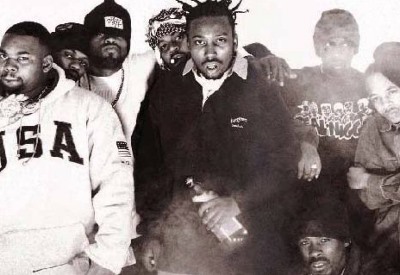
Apu Rambles: The Wonder of Rap Groups (and Their Possible Shortcomings)

by Apu

wu

I’ve always found rap groups to be interesting. And with that I’ve just won the award for the most generic opening sentence in a written piece for January 2017.

Music made by a good group (keyword: GOOD) can be the coolest thing you hear all day. It’s crazy hearing vastly different personalities colluding, bringing different perspectives, styles, and presences to a track while completely complimenting each other. Many times it can be more exciting to listen to a group than a solo artist; the constant change in performers keeps things fresh in a way that may not always happen when listening to a solo artist. You don’t know which group members will be on which track, or what each member will bring to the table. There’s a support system in the form of friendly competition, where each member pushes the other to go above and beyond, leading to some rappers having the best verses of their careers on group songs. And group music is different than posse cuts. While posse cuts can bring together huge rappers to make great songs, the vast majority of the time, there’s not nearly the sort of unity and fluidity that there is on group music when the mic is passed.

It’s a simple fact. Hip hop would not be where it is now if it were not for rappers forming crews and making music together. Whether it be the earlier years with Sugarhill Gang introducing hip hop to wider audiences, to Run D.M.C., the Beastie Boys, Public Enemy, NWA, Geto Boys, the Wu-Tang Clan, Onyx, Westside Connection… The list goes on and on. They were a staple of hip hop in the golden era, and remained to be a driving force in hip hop well into the ‘00s.

I don’t know why they were so big in the formative years, especially compared to now; maybe having a crew onstage helped hype crowds up while performing more effectively than having just a single rapper, leading to better shows and subsequently wider acclaim and greater success. Perhaps that’s why rappers still go up onstage with hypemen, even when they may not need one to help out when the main performer needs to take a breath. Whatever it may have been, there’s nothing quite like seeing a group together. There’s also nothing quite like seeing a group implode after the first album or two because of success changing the approach to making music, causing chemistry to fade and beef to ensue.

I personally think that the biggest contributing factor to a group’s greatness is chemistry. There has to be a foundation for the sound that a group will use, especially when members develop themselves as solo artists with sounds that deviate from the group sound. Take, for example, the Wu-Tang Clan. RZA created that dark, soul-sampled boom bap with Enter The Wu-Tang. However, given that Wu always meant to branch out to become solo artists, the following solo albums each had a different tone from the debut group album. Tical was more bassy and smoked out, Return To The 36 Chambers was muddier and more twisted, Only Built 4 Cuban Linx was more piano and string-driven resulting in a Mafioso tone, and Ironman was more driven by R&B and lighter soul samples. Aside from Liquid Swords, which was fairly similar in tone to Enter The Wu-Tang, they all had their own sound to them to reflect the personality and charisma of each member outside of the group.

However, when they reunited to do Wu-Tang Forever, they went back to a similar style as Enter The Wu-Tang: heavy soul samples and more classic boom bap. Sure, the sound had advanced, but the overall tonality still screamed Wu-Tang as a whole, as opposed to more Raekwon or Ghostface. They had the production base offered by RZA, which meant that other producers like 4th Disciple or Inspectah Deck had a blueprint to follow.

Of course, having that base meant that the subsequent group albums (and even solo albums) were prone to the flaws that came with the failures of RZA. Being that RZA was the de facto leader of the group, him losing beats in a flood ended up creating issues for Wu as time went on. After that, RZA’s decision to change his production style with his Bobby Digital persona made The W and Iron Flag sound off-putting. By the time A New Tomorrow came around, RZA sounded totally uninterested in making music; it seemed he would rather score movies and help Cilvaringz be a cunt.

But he was still the leader of the group, so they had to follow him.

It was a similar situation with D-12. D-12 has two members who produce: Mr. Porter and Eminem. While Proof was the spiritual leader of D-12, as well as musical when they were doing mixtapes and features, Eminem clearly led the group on the albums. Devil’s Night sounded almost like it could have been called The Marshall Mathers LP 1.5: Introducing D12. That’s not nearly even close to being a bad thing – that album is a classic to me. However, it did end up being a bad thing for them on D-12 World. Most of the songs that Eminem produced did not follow a D-12 kind of style. They were like less-gangster G-Unit beats, much like Encore’s production. The only possible exceptions to this are My Band, Bitch, and Come On In (which ended up sounding more like a Mr. Porter beat). Mr. Porter’s beats were perfectly suited to D-12, and showed a potential evolution in their sound from Devil’s Night that could have been very cool, as it was grimy but sillier and jazzier at the same time. Em’s leadership, however, prevented that sound from being explored more aside from songs that Em wasn’t even on. Had he passed leadership to Mr. Porter, the album may have sounded more like Barbershop and I’ll Be Damned and less like Leave Dat Boy Alone and Get My Gun.

While pure democracy in a group would likely lead to no progress at all, one person can’t be the leader for the entirety of the group’s albums. There needs to be a constant passing of the baton. Otherwise the leader may end up running the group into the ground. It seems RZA has finally understood that, because he’s given Ghost the wheel for the next Wu album. Given Ghost’s artistic style with live jazz instrumentation on fairly recent albums like Twelve Reasons To Die I & II, Sour Soul, and 36 Seasons, it will likely be a breath of fresh air for the group, rather than the aimless plodding of RZA’s production on A Better Tomorrow. I’m personally expecting it to be their best in 2 decades.

Groups without chemistry just don’t work. I already know I’m gonna get shitted on by underground hip hop fans, but I personally don’t think Slaughterhouse is demonstrates good group dynamic. Each member is a very talented emcee in his own right (although fuck Joe Budden for life for beating a woman into having a miscarriage). However, there is no feeling of unity among them. Every song that they do sounds like a posse cut. As I stated above, a posse cut can be cool, but if you’re gonna be a group, you have to sound like a unit. It’s weird too, because Joe Budden and Joell Ortiz do back and forth every once in awhile, but they don’t sound natural doing it. Nearly every song either boils down to a cypher that may or may not have a hook in it or an emotional track with each member just saying their piece and not trying to tie themselves into the rest of the group; oftentimes the verses may only share emotion in common and can be about completely different things which throws off the mood of the track. A group needs to have chemistry, otherwise it just doesn’t work. Unfortunately, Slaughterhouse doesn’t have much of it.
Slaughterhouse are also too similar to each other, which oddly doesn’t help their chemistry.

Another part of what makes some groups successful is the roles that members play. When Slaughterhouse do music together, everyone does essentially the same thing in a song. There’s no variety. You need some rappers to be the tough talkers, the more grounded members, and what is quite possibly the most important role: the clown. It can get tiresome to hear so many rappers talking about similar street subjects all the time; you need an ODB to your Wu-Tang Clan or a Sean Price to your Boot Camp Clik (RIP to both) to add some comic relief. The role that guys like them played helped to distinguish the groups from most other hardcore underground groups.

Everyone wants to be the toughest or most lyrical, and people get lost in the mix of everyone else trying to do that. When you put together a group of people trying to be tough or lyrical, that effect may get even worse. Throw a clown in there (who still has skills, mind you), and suddenly your presence becomes more impactful. You have someone who can still spit with the rest of the members, but is spewing clever, witty one-liners and creating a different reaction than the listeners get from listening to the other members. But it’s a fine line; you have too many members who clown around and you’re viewed as a comedy rap group, nothing to take seriously. So a group needs to be diverse, but still maintain similarities enough to where there’s still chemistry.

Groups are wonderful for hip hop. They’re a healthy mix of competition and brotherhood. I wish there were more groups out now; you’d think that with the increased usage of the internet in hip hop music that there would be more groups linking up from city to city, but for some reason that’s not the case. These days it’s always a wonderful treat to see a group either reunite, especially if they haven’t done music in years. With things in hip hop seeming to go back to the way they were (that’s a topic for another time, I don’t feel like opening that can of worms for the basement-dwelling stuck-in-the-90s hip hop nerds to feast on), perhaps we’ll see more groups being formed.

Exploring Other Genres: Sunbather – Braneworld

by Dustin

braneworld

8.25/10

A while back we started a segment called “Exploring Other Genres” to offer fellow hip-hop fans an accessible outlet to a variety of interesting music. More relevant to the here-and-now, our first piece in this segment was on Poor English’s self-titled debut EP. The feedback we received was overwhelmingly positive, and multiple people asked if we could recommend something similar. By coincidence a few weeks later, Poor English’s drummer Tyler reached out to us about another group that his band-mate Joe is involved in: Sunbather. Sunbather just so happened to have a thirty-something minute album out called Braneworld. Featuring sound distinctly different yet similar to the wondrous pop-punk tunes of Poor English, we were certainly interested in giving it a spin.

We fell in love with the album. In fact, it has been on regular rotation ever since.

As mentioned, there are similarities between the Poor English project and Sunbather’s sound on Braneworld; however, to not approach this album as a brilliant standalone work would be doing it a disservice. Sunbather’s sound is a little more punchy, marginally heavier, and a touch more dense. The way instrumentation is layered on this album is really gorgeous. The guitar work weaves in and out of riffs and licks, dipping between the hyperactive and laid-back in one swift motion. The rhythms are delicious, and provide a powerful driving force behind the leads. Sunbather create a “wall of sound” within their music at times. It feel bigger than it probably should, but it is excellent.

Every moment on Braneworld flows into the next seamlessly. The change-ups within songs are frequent enough to keep one guessing, but smooth enough that they’re nearly easy to miss. At the macro level, each track moves into the next without hiccup. At no time did it feel like the song progression was off. Given that album arrangement is one of the things it seems many artists fail at, it was refreshing to listen to one so skillfully laid out.

To put it more simply the transitions are super slick, period. End of discussion.

Though the album is distinctly rock, its quite interesting to see the band show their influences in other genres at time. For example, the song “Daily Dreams” has a distinct folk spin to it, and “Knucklehead” featured some synthetic sounds similar to that of the underground electronic punk movement. These forays into other musical realms broke up the album nicely, yet somehow sound cohesive in the overall scope of Braneworld. Perhaps more importantly, these moments are used quite sparingly. The band doesn’t become predictably experimental throughout the course of the album. It feels more like an adventurous treat at times, rather than part of the albums overall atmosphere.

It should be mentioned that the album atmosphere is, in fact, really well established. There’s something particular about it that just makes everything work together in harmony. To take a bit of a writers cop-out in lieu of better descriptive words: you will instantaneously understand upon listening.

If you’re still not convinced, look at it this way: Braneworld is rock-n-roll for the working class. In times of relative despair internationally, their music feels soothing. Sunbather brings a sense of wonderment to a rock scene that can, at times, feel way too cookie-cutter. Sunbather’s music also radiates a powerful sense of emotional awareness. The happy songs will lift you, and the more sad songs will offer musical solidarity. The vocals and instrumentation play together in a way that makes it nearly impossible to avoid being smitten with their tunes. It’s honest music, and every song feels heartfelt. There’s no attempt to achieve a level of robotic perfection, and the music is better for it.

Album Review: V8 – One Dog Night

by Dustin

odn

8/10

Welcome, ladies and gentlemen, to our very first review of 2017. This is actually a very special review for us, as it’s the very first piece of “early press” we’ve been able to contribute. When our friends at Filthy Broke Recordings agreed to send us a press kit, we were absolutely overjoyed. Though we didn’t get this out as early as we would have liked (stupid actual job causing mayhem), it has still been a pleasure.

Now, onto the review itself. You may be asking, “what album are they so hyped up about?” The answer is One Dog Night, by alternative rapper V8.

The first thing that stands out about One Dog Night is that V8’s vocal performances are really quite monstrous. You won’t find raps full of quotable punches and one-liners on One Dog Night, but it remains an unapologetically gripping listen. V8 has a charming gravel to his delivery on this album, coupled with a wonderful willingness to explore a range of vocal inflections. Whilst drawing you in with what he’s saying, V8 simultaneously begins to construct this dark-sounding environment vocally. The rasp and strain to his voice perfectly sets the atmosphere for what is a grungy album.

Buckle up, because the concept of musical atmosphere and environment are going to be overwhelmingly prevalent while discussing this album.

Backing up his vocals is an assortment of absolutely grimy production that feels nostalgic, yet fresh. One Dog Night’s instrumentation draws inspiration from a wide variety of sources, and it is ever changing throughout the duration of the tape. It’ll have you jamming to a powerful boom-bap beat, then immediately slap you over the head with something completely out of the box and experimental. To be frank, any attempt to verbally explain how diverse-yet-cohesive the production is on One Dog Night will not do it justice. That filthy grunge sound kicked into motion vocally was really well supplemented by the production on this album. A seamless marriage, if you will.

That filth (said affectionately) is further built upon by the usage of interview, news, and other samples between tracks. Though the frequency in which these appear is jarring at first, it quickly becomes a necessary part of One Dog Night.

One Dog Night is the kind of tape that taps into the essence of indie hip-hop that was established through the late nineties and early two-thousands. Those who grew up fascinated by the likes of Myka 9, Radioinactive, Busdriver, and any artist from the Project Blowed heyday will find a welcoming comfort in this album. It’s not the most accessible hip-hop release, but it’s not supposed to be. There are times where One Dog Night almost feels like too much at once; however, the energy and thought that is evident on this album rivals early indie-scene juggernauts, ultimately leading to an incredibly satisfying record. V8 goes against the grain, and his efforts serve as a reminder that abrasiveness can be done tastefully.

Those looking for something to throw on in the background will probably not enjoy this record, and it is beautiful in that way. One Dog Night forces you to pay attention with an in-your-face confidence that many would not be able to pull off.

The cassette release, coming via Filthy Broke, also looks quite intriguing. It is on top end of price point for a tape, but every order comes with a handmade leather case, so the dollar amount is definitely understandable. If you’re a cassette collector looking for something quite unusual, it might be worth having a look at. The cases are super unique, and it’s cool to witness an artist doing something out-of-the-box for a physical release. Really, it’s about as true to the indie mindset as you can get.

Though, they could be gone at this point as only a handful were created. So, you may just be shit out of luck. If that be the case, we sincerely apologize (just kidding, if you snooze you lose).

Lightning Pill Discusses Experimental Music, Helping the Community Feel Heard, LGBT-music relations, and More

by Dustin

lp

Sometimes you stumble across an artist that just has an aura about them that instantly signals they work on another level compared to most. Maybe they’re involved in social causes, maybe they’re workaholics, maybe they’re incredibly mentally dedicated to their craft and community, or maybe they’re all of the above. Such is this case with Lightning Pill. From experimental music crafting, to making sure others don’t feel left out in the cold, Lightning Pill is a lot of things to the do-it-yourself music community. We’ve been aware of his work for a while, and thanks to an introduction by IHeartNoise we’re able to provide an insight into the mind of one of the hardest working individuals you’ll ever have the chance to know.

Lightning Pill can be found on his Twitter, and website. His blog (mentioned in the interview) can be found at Revenge of the Persona Non Grata, and also at its official Twitter. Be sure to give him a look after you’ve finished reading this interview!

EN: First and foremost man, thank you for joining us today. It’s an absolute pleasure. I’ve interviewed quite a few musicians, and I always love working with those who are socially conscious.

That being said, for those reading who may be unaware of you, how would you describe yourself?

Lightning Pill: I am a singer-songwriter who mainly plays keyboard. I take on multiple genres, all which fit underneath bedroom pop, antifolk, etc. I also make beats every now and then. On my downtime, I blog for Afropunk, IHeartNoise and Revenge of the Persona Non Grata, a blog I began focusing on avant-garde/DIY Hip hop, r&b, jazz and electronica.

I also write poems every now and then, but nowadays, poetry is molded into song.

EN: Did being a DIY artist yourself inspire an ambition to write about those forging a similar path musically?

Lightning Pill: Yes. Very much so. I’ve been in the music-making game for years, and found a correlation between most great DIY artists. They want Pitchfork and SPIN coverage and find themselves ignored despite putting out great work. I literally spent all year finding new music through Twitter recommendations and affiliations because, I wasn’t exactly messing with the recommendations of bigger labels. I understood the need to be on bigger platforms, but you don’t need to do that with blogs such as Afropunk helping.

The second album I put out to Afropunk as a DIY artist was Humanbeyondrepair, an album about having Asperger’s Syndrome. I didn’t have the money to tour, didn’t have a huge following, no labels, and so on, but they covered me. I wished more blogs would do that rather than creaming over the same bands they will slag on later.

Twitter is chock full of original musicians and small labels who want to spread their name with no real help from larger platforms. Since they are what I am, I can’t in good conscience make them feel like no one is paying attention. So, I started RPNG. Really it started as a blog for avant-hop, since there wasn’t a huge niche blog for that. Then it expanded into me giving love to smaller acts trying to get on 2DopeBoyz, Pitchfork or Consequence of Sound.

EN: That’s very similar to the reasoning why I started Extraordinary Nobodies. I really respect that at a personal level, but I have to ask: why do you think it is that major outlets turn their ears off to experimental and DIY music?

Lightning Pill: It feels related as why major labels sign experimental acts: if you are engaging, accessible and at least sound like you have a chance in hell in the mainstream or something, then you are “in”. That’s bullshit too, considering that there are some great acts that do have a fighting chance at connecting with the general public.

It feels like going to high school and the “cool kids” either ignore or bully the weirder kids, only to find that they envy them. Acts like SassyBlack (formerly of THEESatisfaction), and even AJ Suede, can’t be found on 2DopeBoyz even though the music has a chance of reaching the public. Only one clipping. song can be found there, too. People are likely to turn a blind eye to artists that don’t have a huge following, and you get a huge following through either celebrity-based nepotism or “accessibility” within the industry.

Perfect examples are rappers and singers within Deathbomb Arc, one of my favorite labels. Excluding clipping., rappers like Signor Benedick, Hareld and They Hate Change don’t get the attention they worked for in their fields despite being really original and talented artists. They deserve to be known in the same corner as Death Grips and Kendrick Lamar. I had to take matters into my hands and write about They Hate Change and True Neutral Crew in Afropunk. Their coverage would probably still be fairly minuscule, if they hadn’t known that I write for them.

EN: Are there any other acts out there that you especially think aren’t getting the attention they deserve, or is it basically the DIY/experimental community as a whole that’s being ignored?

Lightning Pill: It’s a funny thing. If they do get coverage, TheNeedleDrop and Pitchfork are the ones doing it. Still though, a good amounts of the DIY community pretty much live by their wits. Artists like DijahSB got into music and despite how great her music is I don’t even see Aftopunk covering her, and I sent in a blog about her Blue album.

EN: So, running your own publication very much came out of a place of frustration.

Lightning Pill: It started as a way to fill in the niche that 2DopeBoyz and XXL didn’t, couldn’t or won’t touch. It snowballed into a frustration that I shared with artists over making great music but not getting attention despite how “great” they are. This inspired me to take the reins, and I encourage many others to use the blog as a way to give back to your community. The moment I started the blog, I had plenty of artists say they loved my writing. JPEGMAFIA even said my kind of journalism and research rivals that of empty journalists and music critics today, which made me happy. I’ve even had plenty of people approach me to write something for them. I had no right to turn them down because I was, and still am, them.

Type in THEESatisfaction, milo, F. Virtue, Cakes Da Killa, or clipping. in 2DopeBoyz and watch it come up with nothing. The only real explanation I can find is that their blog mostly focuses on artists who aren’t too experimental, as to gain a huge following.

While I am here, I do want to shout out one slightly well-known blog that does what I do: UGSMAG. They cover nothing but that underground shit. Some avantgarde stuff, too. That blog, and the dearly-missed Potholes in My Blog, inspired me to write the blogs I do.

EN: Do you find it difficult to balance your personal life, music, and working on other projects such as journalism?

Lightning Pill: Only because when I get into these projects, I REALLY get into it. When I write about projects, I listen to 5 albums a day. After that, I find myself wondering when I’ll have enough juice and focus to put into my music. When I do music, I get really into it too. It gets hard because I don’t do any of this to merely half-ass it. I’m in it for the long haul… Even if I don’t get paid for doing any of it. That’s how committed I am to what I do. As for my personal life, people know good and well I don’t sit on my bed and do nothing. I’m always working on something to occupy my time. Whether it be hobby or not, I do it because I find fulfillment in it.

Admittedly, it does get hard making sure that when I am head deep in one thing, I don’t neglect the other.

EN: Throughout the year I saw you getting a lot of love from various outlets and labels, such as Deathbomb Arc for instance. How much does it mean to you to know that what you’re doing is being noticed?

Lightning Pill: Man, it means a lot! Imagine years of making music only to find out that I’ve got fans purely from being deep into the underground. This wouldn’t have been possible without Ilya of IHeartNoise, who heard me and has been hyping up my instrumental works, mostly. But since I started pushing everything, not one person has told me my stuff sucked. One dude did, but that was on a couple of fun bars over Jonwayne beats that got a lot of attention, and got me followed by Jonwayne himself.

The Deathbomb Arc thing had me taken aback because I’m a big supporter of the label. The reason being that Deathbomb is one of few labels that aim to surprise you with every artist they add to their roster. So when they asked me about doing a song for them, I was like “what?!”.

I have fans in Ceschi, Dionne Sheree, Ilya, They Hate Change, and plenty in the DIY/experimental (mostly hip hop) community. I feel blessed and it makes me want to work hard to see to it my next few albums and mixtapes don’t suck.

EN: On that note, do you think more artists need to take a second to step back and enjoy the small scale love they receive, rather than desperately trying to “make it big”?

Lightning Pill: In a short answer, yes.

In a long answer, I understand why people want to get big. They do it for money, for attention, to reach people and change the landscape of music. Everyone has reasons as to why they want to get famous. But even if I don’t ever reach the stratosphere, it’s still heartening to know I have a cult following. I do music everyday and never get paid, but it makes me want to keep going knowing people are waiting for my next work.

I was one of those people who wanted to do music to get paid for it. But the more I made music the more I slowly accepted I may never get paid, or that I may never get known to the level that, say, Atmosphere is. But even having a little fans may give me a new perspective. Perhaps making music for them will lead to them spreading the word and finding out that my music can get better and reach people who aren’t just blindly following me. Some people will become Jay-Z and Lil Wayne and some people will be Atmosphere and Run the Jewels. Either way, just knowing one person loves your work is heartening. All one has to do is keep going and keep making your best stuff, keep trying to one up yourself and watch people slowly reveal that they have been a fan of yours.

I think in time I understand why people say that knowing people love your work and are waiting for the next one is better than money. Often times, if people really love and support you, they’ll pay for it when it is for sale. I’d be just fine being the next Ariel Pink, Dam-Funk or Captain Beefheart. People should take any blessing that may come their way in the form of true love and appreciation for what you do.

EN: I noticed on the RPNG Twitter, you note things such as being a LGBT friendly site. I think that is awesome, and I wanted to ask how important it is to you to be open in your support of such causes?

Lightning Pill: Very much so, seeing as how there are a lot of gay rappers in existence. One of the first I found back in high school was Deep Dickollective, helmed by Juba Kalamka. Their music is basically conscious hip hop from a gay man’s point of view. Since then, I found rappers like Melange Lavonne, God-Des and She, and more recently Cakes Da Killa, LE1F, Mykki Blanco, Abdu Ali and F. Virtue. All of them are getting shunned from larger hip hop for being gay, and hardly ever pushed towards a straight demographic. They are part of the reason why I stretched my blog towards people who just plain can’t get bigger attention over stupid shit.

I read in SPIN Magazine that Juba heard some sites pull the “there’s nothing we can do” stance for making gay music more mainstream… To this day, the only gay rapper the world can even mention is Frank Ocean, who only spit a few bars on a few songs.

It’s very important to notice all dimensions of music in general. People need to stop being brand new about rappers just because it doesn’t fit their universe. I just told Cakes Da Killa, “people would rather hear some mediocre ass dude spit bars than to hear you rap. That should change!” That stemmed from me praising clipping. for having Cakes Da Killa on a track, and working with an actual gay rapper. I couldn’t give less of a single fuck about a person’s sexuality. If you got true bars and can stand out musically, fuck everything else.

I cover LGBT rappers, Christian rappers, anyone who can bring something truly fresh to the table.

EN: Do you think that someone like Fly Young Red, who basically turned the gay rap scene into a meme with “boy pussy” did more harm than good for the LGBT community in hip-hop?

Lightning Pill: Eh… I think we should be past the whole “harm and good thing”, seeing as how there are multiple dimensions of anything LGBT. Where there are people who make gay people look hypersexual, there are people putting a good name on it. It’s the same as black people showing they have respect and intelligence among ratchets thinking they are acting white.

Of course it is doing “harm” as it is showing gay people as hypersexual, rather than people who have more to talk about than just that. You know? But, the same can be said about demands that Nicki Minaj and Rhianna be less aggressive with sexuality in their music. They are doing nothing more than being a mirror for the culture we live in. The only difference is straight people make AIDS and femininity jokes, while giving or getting AIDS from the next girl with a fat ass and a pretty face. Where there is a Fly Young Red, there’s a Cupcakke or multiple amounts of dudes talking about running a train on your girlfriend.

That’s just the way it is, but the ones who have yet to see it that way are straight people.

EN: That’s a great approach to conceptualizing it. My cousin (who is big into LGBT activism, with her girlfriend) has already remained conflicted on people like Fly Young Red, so I thought it’d be interesting to get another perspective.

I’m also very curious on your thoughts about hyper-masculinity in hip-hop. I interviewed Kash Jordan last year, and he really wanted to see hip-hop move away from the trend of hyper-masculine music. Do you share that sort of view?

Lightning Pill: Yeah, and as fast as possible. Back in the day, they said hip hop was for the outsiders and hip hop is revolutionary. If that’s true, then why are all these masculine-ass drunk dudes with guns taking over the game? At the end of the day to me, they are more rap than hip hop. The difference between the two is like the difference between rock, alternative, and punk.

Hyper-masculinity is doing a lot of harm, in that it is controlling the idea that men don’t have feelings. We are hyper-violent, hyper-sexual ne’er do wells with hella masculinity problems anyway. Even worse, some people encourage this shit. I thank God for Kash Jordan and Young Thug aiming to tear that shit down, because hyper-masculinity is a fucking facade. All the way. Show me a man who flexes their manhood like diamonds, and I’ll show you a weak dude who probably wishes he was as brave as LGBT types and hides insecurity with a gun or an equally masculine girlfriend. Or show me a dude who talks shit to other rappers, and you’ll see a woman revealing him to be a “fingerinthebootyassbitch”.

Hyper-masculinity is stupid because it denies that men have a feminine side, which they do. Everyone has a little bit of something. Every man has a bit of femininity and every woman has a bit of masculinity. Point blank! It’s just a matter of when you bring it out, at what time, for what. You know? It gets dangerous, if not tricky, when there’s a clear imbalance of the two, but what can one do about that? You know?

EN: Yeah, I get what you mean – in a lot of ways it seems like hip-hop as a whole is going through a bit of an identity crisis, don’t you think? Like, there’s the hyper-masculine old guard, then this new wave struggling (but trying) to break that binary but facing resistance.

Lightning Pill: It is, but it is necessary. They say music dies when you put out the same shit and things get hella stale… Actually, I wouldn’t call it an identity crisis. Maybe an exploration to see all of what hip hop and rap can actually be and do. It’s a revelation of different dimensions of hip hop that was mostly just banished to the underground. It’s intriguing, and long overdue.

EN: That brings me to my next question, what is your biggest gripe with hip-hop currently? Is it the hyper-masculine environment, or something else?

Lightning Pill: My frustration with hip-hop mostly lies in people’s thought that hip-hop should be one-sided, hypocritical and ignorant of their influence. The same people who admit being influenced by Biggie and Tupac are the same dudes who say that their music is “just music” when they get called out on their ignorance. Anytime these people say they don’t want to be role models, I respect that; but, if they didn’t want to be role models, then they should never have gotten famous… Where everyone can see them and learn from them.

Wherever there’s a person just trying to get a check, there are a group of kids on the bus talking about “smoking dicks”. And the parents only care when there’s music that disturbs the general idea of how society is. They are no less ignorant than anyone else. To them, mainstream music is the only music there is, until someone busts out a hip-hop album that’s better and possibly more revolutionary. The trouble with mainstream rap is that people always think “this is how it is”, and that’s bullshit. There is always more to the world than what people see… Or maybe their ignorance is willful. Either way, I hate that hip-hop wants to use their ignorance as a crutch for why some of them just want to make money and don’t want their music to do anything else. Once you are on the Billboard, you are a fucking role model to someone! Deal with it!

Also, I am not entirely comfortable that entertainment has an upper hand over education at times because of how catchy and gripping the music is. People think all you got to do in music is make hits about what you know and don’t know, but how many of them even know how to play an instrument? How many of them studied the music business to figure out how to get ahead other than just making hits? Kids are like sponges. They learn from artists because in their eyes, artists and entertainers are more intriguing. That’s their escape, and it eventually turns into their education whether they believe it or not. So, when something like hyper-masculinity is a thing, more men are being taught that that is what being a man is. We both know that is absolute bullshit and a complete detriment to their sense of humanity.

EN: It sounds a lot like you want prominent musicians to realize that they’re role models and use that elevated status more wisely.

Lightning Pill: Do they have a choice? They are literally in the face of the general public. Men, women and children of all ages, sexes and creeds see them. They don’t have to completely change themselves, but if that’s what they want to maintain, then they have the option of embracing the private life of others. Hell, they could be underground where you can be anything or anyone and nobody can censor you. Hell, Cupcakke is a rapper who has turned down a LOT of record label offers to do it herself, which might afford her some lowkey privacy compared to much bigger types. As soon as you are eligible for Teen Choice Awards, you should expect eyes on you. Not just in terms of fame, but in having loyal “followers” in every sense of the word. It is inevitable and raging against it would be hella useless.

Though, I wouldn’t have minded much if Cupcakke went bigger because I predict her time infront of the spotlight will be spent offering something for the kids as well as adults.

EN: So, transitioning to something a little more about you as an artist. What can we expect from you in the coming year both musically and otherwise?

Lightning Pill: I have been told multiple times to never tell people things before they are done, or before they happen… But, I have two albums and a long mixtape coming up next year. The long mixtape is called Cincuenta, which I can say is my only truly guaranteed project. The rest might fall to the wayside if I lose motivation and seek to do other things musically. But Cincuenta is a yes for next year.

As for performances? I am working on performing more, and maybe testing out Concert Window or my own YouTube concert inspired by Couch by Couchwest.

EN: I like that you’re always trying innovative things like the concept of a YouTube concert. Have you ever released any physical copies of your music? If not, do you plan to?

Lightning Pill: I haven’t. I wish I had the funds to construct physical stuff. I’m still trying to find labels interested in releasing either cassettes or CDs. For now, it all remains digital. Though, I recently talked to Become Eternal, and if all goes well, they will make cassettes of my old ambient work. So, stay tuned there!

EN: A bit of a random question here, but my curiosity is eating me alive. Where’d you get the name Lightning Pill, and what’s the meaning behind it?

Lightning Pill: I have two explanations for this, both of which actually fit. One day I was walking home listening to Patrick Wolf’s The Magic Position, this whole time I pictured him as this glam folktronic figure. I was already trying to work out a sound that’s like folk music using electronic instruments, as opposed to using electronic instruments to manipulate the sound of folk instruments. I have a tendency to put myself in artist’s shoes to keep my imagination going, and I named myself Lightning Pill.

I thought about it a little further another day when I remembered seeing a cartoon where all of the farm animals ate the pills that were supposed to control the weather. If an animal ate a sunny pill, the sun shines out of your stomach. If you are a rainy pill, a rain-cloud will constantly follow you. If you ate a thunder and lighting pill, your insides will get shocked.

So, my name is a bit more extroverted than my music is willing to match, but Lightning Pill stuck around longer than Charcoal Sketches of the Invisible Man (a name I was now willing to use when in a band or collaborating with an artist).

EN: Alright my man, we’re basically at length for this interview. So my last question is, is there anyone you’d like to shout-out, and show some love to, to close things off?

Lightning Pill: The most important person I have to shout out is Ilya of IHeartNoise. If it wasn’t for him, who knows if, one, I’d be making music, two, you’d know that I made music and three, I’d be blogging or sticking with the idea of making experimental music. He was the first ever person who had not only been blogging about my music, but actually championed and listened to my work. Not to mention, on Twitter, he constantly shouts me out to people looking for new music, new writers and all of that. Without that, who knows if you’d be here talking to me. Who knows if I would be getting as much blessings as I do now?

I’d also like to thank those who have listened to my music, read my tweets, and checked out any recommendations I had sent their way. I’m doing my very best not to let anyone down. It’s a hard process, but I didn’t adopt a workaholic persona for nothing. Thank you to all reading.

Apu Rambles: This Year, and the Future

by Apu

yearend

Well, it’s December 28th (well, probably not when this piece goes up). So I guess it’s the time of year to talk about shit I liked and shit I didn’t like, because I’m a person who sometimes writes for a music blog and that means everybody on earth is just dying for my input even though nobody asked.

There are a fair amount of albums this year that I liked. Tribe’s We Got It From Here…Thank You 4 Your Service is what I now consider the pinnacle of a group reuniting and going out. I obviously really liked the two albums I reviewed (Kuniva’s A History of Violence Vol. 2 and Fatt Father’s Veterans Day). I was impressed by Snoop’s Coolaid, and Aesop’s The Impossible Kid was a cool listen, as were Marv Won’s Soundtrack To Autumn, De La Soul’s …and the Anonymous Nobody, and Kendrick’s untitled umastered… I didn’t mind Royce’s Layers and T.I.’s Us Or Else: Letter To The System… And as I sit here that’s all I can think of at the moment of writing this, although I’m sure there’s great music I am either forgetting came out this year or I haven’t had the chance to listen to yet.

However, dope as those albums were, there were only two albums that came out this year that really blew my mind. Albums that I knew were something special from the first time I listened to them; where that feeling didn’t go away after two listens, or three, or ten…

Those albums were Atrocity Exhibition by Danny Brown, and Run The Jewels 3 by a duo whose name I’ve forgotten.

I think based off that little incomplete list of albums above, it’s clear that that my taste tends to be a little lot more rooted in traditional hip hop. However, it ended up being Atrocity Exhibition and RTJ3 that really stood out to me. Danny’s album in particular is so far from what I normally listen to that I was incredibly surprised at how much I liked it when I was hearing it for the first time, especially given how stubborn and set in my ways I am. It was (and I’m using someone else’s description for it, go ahead and sue me for plagiarism***) some weird industrial post-punk shit, way far away from the end of the musical spectrum that I generally find to be appealing.

Normally, I’m really, really not into industrial hip hop. It’s a little too abstract for my pea-brain to be able to comprehend. Most of the industrial hip hop that I’ve listened to contains weird sounds, and rapping that’s too… out there for me to like. It’s just my personal opinion, I don’t connect to it. So for a little bit, it sort of perplexed me as to why I loved Danny’s album so much. I mean, sure, the rapping was great, but I had never imagined that I would gravitate so much towards the production. However, I listened to it more and more, it started to click.

Danny Brown put his own spin on a typical Detroit sound. There are moments on this album that remind me very strongly of the Fat Killahz. “Dance In The Water” sounds similar to “The Fat Song.” The production on “Lost” sounds reminiscent of something you’d hear Fatt Father and/or Marv Won rap on. “Get Hi” screamed King Gordy. However, they weren’t exactly the same. The production on Atrocity Exhibition was warped beyond our dimension; it sounded like it was what Danny wanted us to think went on in his head when he was on drugs.

That didn’t matter though. It did what many other industrial rap acts that I’ve listened to don’t. It stayed hip hop. It’s a lot harder to blend two genres and stay hip hop while trying to go industrial than it is to just make the jump over into industrial. Atrocity Exhibition did its best to get as far away from typical hip hop production as it could, but it made sure to remain rooted in the genre in a way that was familiar. There are hipsters who aren’t versed at all in hip hop who may get mad and try to tell me I’m wrong and that Danny’s album was so good because he abandoned traditional hip hop, but I couldn’t disagree more. He didn’t abandon hip hop, he just blended genres together, seamlessly, without making it too on-the-nose or overt the way someone like Yelawolf does these days with his terrible outlaw country pop rap.

Danny blended genres and kept a hip hop attitude. In doing so, his album became the most creative, effectively experimental hip hop album I have ever heard and love to the degree that I do.

Then I got to thinking, and it began to make sense as to why I enjoyed Run The Jewels from the very first time I listened to them. El-P’s production generally consists of synthesized drums and distorted instruments, far from the heavy bass and knocking drums of what you’d think of when you think of New York. However, he keeps the gritty, Brooklyn vibe to it. The way the beats are done, it sounds like they’re looped in a way similar to the sampling done by a typical New York boom bap producer, even when nothing is being sampled. In fact, on some songs, particularly “Legend Has It,” “Down,” “Thieves!” and “Thursday In The Danger Room,” the production almost sounds like futuristic boom bap. It’s very unlike what I had originally expected industrial hip hop to sound like, before I started to listen to their music, because I had heard several songs that didn’t sound anything like good hip hop (or music [sorry, not sorry]) to me.

Right now, it seems like hip hop is in limbo, sonically, as far as what the next representative sound will be. I get the feeling we’re going to see the current phase of trap fall out of popular favor in the near future. There’s a lot of different sorts of experimental-sounding music coming out. I think Kendrick may have spearheaded it last year with To Pimp A Butterfly. Although the mumble/trap aspect of hip hop is sinking to new lows with irredeemable garbage being made by guys like Lil Yachty and Desiigner, there’s new climate, where it seems like people are starting to throw new ideas against the wall and seeing what sticks. I actually don’t think there’s been a time like this in hip hop since I’ve been a fan. There’s an air of artistic freedom that I think may be starting to arise with the prevalence of independent acts. Whatever it is, I think we’re going to be coming out of the mumble rap phase, at least in the next 2 or 3 years.

I want to see the next phase of hip hop be the style of industrial/alt-rap that I’ve been discussing. It seems to be catching on as time goes on and the general atmosphere of hip hop becomes more experimental. It doesn’t even need to be done to the degree that it’s done by Run The Jewels or Danny Brown on Atrocity Exhibition. Black Milk, for instance, has been becoming more and more experimental with his production with every release; the distorted keyboards, the bass, the drums, the vibe. It started on his Tronic album, and on his last album, If There’s A Hell Below, it seems like he’s heading in a very exciting direction, while still remaining firmly rooted in hip hop. I want to see more of it.

That’s not to say that I want to see artists from the 90s try to be experimental just because it’s what’s popular. I want to be clear and say that I want upcoming artists to participate in making this sort of sound. You know how it sounds sort of desperate (bordering on pathetic on occasion) when a rapper 20 years deep starts rapping on trap beats and using autotuned hooks? It’d sort of be the same kind of thing. There’s nothing wrong with staying in your lane and doing what you know, so long as your own artistry doesn’t regress or stagnate. Do things naturally. With rapper/producers it’s different, because producers have a different mindset, so guys like El-P and Black Milk who have been around for a while can get more experimental organically. But I want the industrial/experimental sound to be like how right now with trap, where it’s the sound that most new and upcoming rappers want to jump into and start their [non]careers with.

Busta Rhymes said in a Westwood interview this year something that I found really interesting. He spoke about the acts who seem to be succeeding in making quality music have something in common. They keep their feet planted in the essence of hip hop. They don’t necessarily make the hip hop of the past, but they keep the spirit and vibe of hip hop while venturing out to do their own styles of music. He says that the trap shit that even his own artists do is cool in the moment, but the really timeless, transcendent music being made by rappers is the music that remembers that it’s hip hop. I really like what he was saying, and for the most part, I agree with him wholeheartedly…but what I liked most about the interview is that Bus’ got Westwood to sit quietly without spouting some loud, unfunny nonsense for more than 3 minutes. But yeah, what he was talking about is exactly why albums like RTJ3 (and RTJ’s other two albums) and Atrocity Exhibition are so effective while being so experimental.

I tried to articulate all of this the best I can. I’m not very well-versed in industrial hip hop so I may sound like I don’t really know what I’m talking about. I hope I got my point across. In any case, I’m interested in what the future of hip hop will sound like. If it sounds anything at all like what I was describing then I’m on board.

***I’m sorry, I just wanted to look cool. Please don’t sue me.

Album Review: Run the Jewels – Run the Jewels 3

by Dustin

rtj3

9/10

Twas the night before Christmas and all through the house, not a creature was stirring… Aside from Killer Mike and El-P, who decided to surprise release Run the Jewels 3 as a Christmas present to their fans! For those unaware, Run the Jewels is the collaborative effort between Atlanta based emcee Killer Mike, and New York’s own producer-slash-alternative-rapper El-P. The duo worked together on Killer Mike’s 2012 solo album R.A.P. Music, before releasing the first Run the Jewels album in 2013. Run the Jewels 2 would come roughly a year later, and the jewel runners have been preoccupied selling out shows and touring the world ever since.

But after more than two years the third installment is finally here. The main question most will probably be asking is, “was this really worth the extended wait”? The answer is a simple and sweet “hell yes”.

The atmosphere on Run the Jewels 3 is truly terrifying. Mike and El take all the anger of the current social climate and twist them into songs that knock hard enough to give a listener whiplash. Though the album definitely has tongue-in-cheek moments, and hilarious one liners at times, the overlying tone is one of bottled rage being unleashed upon the world. Even the tracks that fall more in line with classic brag-rap have politically based lines tucked in ever so cleverly; moreover, none of the social commentary on Run the Jewels 3 seems forced. Killer Mike and El-P did an excellent job of making sure that lines actually fit where they’re placed, and don’t detract from the overall vibe of a song.

We return from the depths of the badland,
With a gun and a knife in our waistband,
Went to war with the Devil and Shaytan,
He wore a bad toupee and a spray tan.
(Killer Mike on Talk to Me)

Run the Jewels do show their emotional range at times too. For instance, the song “2100” delivered a beautifully sad-yet-uplifting anthem of solidarity for trying times. “Report to the Shareholders” and “Down” also take on a much more mellow sound, breaking up the waves of braggadocio and fury.

Features on this album are used relatively sparingly. For the most part, guest artists are limited to a hook or the odd short singing verse (mainly Tunde Adebimpe on “Thieves!”). Danny Brown provided an absolutely insane and hard hitting feature on “Hey Kids (Bumaye)”, as one would expect. There’s also a special unlisted guest feature who absolutely shredded their verse (but we won’t spoil the surprise, so you’ll just have to listen and find out). Overall, all the features were wonderful and added positively to the songs on which they appeared.

Good day from the house of the haunted,
Get a job, get a house, get a coffin,
Don’t stray from the path, remain where you at,
That maximizes our profit,
Is that blunt?,
Oh well, hell, so’s this boot,
We live to hear you say “please don’t shoot”.
(El-P on Don’t Get Captured)

El-P’s production on Run the Jewels 3 is a treat to the ear. Everything felt much more true to the style he’s developed over the years, in comparison to the stripped down instrumentals on the first two group albums. Some of the beats on this record feel absolutely enormous, and dense to the point that one can pick up a new sound upon every subsequent listen. Fans of El-P’s solo discography will notice that some instrumentals almost feel like throwbacks to his previous works; however, everything has progressed into a heavy, angry, bass intensive style that fits perfectly under he and Mike’s vocals.

It needs more time to digest, but Run the Jewels 3 may have the most enjoyable production of the three records. Given how acclaimed the instrumentals from the first two are, that is saying a lot.

There’s really not much else to say to sum up Run the Jewels 3. It’s a face-melter album that may just make you want to punch a hole in a wall. Killer Mike and El-P closed the year by surprise dropping one of the best albums in 2016. They also released it for completely free, so really there’s no excuse: check this out as soon as you can. Even if you’ve never been a Run the Jewels fan before, do it. Do it right now.

Top 15 albums of 2016

by Dustin

2016albums

Ah, 2016 is nearing a close, which means we get to do some reflection. Like every other music blog on the internet, this means we’ve decided to put together a top albums list. It helps us ignore the fact that we’ve completely run out of article ideas for the time being, and hopefully helps distract you from the festering pile of manure that has been 2016. This list is also not limited to hip-hop, which I’m sure is confusing. Now, grab yourself a bowl of popcorn and dig into the list that’s almost certain to make you feel some degree of outrage.

Also, thank you to everyone who has supported us this year. As much as we tend to be a cynical bunch at times, it truly means a lot. You could even say that we love you… In the platonic sense, of course.

15. The Veils – Total Depravity
Total Depravity was a very interesting alternative rock release for many reasons, among those being the groups collaboration throughout with independent hip-hop mainstay El-P. At the very least this would have been an incredibly solid alt-rock album, but the odd touches of hip-hop and electronic influence made it something really unique. It feels a bit inconsistent at times, but Finn Andrews’ and company brought a performance more than worth the purchase.

14. Mr. Lif – Don’t Look Down
It’s always special to see one of the old Definitive Jux crew doing something great years after the label stopped operating; moreover, it was really awesome to see Mr. Lif return to the rap scene after nearly seven years to delivery an incredibly solid album. Don’t Look Down was thoughtful, well written, and felt like a modern update to the underground sound Definitive Jux spent so many years dominating.

13. DIIV – Is The Is Are
Is The Is Are proved to be quite the step up from the alternative rock group DIIV. Though it certainly has moments that felt like they fell a little short (mostly the singles), and perhaps could have used some trimming, Is The Is Are was a wonderful album. The dreamy, reverbed out, sound was equally addictive and catchy. Don’t be surprised if you feel like you’re melting while listening, because it sounds like melting. Does that make sense? No? Okay… Moving on.

12. BADBADNOTGOOD – IV
The fourth BADBADNOTGOOD release may be a little more commercial than their previous efforts, but it also has some of their most engaging and accessible material. It should be noted, however, that the group managed to stay grounded in their roots on IV. The sound evolution is notable, but they didn’t lose themselves. The features on the album all did a really wonderful job, as well, with artists such as Mick Jenkins and Sam Herring providing vocal relief from pure instrumentation.

11. Open Mike Eagle & Paul White – Hella Personal Film Festival
Admittedly, our review on this album didn’t paint it as brightly as it should have. Hella Personal Film Festival turned out to the the type of album that took some time to fully sink in. Perhaps it was Mike’s calmer demeanor, or maybe it was the slightly different production provided by Paul White. Either way, Hella Personal Film Festival was a stunningly relatable album. Mike Eagle resumed his role as rap’s most down-to-earth everyman while gliding with ease over the off-kilter production. Hella Personal Film Festival lacked some of the catchy standouts like some of Mike’s other material, but as a whole it may be his most solid release to date.

10. Koi Child – Koi Child
This Australian hip-hop and jazz band brought one of the most engaging listens of the year with their self-titled debut. Recorded on a remote island, Koi Child’s use of live instrumentation and energetic vocals created an incredible atmosphere. Though the album may not be as socially rooted, it seemed to take a similar approach to music as a group like The Roots. Oh, and Tame Impala’s Kevin Parker executive produced it, so there’s also that.

9. Aesop Rock – The Impossible Kid
Aesop is notorious for hiding his true meaning deep within extended wordplay and a massive vocabulary, but The Impossible Kid saw him take a step back to allow us into the more personal aspects of his life. This album proved to be one of his most accessible, emotional, and at times humorous releases in his discography. It almost seemed to have given him new breath as an rapper. The production was also very good, particularly the rock inspired drum work.

8. Russian Circles – Guidance
Russian Circles have always suffered a bit from inconsistency with their albums, but Guidance felt like them at their very best. This album was ruthless, hard hitting, and incredibly dense. Any shortcomings from the band’s previous efforts seem to have been corrected, and what’s left is a beautiful post-metal album with ample replay value. Prepare to have your mind melted by something new every time you revisit Guidance.

7. clipping. – Splendor & Misery
Coming in at the sixth spot on this list is clipping. with their “space slave opera” album, Splendor & Misery. The experimental rap trio certainly put out their best and most consistent work with this effort. The story on the album was concise, and supplemented flawlessly with their harsh, noisy, and space inspired instrumentals.

6. Ka – Honor Killed the Samurai
Ka is very much an underrated gem within hip-hop with his incredibly consistent discography. Honing his distinct chamber rap style, he pushed himself even further with this year’s Honor Killed the Samurai. This album was the dose of penmanship many have been craving, and the stripped back instrumentals allowed Ka’s vocal performance to be the star of the show.

5. FLANCH – FLANCH
FLANCH was one of those records that came out sounding like nothing before it. It’s a genre breaker in many ways, playing with hip-hop, indie, electronic, noise, and various other genres within its relatively humble running time. The religious and internet-era theme through the tape echoed painfully relatable. FLANCH was a haunting release, and one well worth of being in the top five of the year. For something so impossible to describe it is truly a beautiful work of art.

4. David Bowie – Blackstar
Given the context of this albums release, it seems reasonable to expect that it will be near the top of most album lists for 2016. Unfortunately, what many will fail to talk about is the fact that the music of Blackstar is absolutely gorgeous in its own right. David Bowie didn’t shy away from showing experimental-noise influences on this record, and it paid off wonderfully. Stripping away that context of his death this would still be one of the top albums of the year, and certainly one of Bowie’s best in years. On a blog with less hip-hop focus, this album would probably be closer to the one spot on a year end list. It was that good.

3. A Tribe Called Quest – Thank You for Your Service… We Got it From Here
This is another release where as much can be said about the context as there is about the music itself; however, that shouldn’t take away from the fact that A Tribe Called Quest managed to seamlessly update golden era style into a modern hip-hop classic. There’s not a track that felt out of place on Thank You for Your Service, and the music is paired with an equally impressive message at times. Given that Tribe hadn’t released an album in 18 years, it was absolutely incredible to see them smoothly slide back into hip-hop. Rest in Peace, Phife Dawg.

2. Run the Jewels – Run the Jewels 3
Fortunately due to absolute dumb luck (or possibly laziness), the surprise Christmas release of the much anticipated Run the Jewels 3 didn’t mess up this top albums list. Isn’t that fantastic? It sure is. Anyway, Killer Mike and El-P’s consistency was really given an opportunity to shine on Run the Jewels 3 and they did not disappoint. The third installment from the duo brought 50 minutes of punchy, in your face, bass-heavy, cheeky, and insightful hip-hop. The overall sound is much more similar to El-P’s solo work than the previous Run the Jewels’ albums, but it worked out excellently to craft an album which feels slightly different yet familiar.

1. Danny Brown – Atrocity Exhibition
Honestly, if anyone was going to put out a truly revolutionary sounding hip-hop album it was going to be Danny Brown, and he did. Atrocity Exhibition (borrowing its title from a Joy Division song) is absolutely phenomenal. This album was spacey, unique, and absolutely insane. Atrocity Exhibition felt like a bad drug trip in all the right ways. Once it ends, you feel as if you need to get some fresh air; however, don’t be surprised if you find yourself revisiting this album over and over. Atrocity Exhibition was incredibly disorienting, and catching everything at once felt near impossible. This is a hip-hop album that sounded like nothing else before it, and it truly earned the title of best album in 2016.