Apu Rambles: The Wonder of Rap Groups (and Their Possible Shortcomings)

by Apu

wu

I’ve always found rap groups to be interesting. And with that I’ve just won the award for the most generic opening sentence in a written piece for January 2017.

Music made by a good group (keyword: GOOD) can be the coolest thing you hear all day. It’s crazy hearing vastly different personalities colluding, bringing different perspectives, styles, and presences to a track while completely complimenting each other. Many times it can be more exciting to listen to a group than a solo artist; the constant change in performers keeps things fresh in a way that may not always happen when listening to a solo artist. You don’t know which group members will be on which track, or what each member will bring to the table. There’s a support system in the form of friendly competition, where each member pushes the other to go above and beyond, leading to some rappers having the best verses of their careers on group songs. And group music is different than posse cuts. While posse cuts can bring together huge rappers to make great songs, the vast majority of the time, there’s not nearly the sort of unity and fluidity that there is on group music when the mic is passed.

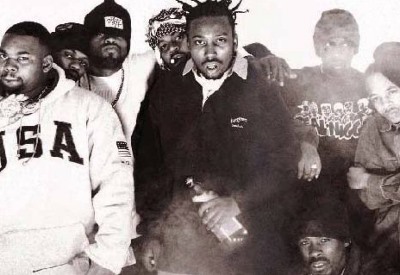
It’s a simple fact. Hip hop would not be where it is now if it were not for rappers forming crews and making music together. Whether it be the earlier years with Sugarhill Gang introducing hip hop to wider audiences, to Run D.M.C., the Beastie Boys, Public Enemy, NWA, Geto Boys, the Wu-Tang Clan, Onyx, Westside Connection… The list goes on and on. They were a staple of hip hop in the golden era, and remained to be a driving force in hip hop well into the ‘00s.

I don’t know why they were so big in the formative years, especially compared to now; maybe having a crew onstage helped hype crowds up while performing more effectively than having just a single rapper, leading to better shows and subsequently wider acclaim and greater success. Perhaps that’s why rappers still go up onstage with hypemen, even when they may not need one to help out when the main performer needs to take a breath. Whatever it may have been, there’s nothing quite like seeing a group together. There’s also nothing quite like seeing a group implode after the first album or two because of success changing the approach to making music, causing chemistry to fade and beef to ensue.

I personally think that the biggest contributing factor to a group’s greatness is chemistry. There has to be a foundation for the sound that a group will use, especially when members develop themselves as solo artists with sounds that deviate from the group sound. Take, for example, the Wu-Tang Clan. RZA created that dark, soul-sampled boom bap with Enter The Wu-Tang. However, given that Wu always meant to branch out to become solo artists, the following solo albums each had a different tone from the debut group album. Tical was more bassy and smoked out, Return To The 36 Chambers was muddier and more twisted, Only Built 4 Cuban Linx was more piano and string-driven resulting in a Mafioso tone, and Ironman was more driven by R&B and lighter soul samples. Aside from Liquid Swords, which was fairly similar in tone to Enter The Wu-Tang, they all had their own sound to them to reflect the personality and charisma of each member outside of the group.

However, when they reunited to do Wu-Tang Forever, they went back to a similar style as Enter The Wu-Tang: heavy soul samples and more classic boom bap. Sure, the sound had advanced, but the overall tonality still screamed Wu-Tang as a whole, as opposed to more Raekwon or Ghostface. They had the production base offered by RZA, which meant that other producers like 4th Disciple or Inspectah Deck had a blueprint to follow.

Of course, having that base meant that the subsequent group albums (and even solo albums) were prone to the flaws that came with the failures of RZA. Being that RZA was the de facto leader of the group, him losing beats in a flood ended up creating issues for Wu as time went on. After that, RZA’s decision to change his production style with his Bobby Digital persona made The W and Iron Flag sound off-putting. By the time A New Tomorrow came around, RZA sounded totally uninterested in making music; it seemed he would rather score movies and help Cilvaringz be a cunt.

But he was still the leader of the group, so they had to follow him.

It was a similar situation with D-12. D-12 has two members who produce: Mr. Porter and Eminem. While Proof was the spiritual leader of D-12, as well as musical when they were doing mixtapes and features, Eminem clearly led the group on the albums. Devil’s Night sounded almost like it could have been called The Marshall Mathers LP 1.5: Introducing D12. That’s not nearly even close to being a bad thing – that album is a classic to me. However, it did end up being a bad thing for them on D-12 World. Most of the songs that Eminem produced did not follow a D-12 kind of style. They were like less-gangster G-Unit beats, much like Encore’s production. The only possible exceptions to this are My Band, Bitch, and Come On In (which ended up sounding more like a Mr. Porter beat). Mr. Porter’s beats were perfectly suited to D-12, and showed a potential evolution in their sound from Devil’s Night that could have been very cool, as it was grimy but sillier and jazzier at the same time. Em’s leadership, however, prevented that sound from being explored more aside from songs that Em wasn’t even on. Had he passed leadership to Mr. Porter, the album may have sounded more like Barbershop and I’ll Be Damned and less like Leave Dat Boy Alone and Get My Gun.

While pure democracy in a group would likely lead to no progress at all, one person can’t be the leader for the entirety of the group’s albums. There needs to be a constant passing of the baton. Otherwise the leader may end up running the group into the ground. It seems RZA has finally understood that, because he’s given Ghost the wheel for the next Wu album. Given Ghost’s artistic style with live jazz instrumentation on fairly recent albums like Twelve Reasons To Die I & II, Sour Soul, and 36 Seasons, it will likely be a breath of fresh air for the group, rather than the aimless plodding of RZA’s production on A Better Tomorrow. I’m personally expecting it to be their best in 2 decades.

Groups without chemistry just don’t work. I already know I’m gonna get shitted on by underground hip hop fans, but I personally don’t think Slaughterhouse is demonstrates good group dynamic. Each member is a very talented emcee in his own right (although fuck Joe Budden for life for beating a woman into having a miscarriage). However, there is no feeling of unity among them. Every song that they do sounds like a posse cut. As I stated above, a posse cut can be cool, but if you’re gonna be a group, you have to sound like a unit. It’s weird too, because Joe Budden and Joell Ortiz do back and forth every once in awhile, but they don’t sound natural doing it. Nearly every song either boils down to a cypher that may or may not have a hook in it or an emotional track with each member just saying their piece and not trying to tie themselves into the rest of the group; oftentimes the verses may only share emotion in common and can be about completely different things which throws off the mood of the track. A group needs to have chemistry, otherwise it just doesn’t work. Unfortunately, Slaughterhouse doesn’t have much of it.
Slaughterhouse are also too similar to each other, which oddly doesn’t help their chemistry.

Another part of what makes some groups successful is the roles that members play. When Slaughterhouse do music together, everyone does essentially the same thing in a song. There’s no variety. You need some rappers to be the tough talkers, the more grounded members, and what is quite possibly the most important role: the clown. It can get tiresome to hear so many rappers talking about similar street subjects all the time; you need an ODB to your Wu-Tang Clan or a Sean Price to your Boot Camp Clik (RIP to both) to add some comic relief. The role that guys like them played helped to distinguish the groups from most other hardcore underground groups.

Everyone wants to be the toughest or most lyrical, and people get lost in the mix of everyone else trying to do that. When you put together a group of people trying to be tough or lyrical, that effect may get even worse. Throw a clown in there (who still has skills, mind you), and suddenly your presence becomes more impactful. You have someone who can still spit with the rest of the members, but is spewing clever, witty one-liners and creating a different reaction than the listeners get from listening to the other members. But it’s a fine line; you have too many members who clown around and you’re viewed as a comedy rap group, nothing to take seriously. So a group needs to be diverse, but still maintain similarities enough to where there’s still chemistry.

Groups are wonderful for hip hop. They’re a healthy mix of competition and brotherhood. I wish there were more groups out now; you’d think that with the increased usage of the internet in hip hop music that there would be more groups linking up from city to city, but for some reason that’s not the case. These days it’s always a wonderful treat to see a group either reunite, especially if they haven’t done music in years. With things in hip hop seeming to go back to the way they were (that’s a topic for another time, I don’t feel like opening that can of worms for the basement-dwelling stuck-in-the-90s hip hop nerds to feast on), perhaps we’ll see more groups being formed.

Top 15 albums of 2016

by Dustin

2016albums

Ah, 2016 is nearing a close, which means we get to do some reflection. Like every other music blog on the internet, this means we’ve decided to put together a top albums list. It helps us ignore the fact that we’ve completely run out of article ideas for the time being, and hopefully helps distract you from the festering pile of manure that has been 2016. This list is also not limited to hip-hop, which I’m sure is confusing. Now, grab yourself a bowl of popcorn and dig into the list that’s almost certain to make you feel some degree of outrage.

Also, thank you to everyone who has supported us this year. As much as we tend to be a cynical bunch at times, it truly means a lot. You could even say that we love you… In the platonic sense, of course.

15. The Veils – Total Depravity
Total Depravity was a very interesting alternative rock release for many reasons, among those being the groups collaboration throughout with independent hip-hop mainstay El-P. At the very least this would have been an incredibly solid alt-rock album, but the odd touches of hip-hop and electronic influence made it something really unique. It feels a bit inconsistent at times, but Finn Andrews’ and company brought a performance more than worth the purchase.

14. Mr. Lif – Don’t Look Down
It’s always special to see one of the old Definitive Jux crew doing something great years after the label stopped operating; moreover, it was really awesome to see Mr. Lif return to the rap scene after nearly seven years to delivery an incredibly solid album. Don’t Look Down was thoughtful, well written, and felt like a modern update to the underground sound Definitive Jux spent so many years dominating.

13. DIIV – Is The Is Are
Is The Is Are proved to be quite the step up from the alternative rock group DIIV. Though it certainly has moments that felt like they fell a little short (mostly the singles), and perhaps could have used some trimming, Is The Is Are was a wonderful album. The dreamy, reverbed out, sound was equally addictive and catchy. Don’t be surprised if you feel like you’re melting while listening, because it sounds like melting. Does that make sense? No? Okay… Moving on.

12. BADBADNOTGOOD – IV
The fourth BADBADNOTGOOD release may be a little more commercial than their previous efforts, but it also has some of their most engaging and accessible material. It should be noted, however, that the group managed to stay grounded in their roots on IV. The sound evolution is notable, but they didn’t lose themselves. The features on the album all did a really wonderful job, as well, with artists such as Mick Jenkins and Sam Herring providing vocal relief from pure instrumentation.

11. Open Mike Eagle & Paul White – Hella Personal Film Festival
Admittedly, our review on this album didn’t paint it as brightly as it should have. Hella Personal Film Festival turned out to the the type of album that took some time to fully sink in. Perhaps it was Mike’s calmer demeanor, or maybe it was the slightly different production provided by Paul White. Either way, Hella Personal Film Festival was a stunningly relatable album. Mike Eagle resumed his role as rap’s most down-to-earth everyman while gliding with ease over the off-kilter production. Hella Personal Film Festival lacked some of the catchy standouts like some of Mike’s other material, but as a whole it may be his most solid release to date.

10. Koi Child – Koi Child
This Australian hip-hop and jazz band brought one of the most engaging listens of the year with their self-titled debut. Recorded on a remote island, Koi Child’s use of live instrumentation and energetic vocals created an incredible atmosphere. Though the album may not be as socially rooted, it seemed to take a similar approach to music as a group like The Roots. Oh, and Tame Impala’s Kevin Parker executive produced it, so there’s also that.

9. Aesop Rock – The Impossible Kid
Aesop is notorious for hiding his true meaning deep within extended wordplay and a massive vocabulary, but The Impossible Kid saw him take a step back to allow us into the more personal aspects of his life. This album proved to be one of his most accessible, emotional, and at times humorous releases in his discography. It almost seemed to have given him new breath as an rapper. The production was also very good, particularly the rock inspired drum work.

8. Russian Circles – Guidance
Russian Circles have always suffered a bit from inconsistency with their albums, but Guidance felt like them at their very best. This album was ruthless, hard hitting, and incredibly dense. Any shortcomings from the band’s previous efforts seem to have been corrected, and what’s left is a beautiful post-metal album with ample replay value. Prepare to have your mind melted by something new every time you revisit Guidance.

7. clipping. – Splendor & Misery
Coming in at the sixth spot on this list is clipping. with their “space slave opera” album, Splendor & Misery. The experimental rap trio certainly put out their best and most consistent work with this effort. The story on the album was concise, and supplemented flawlessly with their harsh, noisy, and space inspired instrumentals.

6. Ka – Honor Killed the Samurai
Ka is very much an underrated gem within hip-hop with his incredibly consistent discography. Honing his distinct chamber rap style, he pushed himself even further with this year’s Honor Killed the Samurai. This album was the dose of penmanship many have been craving, and the stripped back instrumentals allowed Ka’s vocal performance to be the star of the show.

5. FLANCH – FLANCH
FLANCH was one of those records that came out sounding like nothing before it. It’s a genre breaker in many ways, playing with hip-hop, indie, electronic, noise, and various other genres within its relatively humble running time. The religious and internet-era theme through the tape echoed painfully relatable. FLANCH was a haunting release, and one well worth of being in the top five of the year. For something so impossible to describe it is truly a beautiful work of art.

4. David Bowie – Blackstar
Given the context of this albums release, it seems reasonable to expect that it will be near the top of most album lists for 2016. Unfortunately, what many will fail to talk about is the fact that the music of Blackstar is absolutely gorgeous in its own right. David Bowie didn’t shy away from showing experimental-noise influences on this record, and it paid off wonderfully. Stripping away that context of his death this would still be one of the top albums of the year, and certainly one of Bowie’s best in years. On a blog with less hip-hop focus, this album would probably be closer to the one spot on a year end list. It was that good.

3. A Tribe Called Quest – Thank You for Your Service… We Got it From Here
This is another release where as much can be said about the context as there is about the music itself; however, that shouldn’t take away from the fact that A Tribe Called Quest managed to seamlessly update golden era style into a modern hip-hop classic. There’s not a track that felt out of place on Thank You for Your Service, and the music is paired with an equally impressive message at times. Given that Tribe hadn’t released an album in 18 years, it was absolutely incredible to see them smoothly slide back into hip-hop. Rest in Peace, Phife Dawg.

2. Run the Jewels – Run the Jewels 3
Fortunately due to absolute dumb luck (or possibly laziness), the surprise Christmas release of the much anticipated Run the Jewels 3 didn’t mess up this top albums list. Isn’t that fantastic? It sure is. Anyway, Killer Mike and El-P’s consistency was really given an opportunity to shine on Run the Jewels 3 and they did not disappoint. The third installment from the duo brought 50 minutes of punchy, in your face, bass-heavy, cheeky, and insightful hip-hop. The overall sound is much more similar to El-P’s solo work than the previous Run the Jewels’ albums, but it worked out excellently to craft an album which feels slightly different yet familiar.

1. Danny Brown – Atrocity Exhibition
Honestly, if anyone was going to put out a truly revolutionary sounding hip-hop album it was going to be Danny Brown, and he did. Atrocity Exhibition (borrowing its title from a Joy Division song) is absolutely phenomenal. This album was spacey, unique, and absolutely insane. Atrocity Exhibition felt like a bad drug trip in all the right ways. Once it ends, you feel as if you need to get some fresh air; however, don’t be surprised if you find yourself revisiting this album over and over. Atrocity Exhibition was incredibly disorienting, and catching everything at once felt near impossible. This is a hip-hop album that sounded like nothing else before it, and it truly earned the title of best album in 2016.

Album Review: Fatt Father – Veteran’s Day

by Apu

ff

8/10

Last week was a weird goddamn week. Without going into politics too much because a lot of people seem to get more offended by other people’s political views than they do at an insult directed towards their family, a lot happened in a pretty short amount of time, most of which I don’t think a large portion of the population were actually seriously prepared for. Considering this, it should go without saying that getting some new music at the end of the week was a welcome respite from the Mr. Krabs meme of a week that the country had to deal with. I was personally most interested in A Tribe Called Quest’s new album, We Got It From Here… Thank You 4 Your Service and Fatt Father’s Veterans Day, which is the album I’m here to talk about.


Veteran’s Day is Fatt Father’s first solo release since 2012’s Fatherhood, a release where I felt like Fatts was starting to establish who he was as an artist. Veterans Day, released on the holiday it’s named after, only serves to further that feeling. Fatt Father came into his own on this release, displaying better than ever who he is as an emcee, as well as the person behind the mic.

The album’s production is handled entirely by D.R.U.G.S. Beats, who you may recognize as a producer on Dr. Dre’s last album, Compton (he produced the “Gone” half of “Darkside/Gone”). Being that he is technically a Dr. Dre-approved producer, this album’s beats are very well done throughout. A pretty big portion of the beats, including “Come On,” “Just Listen,” and “The Greatest” among others, cause involuntary head-nodding, and others like “Shabazz’s Gospel” and “Keep Ya Head Up” create a very tangible mood that draws you in even without having to hear Fatt’s verses. D.R.U.G.S. did a great job at capturing Fatt’s style; the production brings out the best of his distinctive, deep voice, and allows him to explore slightly different deliveries that he hasn’t used as often in the past. The end product is an underground street rap album with production that sounds more professional and sonically pleasing than I’ve found on most projects of its ilk.

Veteran’s Day opens up with a speech by someone who seems to be a war vet, detailing emotions that could be construed as something that’s almost like PTSD. That transitions to the first song, “Shabazz’s Gospel,” a song where Fatt Father, a bit like the vet from the intro, goes into detail about the traumas he faced in his past, from the separation of his parents to the deaths of his brother and his close friend Big Cobb. From there, Fatts goes into topics such as his childhood, love and women’s insecurities, police brutality, loss, and his life in current times.

Crack fiend, crack house, 8 ball, quarter ounce,
Death toll moving up, decent folk moving out,
Lost souls searching for boss roles to shoot it out,
Heart cold, traveling dark roads to move about,
Homicide, gather the yellow tape, spool it out,
Mama’s tears falling on cotton blends in huge amounts.
(Mama’s Words)

What I found to be the biggest strength on this project, as I alluded to earlier on, is Fatt Father’s delivery. He’s always had a voice that stood out; it’s deep and it cuts through a record in a very unique way. He sort of reminds me of a mix of Biggie and Scarface in some ways, the latter having a delivery that very much falls under the description I just gave. But on this album, Fatt Father started to adapt it a bit. He really let his emotion, whether positive or negative, bleed through his vocals on this album. It made the emotional songs hit harder, and the lighter songs like “K.A.M.M.H.” and “Come On” much more fun to listen to. It boils down to Fatt Father’s range as an artist expanding. He was always more willing to explore different topics and styles as a member of the Fat Killahz, but as a solo artist he always kept it gutter as shit. He does that on this album too, but he seems more flexible with what he’s willing to talk about and do.

Of course, as with any album, there’s music that are a little less content-heavy, and more for just vibing to. Some serve as great pump-up songs, such as “Just Listen,” “K.A.M.M.H.” with Ro Spit (this one’s my favorite song off the album), and “The Greatest” featuring killer verses from Fatt Father and Kuniva, and a fairly good verse from Royce da 5’9” that I felt fell a bit short of the energy that was coming from the rest of the track. Then there are songs like “Everybody” and “Never Die” featuring strong verses from Fat Killahz members Marv Won, Bang Belushi, and a too-over-the-top-for-me verse from King Gordy, both of which (besides Gordy’s verse) you can just chill to, listening to some nice verses and smooth beats that would sound awesome on a car stereo system. There is a nice display at diversity while keeping to a general sound on this album.

Overall, I’m very happy with Veteran’s Day. I love to see an artist who’s sort of an underdog the way Fatt Father is make an album that displays the sort of effort that a lot of so-called top artists don’t have in their music. Hearing a rapper older than most of the kids coming out make an album that displays hunger that they can’t muster up is just so satisfying to me, and reminds me that even though sometimes bullshit (from both the mainstream and underground) may get frustrating to always have to hear, good music will always be made because there will always be someone who cares. This album just solidifies why I place Fatt Father in my list of rappers who I take a personal responsibility for when it comes to spreading their music.

Collectors Corner: Meme Vivaldi, clipping, and Offsite & Wontu.

by Dustin

cctitle

Welcome to the Collectors Corner, a new article series on Extraordinary Nobodies where we will be taking a look at physical media from all sorts of record labels and artists. Most of these will be coming from my own collection, but my (kind of) wonderful co-writer Apu will also be contributing from his assortment of music on occasion. Collectors Corner will be a little more relaxed (and a little less hip-hop focused) than some of our other articles, serving as break from the usual… Mostly for myself, but I’m sure variation in content is healthy, right?

Primarily, I just thought it would be fun to spotlight some of the cool and weird physical releases that constantly pop up in the music scene. We’ll also get the chance to throw in some mini-reviews of albums we otherwise wouldn’t have the time to review… Wow, this is great, right? Right?!

Now, let’s just jump right into the first batch of albums in the collectors corner spotlight:

memev

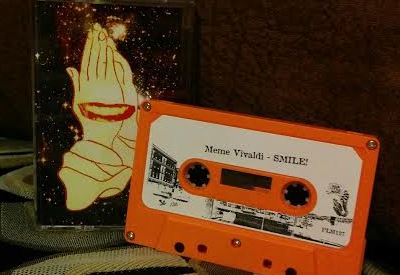
From Poor Little Music, an underground Canadian label that deals primarily in cassette and floppy disk (yes, you’ve read that right) releases, I picked up Meme Vivaldi’s Smile on tape. The art on the packaging itself is really nice. There’s something about it that I found to be somewhat vaporwave inspired, particularly on the inside of the j-card insert. The cassette itself is a brilliant orange, and features a sticker rather than stamping.

Smile basically sounds like the soundtrack to an artificial intelligence having a mental breakdown. It is an incredibly odd little electronic album, but it’s also a lot of fun. I hadn’t personally heard Smile when I purchased it (yay, impulse buys), but I was pleasantly surprised once I got a chance. The sounds here definitely aren’t for everyone, but those looking for a mind-fuck will probably enjoy it.

Smile is also a limited edition of 30, so if you’re looking to own a cassette you may want to get on that soon. Hell, they could already be sold out by the time you read this. Sorry.

clippin

From SubPop Records and Deathbomb Arc, I also picked up the cassette version of clipping.’s Splendor & Misery. There were a few different physical media options for this album, but ultimately I ended up going with the cassette because the packaging is gorgeous. The cassette itself is wonderfully industrial looking, coming coloured in a clean light gray.

The insert has a very classy foil look to it, complimented by a retro feel to the rest of the packaging. This is very honestly one of the nicest looking cassette releases I’ve seen this year and I would fully recommend it to anyone looking to add to their collection. Plus, something about listening to glitched-out experimental hip-hop on cassette just feels right… And that is the most pretentious sentence I will ever write in my life.

Splendor & Misery is one of my absolute favorite releases this year; you can read more about my thoughts on this album in my full-length review.

offsitewontu

Third is Offsite & Wontu’s collaborative effort After Shenron. This album comes via Every Dejavu. The packaging on this tape is a really an aesthetic treat. From the incredible blue colour on the casing itself, to the beautiful album art. It looks great in my collection, but more importantly it is also a wonderful little project musically.

The production and rapping, are a very chill alternative brand that fans of rappers such as Open Mike Eagle and milo will certainly enjoy. After Shenron is short, but it feels like it packs enough content to sink your teeth into.

Album Review: Kuniva – A History of Violence Vol. 2

by Apu

hiv

8/10

Coming back from doing a tour with a couple of his group members and stealing the show more often than not on D-12’s Devil’s Night Mixtape, Kuniva has gone solo again with the follow up to his official debut, A History of Violence. Released about a year later than originally planned, this project was pushed back until 2016 because of his work with D-12.

Before I go any further, I advise all 3 of you who are reading this to check my recap of A History of Violence (Vol. 1). I promise I’m not saying this [entirely] as a plug for views!

The first thing that can be said about this album is that overall, it is much more powerful than its predecessor. It’s evident even from the release of the lead single, “Dear Uncle”, that Kuniva approached making this album from a totally different perspective. It’s more heartfelt, thoughtful, and passionate. There’s nothing here that has the sort of carefree, almost ignorant attitude of “Born This Way” or “Where I’m From.” The entirety of the album is more mature and artistic. The two years Kuniva spent working on this left him a more seasoned artist, let alone emcee.

With this project, Kuniva put a larger focus on songwriting, more so than just rapping and lyricism. In fact, the straight “lyrical miracle” lyrics are less prevalent on many of the songs; for the most part, he opted towards writing songs with a message and focused less heavily on the rhymes and wordplay. That is probably my biggest gripe (well, actually, my only grip) with the album…and even then, it’s not really that big of an issue, because it’s not like Kuniva dumbed anything down, and there were still several instances where he did come with the battle lyricism that he’s known for. He’s shown the caliber of his lyricism on each of his previous projects, and just shifted focus on this. There was less room for it. He had something that he wanted to make sure he got across this time, and didn’t risk sacrificing the message with unnecessarily complex rhymes or metaphors.

The hooks are noticeably stronger, more present, and in many cases more melodic than they were on Kuniva’s previous material, which is artistic growth that I’m personally very glad to see. A stronger hook is what separates a good rap from a good song. He also started playing with his flow a bit. He had shown flashes of implementing double time flows on D-12’s comeback song “Bane” but since then kept it a little simpler on the D12 mixtape. However, from the very first track on this project onwards, we get to hear him weave in and out of different pockets in a way that I honestly didn’t expect. His flow has become crisper, and he’s managed to make it sound as though it’s both more precise and more relaxed at the same time.

Kuniva also started using his delivery to add to the buildup of his verses to give a more dynamic feeling towards the songs. On many of the tracks, he would start adding more of an edge to his voice as the verses went on, which helps keep the listener not simply engaged, but nearly clinging onto the words he’s saying. The majority of this album consists of very personal music, detailing the difficulties he’s had in his life as vividly as the best of them. His delivery matched the pain that is written so well that you would think he was sitting in a psychiatrist’s room recounting it as opposed to just rapping pre-written lyrics into a mic. I firmly believe that Kuniva’s delivery is one of the most impactful out right now. At times on this project his delivery, paired with the intensity of the stories he told in his lyrics, could figuratively kick you in the stomach.

My son’s looking up to me more, watching my every move,
Trying to mimic his dad, I try not to show him my tool,
He’s asking questions now, fuck I’m supposed to do?,
Finally told him what happened to Bugz and Uncle Proof,
The pain of explaining the real, leave you with screws loose,
To be able to watch your homie murdered on Youtube.
(Mama I Tried)

That’s not to say that the entire album is full of heavy subject matter. Songs like “Ride Slow,” “All I Know,” and “Trouble On My Mind” serve as Kuniva’s way of giving the listener something easier to listen to. At the same time, they still manage to capture the [relatively] lighter side to Kuniva’s life, rather than being just filler tracks for people who don’t want to listen to such serious music. They detail Kuniva’s life on the block, largely leaving aside the topics of personal strife and police brutality. They definitely don’t feel out of place though; in fact, they make the album feel more fleshed out. Block Symfany and Mr. Porter do a great job at offering production that flows well from track to track, and making each song settle in well. Each of these tracks, incidentally, are the only tracks with guest rappers on them. I personally feel as though Kuniva’s verses on these tracks vastly overtake the guest verses, who were strong in their own right. I do want to say that I’m relieved that the chemistry between Denaun and Kuniva still exists, and I look forward to the Brigade project that they announced in the outro of “Trouble On My Mind.”

The final track, “End of the Beginning,” has a small interlude between verses where Kuniva mentions how he’s found that people don’t really know that he’s his own person outside of D-12, and that he needs to show people who he is by himself. The production (offered by Block Symfany and Mr. Porter) help separate him from the devious D12 sound overall, and allow him to develop his own persona through his soul-bearing delivery and lyrics, which have become possibly the most vivid and deep out of anyone in his group aside from the obvious member. If there was something he could have released that would show people what he has to offer, this is it. This is the project that he needed to get people to stop using their bias against his group as a reason not to take him seriously. He succeeded in creating a cohesive project that puts on full display who he is as an artist and emcee. It is not a perfect album, but he has cemented who he really is behind his group persona, and he can keep building from there, which is what the phrase “end of the beginning” seems to imply.

Too often, you’ll see somebody release a sequel to an album and have it be essentially the same thing. No advancement in sound, no change in content…nothing different is offered. It’s basically just an excuse for an artist to not evolve and come with the cop-out of “but…but yeah but this is just the next part, it doesn’t make sense to change anything!” This album is a sequel done right. Kuniva uses this album as an opportunity to expand on what he was talking about in Vol. 1. He carries more of a narrative throughout it, aided by the interludes. It’s almost like he had the first disc serve as the prelude to his life story, where he gave bits and pieces, and he decided to dig deeper on this. While the lyricism may not be as complex, as a full body of work Vol. 2 absolutely dwarfs Vol. 1, and stands by itself as a great project.

Retrospective Review: Movies for the Blind, by Cage

by Dustin

mftb

Halloween is always a fun time of the year. The kiddos are out in spooky costumes collecting enough candy to become diabetic at eight years old, young adults are out in costumes slutty enough to make a stripper wince, and everyone is generally just out to have a good time. More importantly for this site however, there’s also a huge array of horror themed hip-hop out there to fit the mood of the season. We’re not talking about struggle-Juggalo horrorcore however. What we want to discuss is the artists that went deeper, combining horror elements with conventional hip-hop to create near-movie like albums.

Welcome to Extraordinary Nobodies’ first ever Halloween Week, where we will have a look at four of our favorite horror inspired albums for an entire week leading up to Halloween (though surely you have figured that out by now).

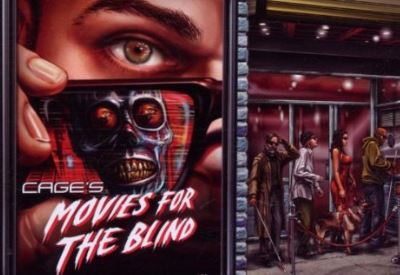
The first album on the menu is perhaps the least Halloween-flavoured of the bunch, but it’s got one foot firmly planted in the horror genre. Cage’s Movies for the Blind, released in 2002, combined shock rap with New York hip-hop in a way not many had attempted. Though he’s probably most notorious for a short lived beef with rap megastar Eminem, Cage’s first two releases are regarded by many as underground classics. Movies for the Blind started it all, and it’s a record that will leave you feeling utterly disgusted in the best way possible.

Lyrically, Movies for the Blind is the ultimate channeling of rage, drug abuse, and mental illness into bar after bar of tantalizingly shocking lines. Setting the tone is an album opener with Cage expressing an unbridled affinity for PCP and destruction. The album doesn’t quit either, with jump-scare like lyrics woven into even the most New York sounding tracks to keep you on edge. No content is off the table on this record. Murder, suicide, and violence find themselves as staples on what is a freak-show of atrocities. Dips into the norm are rare, but when they do happen it serves as a necessary break from the amazingly grotesque images Cage paints with his words.

Blue collar to corporate blessed the unfortunate,
Like when I put my foot down that bitch still aborted it,
Stuck the canister under my jacket like the lucky one,
‘Uh, sir you can’t leave with that,’ bitch this my fucking son!
(Too Much)

Unlike Hell’s Winter, which saw Cage take a more introspective approach to his music, Movies for the Blind lacks any form of self-awareness. It is an album with an emcee at his most unhinged, unloading rage and hate at anyone who will listen. It’s beautifully executed, and forces you to feel a level of discomfort that most horrorcore albums simply haven’t been able to achieve.

His charisma is also undeniable. It gets to the point that he nearly comes across as a sociopath.

I’m a suicidal failure, look my life’s a failure,
I can’t make it in rap, even my birth’s an error,
Do what I can to catch a quick death,
But I’m meant to be here and that’s the fuckin’ hell I live with.
(Suicidal Failure)

Interestingly, the production on Movies for the Blind is relatively subdue and typical for the underground New York scene at the time. The album featured production primarily by DJ Mighty Mi, but also the likes of El-P, Necro, and Camu Tao (plus a handful of others). With the lineup, it’s no surprise that the sound is so distinctly east coast. Movies for the Blind fools you into nodding along with the gritty production, while throwing lines about suicide and death in your face. The contrast is absolutely wonderful to experience; moreover, the instrumentals are brilliantly cohesive throughout.

Movies for the Blind may not be the ultimate Halloween record, but there are qualities to it that definitely make it a terrifying listening. It’s quite interesting how this album plays out like a series of short snuff films. It’s more disturbing than scary, but it remains as grimy today as it was 14 years ago upon release. Movies for the Blind is also a gem from a time where Definitive Jux and Eastern Conference (the latter of which would release the album) were just beginning to take over the New York underground scene. Whether you’re interested in records from that era, or just looking for something gory to celebrate Halloween, Movies for the Blind remains an underground classic that is wholeheartedly recommendable.

Not for the faint of heart, however.

Album Review: Danny Brown – Atrocity Exhibition

by Dustin

ae

9/10

If you’re a hip-hop fan and you don’t know who Danny Brown is, there’s a good chance you’ve been living under a rock since 2011. The Detroit emcee is known as quite the character, bringing an insurmountable level of energy to every song he touches. After jumping to Warp Records, Danny has finally released his follow up to 2013’s Old. Atrocity Exhibition.

And yes, that is a Joy Division reference.

On this record, Danny Brown is a rock-star in every sense of the term. He’s a boisterous character with no fear of expressing his affinity for drugs and alcohol; however, the beauty in Atrocity Exhibition is his ability to explore the consequences of the lifestyle he lives. Danny may be one of the few rappers who will boast about his drug use on one track, and then turn around and smack you with the honest truth about the problems this causes him on the next. Lyrically, he is completely on point. Atrocity Exhibition still has the same zany personality that made XXX and Old unique, but it’s also a highly introspective release. His lyrics are upfront and truthful, depicting a lifestyle that many couldn’t begin to imagine.

Everybody say, you got a lot to be proud of,
Been high this whole time, don’t realize what I done,
Cause when I’m all alone, feel like no one care,
Isolate myself and don’t go nowhere,
Smoking blunt after blunt, ’til my eyes start burning,
Hennessy straight got my chest like a furnace,
Drowning frustrations in a ocean of sin,
Thinking irrational, I have no emotions.
(Downward Spiral)

What stands out most about Danny Brown’s vocal performance on this record though is his flow. The man can rap on anything, plain and simple. For example, both the opening track “Downward Spiral”, and the song “White Lines” both have instrumentals that sound as if they should be impossible to ride… Yet, Danny finds a way to make it sound as easy as breathing. It’s really something to behold, and his ability to do this is on display here more than any previous album.

Which brings us to the instrumentation itself.

The production on Atrocity Exhibition is a really a unique experience. Provided by the likes of Paul White, The Alchemist, and a few others, the instrumentation on the album is unlike any other. There are elements to the production which feel distinctly Detroit, yet the overall sound is so off-the-wall that it’s hard to Atrocity Exhibition to any single influence. There are tracks like “Downward Spiral” that feel so heavily influenced by Joy Division (as the title would lead one to believe), and then more conventional instrumental like “Pneumonia”.

In the broader sense, everything works well together even with the vast stylistic variation. It feels hectic in a good way, and that’s exactly what’s to be expected from Danny Brown.

Atrocity Exhibition is special. It’s special first and foremost because it’s a great album, but there’s also something wonderful about seeing Danny Brown realize his potential. His previous releases have all been good in their own respect, but Atrocity Exhibition feels like so much more. It’s the type of album that pushes boundaries without being recklessly abrasive. Its execution is brilliant in the sense that it’s experimental, yet familiar enough to appeal to a larger base.

So my task,
Is inspire your future with my past,
I lived through that shit,
So you don’t have to go through it,
Stepping stones in my life,
Hot coals,
Walk with me.
(Hell for It)

Atrocity Exhibition may feel like a fever dream, but it is one that you will never want to wake up from. As a hip-hop fan, this record is a can’t miss album. Danny Brown has released one of the most engaging, unique, and gritty records of 2016. It’s certainly worth your time, and potentially album of the year material.

The Media That Refuses to Die: Cassette

by Dustin

cassette

“What is that?” my buddy asks as I pull another parcel from the mailbox, “don’t tell me you’re still collecting music”.

You see, my friend doesn’t quite understand the point of collecting physical media when it comes to music. He sees CDs and vinyl as a waste of money when I’ve already got a Spotify subscription. The argument that I want better sound quality usually shuts him up, since streaming can be questionable at times in that regard.

Unfortunately that argument will not work with this shipment.

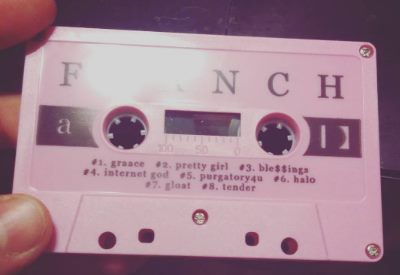
My friend remains interested as I rip apart the yellow envelope from Darling Recordings. I explained to him that the album is by a really cool experimental group called FLANCH. He seems interested in the sound and implies that he would like to listen to it once I finish my painfully slow unwrap job; however, his interest turns to confusion as I reveal the contents of the envelope.

He looks at me and his face screws up into an indescribable expression. In a moment of baffled realization he asks the question, “is that a fucking cassette?”

cassette2

Though this may sound ridiculous to some, cassette has seen a huge resurgence in the past couple years via the independent scene. The companies which produce cassette tapes are reportedly having their best years since the 1960s. For example, the National Audio Company reportedly produced over ten million cassettes in 2014 alone. For something once considered defunct this is a huge comeback, and it is almost rooted entirely in the independent music scene.

But why? To help answer that question we touched base with Nick Faidley. Nick is the founder of independent label Darling Recordings, an outfit which has released multiple cassettes (including FLANCH, mentioned earlier in this article). He offered up the following insight as to why cassettes have seen such a heavy revival:

Darling Recordings has turned to tapes for the many of the same reasons as other independent labels and musicians: cassettes are low cost, low hassle, and easy for bands to use on the merch table. For us it’s really that simple. Tapes are affordable at low quantities, unlike vinyl (incredibly expensive) and CDs (large minimum orders), and they can be completely DIY.

Darling runs its cassette manufacturing with a wonderful company out of Ohio called A to Z Audio.

As Nick stated, cost is a huge factor. Unlike major outfits, most independent labels only do limited releases for physical editions of records. These are generally in the 20-100 copies range. The price per unit for limited runs is cheaper on cassette than any other physical media; moreover, a price per unit quote (on a 100 album order) from a Canadian duplication company shows that the difference is extreme:

CD with Jewel Case and Insert: $4.90/each
Vinyl Record with Colour Cover: $9.00/each
Cassette with Clear Case and J-Card Insert: $1.85/each

Cassette is the clear cut choice based on cost alone, and for small independent labels every dollar counts. Perhaps physical media is no longer a necessity with the rise of digital distribution, but fans will always be looking to get their hands on merch. Cassettes are a cost effective way to provide this to fans (whether it be online, in a record store, or at a show). In addition to it being good for the label, cassette releases are generally cheaper for the consumer as well. It’s very much a win-win for those interested.

Though more subjective, there’s also a collectible feel to cassettes that seems to offer up a lot of appeal. There’s certainly a degree of nostalgia involved to a particular generation, but to others they just seem “cool”. They’re just so much different when compared to CDs and vinyl. Cassettes have a particular minimalistic and rugged appearance that seems to draw a certain crowd in. Even the listening experience, though maybe not the best in terms of sound quality, is incredibly unique. The tape hiss, the sound of the cassette deck mechanism, the sudden jarring click when a side runs out…

It’s something that can’t really be compared to anything other music media, for better or worse.

Interestingly, this wave of cassette revival has become big enough that some major labels have started to jump on the bandwagon. A recent example of this is Shady Records re-issuing Eminem’s major imprint debut, The Slim Shady LP, on a translucent purple cassette. To no ones surprise, the re-issue was incredibly popular. It doesn’t seem like this will be a regular trend such as vinyl releases, but it definitely speaks to the size of cassettes resurgence.

For all intents and purposes cassette should be dead, but it’s not. They’ve found their way back into the music scene by carving a niche which no other media can really occupy. What cassette lacks in sound quality it more than makes up for in affordability, making them the ultimate budget merchandise. It’s a revival that maybe no one expected, but it’s working out beautifully for artists around the globe.

So, the next time you see a cassette just remember: your uncle who owns a Mustang from the 1980s with a tape-deck isn’t the only person looking to buy cassettes anymore.

Album Review: clipping. – Splendor & Misery

by Dustin

sm

8.5/10

It definitely seems as if we’ve written about clipping. a lot, but they’re one of the most active and unique rap groups out current. Who can blame us? Anyway…

To say that Daveed Diggs is popular right now would be an understatement. Fortunately, for fans of the Los Angeles based experimental rap trio clipping., he’s not abandoned his work in the world of weird. With an EP (Wriggle) already under their belt for the year, clipping. is back again with a full length followup to 2014’s CLPPNG. Released under Sub Pop Records and popular experimental outfit Deathbomb Arc, Splendor & Misery looks to keep clipping.’s hot-streak of releases at full steam.

With Splendor & Misery, clipping. took a step in a different direction from previous releases. The album follows the story of the sole survivor of an uprising, his life on an interstellar transport ship, and his relationship with the on-board computer. The concept is unique, and provided Digg’s the opportunity to flex his storytelling ability at every turn. He flawlessly maneuvers over the wild production, proving time and time again that he is one of the more versatile emcees in hip-hop. Tracks like “Baby Don’t Sleep” are beautifully unnerving, and it big part of this is Daveed’s vocal control and delivery. All in all, a wonderful vocal performance throughout the entirety of Splendor & Misery.

No home, you’ve been there,
Clearly off safety,
No destination,
No time for waiting,
Saviors are fiction,
Memories fading,
like ghosts, ghosts, go.
(Baby Don’t Sleep)

The production is basically what is to be expected from a clipping. album. It’s abrasive, loud, and fuzzy. The main difference on Splendor & Misery is that the instrumentals tend to be more spaced out than a lot of their previous work. Given the concept of the album, this is completely understandable and sets a well defined mood behind Deveed’s vocals. Atmosphere is the main strength of the production on this album. Though it might not necessarily carry that touch of traditional hip-hop the group is known for, the instrumentation is well execute. Hudson and Snipes rarely disappoint.

Though the album is a fantastic piece of art-rap, Splendor & Misery does have one minor flaw. There was a single moment which did not feel as though it fit the overall sound of the record. “Story 5” . Coming off a long run of incredibly cohesive work, the acapella felt very out of place. Unlike the previous “story” tracks on clipping. releases, it was not a standout track; regardless, It is still a pleasant listen and quite interesting, but in the grander picture of Splendor & Misery it was a jarring shift in sound.

Listeners who go into Splendor & Misery expecting the heavy hitting blend of conventional rap and noise may be in for a bit of a shock. This album is definitely a departure from the norm for clipping. as a group. Splendor & Misery should be approached as a conceptual art album, and not put in the same category as their previous works. Fortunately, for those who find themselves missing the sounds clipping. played with on previous releases the EP from earlier this year is jam packed with heavy, easier to digest songs.

This ain’t healthy to be held to blame,
Once you help me, now you abandon me,
What you’re tellin’ me by not tellin’ me?,
Anything, anything,
I’d give anything if you’d say my name,
Don’t you play with me, it’s an emergency.
(Break the Glass)

Don’t discredit Splendor & Misery for that reason, however. This album seems to be the moment that clipping. really discovered who they are as artists. From a conceptual standpoint this is the groups strongest effort. It was an absolute treat to see them tapping into some hidden potential. They took a risk with a release that is unconventional even for clipping., and it paid off with a solid final product.

East Coast Rapper MCrv Discusses Life as a Working Class Hip-Hop Artist

by Dustin

mcrv-glitched-9-10-2016-5-17-32-pm

The east coast has been a powerhouse in rap for as long as the genre is old. Under the surface, the east coast has developed some of the most unique underground acts of all time. Of these, Definitive Jux was one of the most notable throughout the 2000s. Lead by independent hip-hop star El-P, the Jux crew was consistently putting out their unique brand of experimental east coast rap.

Nearly seven years after the label was put on indefinite hiatus, those influenced by Definitive Jux are starting to find their own voice in hip-hop. MCrv is one of these rappers. A student of the independent hip-hop scene, MCrv spoke with us on life as a working class rapper, balancing family life, and how he sees his own music.

Read the interview below, and then go ahead and check out MCrv on Twitter, Bandcamp, and Facebook.

EN: I figure we should probably start with the basics to help people learn about you as an artist, if that’s okay with you. How long ago was it that you started rapping, and how did you get interested in it?

MCrv: I started rapping when I was about 15. I’m 25 now… So, ten years I guess. I didn’t really take it serious until I was 20 or 21. It was just for fun with two friends of mine, Dan and Tony. We we bored teenagers, [and] I was like: “lets make a rap song”.

Dan played drums, Tony did bass, and I rapped. They were [just] dumb songs about high school and partying. we stopped after five six songs until I turned 17 and a friend gave me a copy of Hell’s Winter and Labor days and I found out these dudes were making music themselves and rapping about all sorts of shit. I was fascinated. So my senior year of high school (2008-2009) I started learning how to use GarageBand and [my keyboard], and writing lyrics. And [I was also] discovering more artists on Definitive Jux and Rhymesayers, and anyone they collaborated with.

Some of my first ideas were made at the school computers in Manville High. Once I learned I could record at home, I was obsessed with saving for my own studio. [However], before I graduated I got into some trouble with my parents about abusing prescription pills. I left my parents house moved in with my grandparents because there was so much tension; everyone thought I had addiction problems. It was more experimental, but it didn’t matter [because] I broke their trust… It was hard after high school. I ended up doing out-patient rehab before I left New Jersey, and learned a lot about addicts. [I] realized I had potential to end up down that road, but never had the desire.

While all this drama was going on I kept [trying] ideas on my Yamaha keyboard, and recording vocals in Audacity with a ten dollar mic. I would record my beats off the keyboard speakers into Audacity then record my vocals [to] hear my ideas.

Some time went by and I decided to move to New York state with some family after living in New Jersey for 18 years. [Mostly] to start fresh and find some solid ground, since things were rough with my immediate family. I got a job and stayed focused on saving money. Within a year I saved enough money to buy myself an iMac and Pro Tools! I also picked up an Axiom 49 and I started to teach myself how to record using Pro Tools when I was about 19.

EN: That’s pretty crazy, so now have you got yourself a little home-studio setup? I noticed listening to your tape that it was super clean quality wise, moreso than I notice from a lot of rappers on the do-it-yourself path.

MCrv: Yeah, I have my own set up at home, and thank you. I’ve worked really hard to show progress in the quality of my music. My set up is realy simple: two monitors, an interface, an Axiom 49, and I switched recently from Pro Tools to Logic which has been great. I have a mic that I record my rough vocals on at home, but for all my final vocal tracks and final mixing I go to my friend Jim Servedio at his home studio and he puts his ears and hands in… He actually sold me my equipment when I moved to New York six years ago, and he’s been helping me with my mixes and recording ever since. [Jim] has been working with music and studios for almost 30 years, and we have a natural chemistry in the studio as far as what we are looking for sound wise. It hasn’t been easy, but he’s been patient and has allowed me to grow at my own pace.

EN: It’s great you’ve got a bit of a mentor in that regard though; to me, it seems like audio quality holds back a lot of young artists. You’ve already surpassed that hurdle. Moving onto influences for a moment, I remember when I first messaged you we talked about Colors and Sounds having a bit of an early Definitive Jux sound. You kind of came up on artists from that era and roster, correct?

MCrv: I’m [just] really lucky to have Jim. He has helped me so much… I don’t think I would know as much about the actual process of music making if it weren’t for him.

Yeah, I feel like I got really into it all when None Shall Pass, I’ll Sleep When You’re Dead and Depart From Me were still fresh. People started realizing there was more to underground rap than what they previously thought. At least that was my take [on it].

EN: Man, you had to go and name drop I’ll Sleep When You’re Dead haha. That’s my favorite album of all time, by far. It got me through a really rough period in life. Anyway, more to the point. You’ve definitely got influences, but your style is very much your own. Is it important for you to develop a unique sound for yourself?

MCrv: That album helped me a lot too! [Particularly] during my teen years and early twenties. “The Overly Dramatic Truth” [off I’ll Sleep When You’re Dead] still brings me back to those feelings.

And yeah, it is very important for me to have a unique sound for myself. That’s what drew me to Def Jux so much. Each dude had their own style [and] their own niche that I could get lost in and appreciate. I study those things, and have found what I like in myself. I [try to] bring [that] out in my music, and find my own signature traits that make MCrv, MCrv.

I still find it fascinating that you were able to dissect my influences based on my music, because anyone who knows me, like my close friends, if you asked [them] “what rapper or label does mcrv appreciate?”, they would say Aesop Rock, Def Jux, or Rhymesayers [laughs].

EN: Ah man, when I heard it the first time I was like this dudes got a super unique sound but at the same time there’s a flavor to this music that I recognize. So I spun it again, and then put on Bazooka Tooth I think and I was like holy shit, he sounds like he could have been a Def Jukie back in the day [laughs].

MCrv: Dude, thats crazy! I told myself when I made Colors and Sounds that this was my Bazooka Tooth [laughs].

EN: Then at that point, because that’s where my music tastes are pretty firmly I needed to talk to you for the site [laughs]. Like, I feel that even though Def Jux was pretty big, you don’t see a lot of the new generation building on that sound. (even thought the indie scene is strong as ever). Would you agree?

MCrv: I would totally agree. I feel I hear a lot of underground and commercial elements mixed together in a lot of the new generation stuff. I feel like there is a lot of risk in the music those [Def Jux] artists put out. There is meaning in their every sound and word. The messages and subject matters are like nothing any other artists have touched. There is a very peculiar way they’ve made music that I really don’t hear in others.

EN: I guess you’re somewhat of a revivalist in that way then, because it feels like that era ended so abruptly [laughs]. So tell me a bit about the process of your album, how long did you work on it and such?

MCrv: [Laughs] That’s a sweet thought… Trust me, I would love to see that label shine through again. I’m no savior though, I just know who I have to pay my respects to because those dudes showed me life pretty much… They taught me about life.

I worked on Colors and Sounds for about a year. I recorded everything at home… I made all the beats first and then wrote each song. [I] rehearsed them at home, and once I knew them well enough I took them to Jims house. We mixed the beats there, [and] then I record my vocals in his booth and we sat and mixed them in together. We’d usually go back a few days later and mix [again], and then once we were happy with [it] we’d do a little mastering.

[Occasionally] I write lyrics before the beat, but most of the time I make a beat then write the song. I enjoy creating the scene first. The little world all this shit is about to be said in, [and] then I just say it.

EN: Was there a particular place the album came from emotionally, or were you creating purely on your drive to make music?

MCrv: I had made eight songs before Colors and Sounds. They were about my depression, my separation from my family, and songs about how I found music and how I made it home. Colors and Sounds was kind of my acceptance of all that, [plus] realizing I got past it and can move on. I was able to deal with my depression with certain songs like “Bangarang” and “When the Heart Unfolds”.

Other times I wanted to have fun and be creative like “Spacemandude – A Galactic Tale” where I came up with a story for “Spacemandude” who’s like a secret-agent-spaceman, [and his] rival “Supreme Cream”.

Then there is an actual love song called “Unexpected Beauty” that I made for my girlfriend, who is also the mother of my beautiful daughter. [This] later led to “Say Grace”, which is the last track on the album. I made [it] for my daughter Ramona Grace.

Emotionally I was everywhere a little bit. Us expecting a child changed my attitude and mindset from focusing on how to feel better about my surroundings and current being, to realizing I’m going to be a father.

EN: Is there a goal for you, as far as evolution as an artist? Do you want your sound to continually grow and evolve with each release?

MCrv: Yes of course, I feel growing and making progress is very important to me. In all aspects really. [From] the actual recording and technical parts, to actually capturing my feelings with instruments, to allowing myself to try new rhyme schemes. I feel I have evolved with each release. Every time I make a new project (or collection of songs) my goal is to not just make it better than what I previously made, but to [also] implement the new things I’ve learned. And also to do some of the things I didn’t fit in on the previous project.

I feel like my evolution has been real natural, and I make what I feel comfortable with.

EN: That’s really admirable, to feel comfortable with the sound you’ve developed but still be focused on evolving naturally. What’s next for you, do you think? Do you hope to release more albums going forward?

MCrv: Yeah, I’ve felt like I’ve developed my own style. I know what my beats sound like, and I know how they could sound if I keep making progress like I intend.

Right now I’m about to record a five song EP I have been working on. A friend of mine helped with some of the instrumentation for each song. I played with some random ideas when I first got Logic, and he would hear what I had so far and add a part. Then I would fit that in, and build the track. I plan on releasing it sometime early fall. Its called Cluttered Souls. Its probably my favorite thing I’ve made so far… there are a couple songs on there were I feel I stepped out of my box and spoke up.

Also I’ve been working on new beats. I’m constantly working on something. I don’t get a lot of beats sent to me. I have a few friends who I have some things in the works with, but nothing really solid. I have a few singles I wanna release too. Just some different things I have been experimenting with. So really I’m just continuing my journey…

I think my next real goal is to make an album. I have one planned out and am very excited to start building solid foundations. I have ideas already rolling, but that’s probably what will consume most of my time after summer is out and the seasons change.

EN: I saw on your Facebook that you do some live shows. What’s that experience like for you as an independent artist?

MCrv: Its been pretty awesome to perform. I’ve done a bunch of open mics around central New York and those have been fun. Its usually really quiet and I’m use to being the only rap act. Most of the time its people singing with an acoustic, singing behind a track, or reading poetry. When I wait my turn to go up I get anxious and excited, ’cause its my chance to change things up and create a new environment for ten minutes. People are pretty respectful. There isn’t a lot rapping, like I said, so its cool to see people listen and nod or move a little to the music even if rap isn’t their thing.

I did an open mic one night in Binghamton and I felt really good about my performance. My only goal that night was to have fun and feel good about my songs. I did just that and it went very well. This dude Chris who writes for the Carousel Paper asked me if I wanted to open for this band, Telekinetic Walrus, so I took that opportunity. That was fun too. I’m pretty private about things. I don’t have a lot of friends I have a few close ones, and if everyone has to work (including my girlfriend) I’m on my own [laughs]. So it was me [with] my backpack, some CDs, and a laptop with my set in a playlist. I met some people and greeted everyone then I sat quietly in the bar drinking a glass of water [laughs].

I don’t drink or go to bars so everyone’s drinking around me and I’m sitting there alone listening to music. When it came time to go up, I introduced myself and interacted with the people. Everyone was really loud [laughs], they were all drinking and socializing. They didn’t know me or what I had to offer so when I started doing my songs it was loud… Not to mention the sound man had no monitors for us to hear ourselves (let alone care about how anything sounded) so it was hard to hear my music.

I did feel really good about my performance and making sure the people were still with me in some way despite the fact they couldn’t care less about what I was doing [laughs]. There were a few people who were really interested and listening to what I was saying though. I had a guy come up to me and thank me for what I did. He told me he really related and heard where I was coming from. We talked for a bit about how much time it takes to make music and all that then asked me for a CD, and a few other people grabbed CDs. Its been a pretty good experience so far. I really focus on performing my best and approaching people with a sincere and clear presence to get them to feel something.

EN: Is it intimidating to put yourself out there, in live shows, as a smaller-scale independent artist?

MCrv: Initially it was. A lot of that was because all my music and performing falls on me. I would be nervous because I had doubt’s like “what could one dude doing all this on his own have to offer people”? But once I got more comfortable with myself and people’s reactions when I perform, I realized there was nothing to be afraid of except not continuing to grow as an artist and overcoming [those] fears.

I mean, certain aspects are still intimidating. I’m not very well known or anything. When people go from listening to a song or two, then all I hear is talking during my performance, it kinda crushes you a bit… But, I try not to let it discourage me too much. Plus there are usually a few people who really are paying attention. All I can do is my best, and appreciate the time I get.

Which I do, very much [laughs].

EN: As a working class rapper, do you find it hard to balance other responsibilities while also finding time to work on your art?

MCrv: Yeah, sometimes it is difficult to balance everything. My girlfriend and I both work full time. The days she works late it is just my daughter and myself at home. Once I’m outta work I make sure the house is picked up, my animals are fed and watered, and I make sure my daughter is happy and full at all times.

Its been a bit of an adjustment since I’ve become a father. I could have plans to work on a beat or write and if Ramona needs to be fed, or she just simply wants me to hold her I put my music aside until I feel she is content. I wouldn’t trade any of it for anything though.

It’s hard work coming home from a job, raising a family, and trying to build something that’s going to last a lifetime (or at least hope it does), but it’s all worth it. I feel all the responsibility and pressure has helped me grow as a person. I have been able to value my personal time, and the time I have with my family. Once you find a routine (and make changes to that routine as new things arise) that sense of fulfillment is like no other. At least that’s what I’ve come to learn.

I’ve always been pretty disciplined with my music making and managing my time. Ask any of my friends [laughs]. They haven’t seen me in two months because I’m focused on my next project. I write myself lists of what I need with each song, and ideas I want to incorporate so I don’t have to think about it as much when I’m not working on them. Any little thing I can do to help keep organized I try to utilize.

EN: I respect that so much, the determination to still put in work musically while making sure your daughter comes first. That’s something I can never say anything bad about. Okay, now I’ve gotta ask the question I ask everyone as we wrap this up. Who are your five dream collaborations, dead or alive?

MCrv: I appreciate that man, thank you.

[Laughs] I’ve never thought about that much. I’m always like “my heroes don’t wanna fuck with me” [laughs]. Aesop Rock for sure. I always dreamed about him rapping on one of my tracks when I felt I was ready. I don’t think I’ll ever be ready [laughs].

I would also love to do a song with Blueprint. He’s been someone I listen to and followed for years. 1988 was an album I rapped along to when I really started taking song crafting more serious.

MF DOOM as well. I love all his music no matter what alias.

I would really love to do a song with Busdriver. That dude has the craziest beats and flows and I feel like that would be a challenge.

Blockhead would be another one for me. He use to make beats for Aesop, and has made great instrumental projects and other collaborative albums that rock.

EN: Ah man, I know I said we were closing it up but I have to ask this too because I’m a huge Busdriver fan and I see so little discussion about him. What’s your favorite album of his? I’ve been in love with Perfect Hair since it dropped, and Temporary Forever is a classic.

MCrv: Oh man, I really love both those albums. RoadKillOverCoat is probably my favorite album by Busdriver, [it has] so many great songs. Thumbs was great as well one of the best albums of 2015 hands down.

EN: Thumbs was dope too! I actually bought the cassette release of it, it’s pretty sick. Alright man, it’s time for the final question, but first I’d just like to really thank you again for doing this. If you had to describe what you bring to the table as a rapper (to convince someone to listen) what would you say?

MCrv: Well thank you my man for taking the time to get to know me a little, and [for] taking interest in the music and process. I very much appreciate it, its been fun having you throw questions at me.

To answer your question, I would have to say change. I usually write about things I’m going through or circumstances that need to change or evolve if you will. I am always striving to make natural progress with what I have in this life, and change is a part of that on a constant basis. I feel each song I tackle something I’m adjusting to, or I am accepting about the world or myself.

When I finish a song I feel grounded. I feel like the person I know I can be, want to be, and will be as long as I continue to learn and make adjustments (change) when necessary. I’ve always been a dude to make plans with set times and deadlines. That works to a degree, but there is always a natural flow of things and left turns to be made when least expected.