Exploring Other Genres: Sunbather – Braneworld

by Dustin

braneworld

8.25/10

A while back we started a segment called “Exploring Other Genres” to offer fellow hip-hop fans an accessible outlet to a variety of interesting music. More relevant to the here-and-now, our first piece in this segment was on Poor English’s self-titled debut EP. The feedback we received was overwhelmingly positive, and multiple people asked if we could recommend something similar. By coincidence a few weeks later, Poor English’s drummer Tyler reached out to us about another group that his band-mate Joe is involved in: Sunbather. Sunbather just so happened to have a thirty-something minute album out called Braneworld. Featuring sound distinctly different yet similar to the wondrous pop-punk tunes of Poor English, we were certainly interested in giving it a spin.

We fell in love with the album. In fact, it has been on regular rotation ever since.

As mentioned, there are similarities between the Poor English project and Sunbather’s sound on Braneworld; however, to not approach this album as a brilliant standalone work would be doing it a disservice. Sunbather’s sound is a little more punchy, marginally heavier, and a touch more dense. The way instrumentation is layered on this album is really gorgeous. The guitar work weaves in and out of riffs and licks, dipping between the hyperactive and laid-back in one swift motion. The rhythms are delicious, and provide a powerful driving force behind the leads. Sunbather create a “wall of sound” within their music at times. It feel bigger than it probably should, but it is excellent.

Every moment on Braneworld flows into the next seamlessly. The change-ups within songs are frequent enough to keep one guessing, but smooth enough that they’re nearly easy to miss. At the macro level, each track moves into the next without hiccup. At no time did it feel like the song progression was off. Given that album arrangement is one of the things it seems many artists fail at, it was refreshing to listen to one so skillfully laid out.

To put it more simply the transitions are super slick, period. End of discussion.

Though the album is distinctly rock, its quite interesting to see the band show their influences in other genres at time. For example, the song “Daily Dreams” has a distinct folk spin to it, and “Knucklehead” featured some synthetic sounds similar to that of the underground electronic punk movement. These forays into other musical realms broke up the album nicely, yet somehow sound cohesive in the overall scope of Braneworld. Perhaps more importantly, these moments are used quite sparingly. The band doesn’t become predictably experimental throughout the course of the album. It feels more like an adventurous treat at times, rather than part of the albums overall atmosphere.

It should be mentioned that the album atmosphere is, in fact, really well established. There’s something particular about it that just makes everything work together in harmony. To take a bit of a writers cop-out in lieu of better descriptive words: you will instantaneously understand upon listening.

If you’re still not convinced, look at it this way: Braneworld is rock-n-roll for the working class. In times of relative despair internationally, their music feels soothing. Sunbather brings a sense of wonderment to a rock scene that can, at times, feel way too cookie-cutter. Sunbather’s music also radiates a powerful sense of emotional awareness. The happy songs will lift you, and the more sad songs will offer musical solidarity. The vocals and instrumentation play together in a way that makes it nearly impossible to avoid being smitten with their tunes. It’s honest music, and every song feels heartfelt. There’s no attempt to achieve a level of robotic perfection, and the music is better for it.

Lightning Pill Discusses Experimental Music, Helping the Community Feel Heard, LGBT-music relations, and More

by Dustin

lp

Sometimes you stumble across an artist that just has an aura about them that instantly signals they work on another level compared to most. Maybe they’re involved in social causes, maybe they’re workaholics, maybe they’re incredibly mentally dedicated to their craft and community, or maybe they’re all of the above. Such is this case with Lightning Pill. From experimental music crafting, to making sure others don’t feel left out in the cold, Lightning Pill is a lot of things to the do-it-yourself music community. We’ve been aware of his work for a while, and thanks to an introduction by IHeartNoise we’re able to provide an insight into the mind of one of the hardest working individuals you’ll ever have the chance to know.

Lightning Pill can be found on his Twitter, and website. His blog (mentioned in the interview) can be found at Revenge of the Persona Non Grata, and also at its official Twitter. Be sure to give him a look after you’ve finished reading this interview!

EN: First and foremost man, thank you for joining us today. It’s an absolute pleasure. I’ve interviewed quite a few musicians, and I always love working with those who are socially conscious.

That being said, for those reading who may be unaware of you, how would you describe yourself?

Lightning Pill: I am a singer-songwriter who mainly plays keyboard. I take on multiple genres, all which fit underneath bedroom pop, antifolk, etc. I also make beats every now and then. On my downtime, I blog for Afropunk, IHeartNoise and Revenge of the Persona Non Grata, a blog I began focusing on avant-garde/DIY Hip hop, r&b, jazz and electronica.

I also write poems every now and then, but nowadays, poetry is molded into song.

EN: Did being a DIY artist yourself inspire an ambition to write about those forging a similar path musically?

Lightning Pill: Yes. Very much so. I’ve been in the music-making game for years, and found a correlation between most great DIY artists. They want Pitchfork and SPIN coverage and find themselves ignored despite putting out great work. I literally spent all year finding new music through Twitter recommendations and affiliations because, I wasn’t exactly messing with the recommendations of bigger labels. I understood the need to be on bigger platforms, but you don’t need to do that with blogs such as Afropunk helping.

The second album I put out to Afropunk as a DIY artist was Humanbeyondrepair, an album about having Asperger’s Syndrome. I didn’t have the money to tour, didn’t have a huge following, no labels, and so on, but they covered me. I wished more blogs would do that rather than creaming over the same bands they will slag on later.

Twitter is chock full of original musicians and small labels who want to spread their name with no real help from larger platforms. Since they are what I am, I can’t in good conscience make them feel like no one is paying attention. So, I started RPNG. Really it started as a blog for avant-hop, since there wasn’t a huge niche blog for that. Then it expanded into me giving love to smaller acts trying to get on 2DopeBoyz, Pitchfork or Consequence of Sound.

EN: That’s very similar to the reasoning why I started Extraordinary Nobodies. I really respect that at a personal level, but I have to ask: why do you think it is that major outlets turn their ears off to experimental and DIY music?

Lightning Pill: It feels related as why major labels sign experimental acts: if you are engaging, accessible and at least sound like you have a chance in hell in the mainstream or something, then you are “in”. That’s bullshit too, considering that there are some great acts that do have a fighting chance at connecting with the general public.

It feels like going to high school and the “cool kids” either ignore or bully the weirder kids, only to find that they envy them. Acts like SassyBlack (formerly of THEESatisfaction), and even AJ Suede, can’t be found on 2DopeBoyz even though the music has a chance of reaching the public. Only one clipping. song can be found there, too. People are likely to turn a blind eye to artists that don’t have a huge following, and you get a huge following through either celebrity-based nepotism or “accessibility” within the industry.

Perfect examples are rappers and singers within Deathbomb Arc, one of my favorite labels. Excluding clipping., rappers like Signor Benedick, Hareld and They Hate Change don’t get the attention they worked for in their fields despite being really original and talented artists. They deserve to be known in the same corner as Death Grips and Kendrick Lamar. I had to take matters into my hands and write about They Hate Change and True Neutral Crew in Afropunk. Their coverage would probably still be fairly minuscule, if they hadn’t known that I write for them.

EN: Are there any other acts out there that you especially think aren’t getting the attention they deserve, or is it basically the DIY/experimental community as a whole that’s being ignored?

Lightning Pill: It’s a funny thing. If they do get coverage, TheNeedleDrop and Pitchfork are the ones doing it. Still though, a good amounts of the DIY community pretty much live by their wits. Artists like DijahSB got into music and despite how great her music is I don’t even see Aftopunk covering her, and I sent in a blog about her Blue album.

EN: So, running your own publication very much came out of a place of frustration.

Lightning Pill: It started as a way to fill in the niche that 2DopeBoyz and XXL didn’t, couldn’t or won’t touch. It snowballed into a frustration that I shared with artists over making great music but not getting attention despite how “great” they are. This inspired me to take the reins, and I encourage many others to use the blog as a way to give back to your community. The moment I started the blog, I had plenty of artists say they loved my writing. JPEGMAFIA even said my kind of journalism and research rivals that of empty journalists and music critics today, which made me happy. I’ve even had plenty of people approach me to write something for them. I had no right to turn them down because I was, and still am, them.

Type in THEESatisfaction, milo, F. Virtue, Cakes Da Killa, or clipping. in 2DopeBoyz and watch it come up with nothing. The only real explanation I can find is that their blog mostly focuses on artists who aren’t too experimental, as to gain a huge following.

While I am here, I do want to shout out one slightly well-known blog that does what I do: UGSMAG. They cover nothing but that underground shit. Some avantgarde stuff, too. That blog, and the dearly-missed Potholes in My Blog, inspired me to write the blogs I do.

EN: Do you find it difficult to balance your personal life, music, and working on other projects such as journalism?

Lightning Pill: Only because when I get into these projects, I REALLY get into it. When I write about projects, I listen to 5 albums a day. After that, I find myself wondering when I’ll have enough juice and focus to put into my music. When I do music, I get really into it too. It gets hard because I don’t do any of this to merely half-ass it. I’m in it for the long haul… Even if I don’t get paid for doing any of it. That’s how committed I am to what I do. As for my personal life, people know good and well I don’t sit on my bed and do nothing. I’m always working on something to occupy my time. Whether it be hobby or not, I do it because I find fulfillment in it.

Admittedly, it does get hard making sure that when I am head deep in one thing, I don’t neglect the other.

EN: Throughout the year I saw you getting a lot of love from various outlets and labels, such as Deathbomb Arc for instance. How much does it mean to you to know that what you’re doing is being noticed?

Lightning Pill: Man, it means a lot! Imagine years of making music only to find out that I’ve got fans purely from being deep into the underground. This wouldn’t have been possible without Ilya of IHeartNoise, who heard me and has been hyping up my instrumental works, mostly. But since I started pushing everything, not one person has told me my stuff sucked. One dude did, but that was on a couple of fun bars over Jonwayne beats that got a lot of attention, and got me followed by Jonwayne himself.

The Deathbomb Arc thing had me taken aback because I’m a big supporter of the label. The reason being that Deathbomb is one of few labels that aim to surprise you with every artist they add to their roster. So when they asked me about doing a song for them, I was like “what?!”.

I have fans in Ceschi, Dionne Sheree, Ilya, They Hate Change, and plenty in the DIY/experimental (mostly hip hop) community. I feel blessed and it makes me want to work hard to see to it my next few albums and mixtapes don’t suck.

EN: On that note, do you think more artists need to take a second to step back and enjoy the small scale love they receive, rather than desperately trying to “make it big”?

Lightning Pill: In a short answer, yes.

In a long answer, I understand why people want to get big. They do it for money, for attention, to reach people and change the landscape of music. Everyone has reasons as to why they want to get famous. But even if I don’t ever reach the stratosphere, it’s still heartening to know I have a cult following. I do music everyday and never get paid, but it makes me want to keep going knowing people are waiting for my next work.

I was one of those people who wanted to do music to get paid for it. But the more I made music the more I slowly accepted I may never get paid, or that I may never get known to the level that, say, Atmosphere is. But even having a little fans may give me a new perspective. Perhaps making music for them will lead to them spreading the word and finding out that my music can get better and reach people who aren’t just blindly following me. Some people will become Jay-Z and Lil Wayne and some people will be Atmosphere and Run the Jewels. Either way, just knowing one person loves your work is heartening. All one has to do is keep going and keep making your best stuff, keep trying to one up yourself and watch people slowly reveal that they have been a fan of yours.

I think in time I understand why people say that knowing people love your work and are waiting for the next one is better than money. Often times, if people really love and support you, they’ll pay for it when it is for sale. I’d be just fine being the next Ariel Pink, Dam-Funk or Captain Beefheart. People should take any blessing that may come their way in the form of true love and appreciation for what you do.

EN: I noticed on the RPNG Twitter, you note things such as being a LGBT friendly site. I think that is awesome, and I wanted to ask how important it is to you to be open in your support of such causes?

Lightning Pill: Very much so, seeing as how there are a lot of gay rappers in existence. One of the first I found back in high school was Deep Dickollective, helmed by Juba Kalamka. Their music is basically conscious hip hop from a gay man’s point of view. Since then, I found rappers like Melange Lavonne, God-Des and She, and more recently Cakes Da Killa, LE1F, Mykki Blanco, Abdu Ali and F. Virtue. All of them are getting shunned from larger hip hop for being gay, and hardly ever pushed towards a straight demographic. They are part of the reason why I stretched my blog towards people who just plain can’t get bigger attention over stupid shit.

I read in SPIN Magazine that Juba heard some sites pull the “there’s nothing we can do” stance for making gay music more mainstream… To this day, the only gay rapper the world can even mention is Frank Ocean, who only spit a few bars on a few songs.

It’s very important to notice all dimensions of music in general. People need to stop being brand new about rappers just because it doesn’t fit their universe. I just told Cakes Da Killa, “people would rather hear some mediocre ass dude spit bars than to hear you rap. That should change!” That stemmed from me praising clipping. for having Cakes Da Killa on a track, and working with an actual gay rapper. I couldn’t give less of a single fuck about a person’s sexuality. If you got true bars and can stand out musically, fuck everything else.

I cover LGBT rappers, Christian rappers, anyone who can bring something truly fresh to the table.

EN: Do you think that someone like Fly Young Red, who basically turned the gay rap scene into a meme with “boy pussy” did more harm than good for the LGBT community in hip-hop?

Lightning Pill: Eh… I think we should be past the whole “harm and good thing”, seeing as how there are multiple dimensions of anything LGBT. Where there are people who make gay people look hypersexual, there are people putting a good name on it. It’s the same as black people showing they have respect and intelligence among ratchets thinking they are acting white.

Of course it is doing “harm” as it is showing gay people as hypersexual, rather than people who have more to talk about than just that. You know? But, the same can be said about demands that Nicki Minaj and Rhianna be less aggressive with sexuality in their music. They are doing nothing more than being a mirror for the culture we live in. The only difference is straight people make AIDS and femininity jokes, while giving or getting AIDS from the next girl with a fat ass and a pretty face. Where there is a Fly Young Red, there’s a Cupcakke or multiple amounts of dudes talking about running a train on your girlfriend.

That’s just the way it is, but the ones who have yet to see it that way are straight people.

EN: That’s a great approach to conceptualizing it. My cousin (who is big into LGBT activism, with her girlfriend) has already remained conflicted on people like Fly Young Red, so I thought it’d be interesting to get another perspective.

I’m also very curious on your thoughts about hyper-masculinity in hip-hop. I interviewed Kash Jordan last year, and he really wanted to see hip-hop move away from the trend of hyper-masculine music. Do you share that sort of view?

Lightning Pill: Yeah, and as fast as possible. Back in the day, they said hip hop was for the outsiders and hip hop is revolutionary. If that’s true, then why are all these masculine-ass drunk dudes with guns taking over the game? At the end of the day to me, they are more rap than hip hop. The difference between the two is like the difference between rock, alternative, and punk.

Hyper-masculinity is doing a lot of harm, in that it is controlling the idea that men don’t have feelings. We are hyper-violent, hyper-sexual ne’er do wells with hella masculinity problems anyway. Even worse, some people encourage this shit. I thank God for Kash Jordan and Young Thug aiming to tear that shit down, because hyper-masculinity is a fucking facade. All the way. Show me a man who flexes their manhood like diamonds, and I’ll show you a weak dude who probably wishes he was as brave as LGBT types and hides insecurity with a gun or an equally masculine girlfriend. Or show me a dude who talks shit to other rappers, and you’ll see a woman revealing him to be a “fingerinthebootyassbitch”.

Hyper-masculinity is stupid because it denies that men have a feminine side, which they do. Everyone has a little bit of something. Every man has a bit of femininity and every woman has a bit of masculinity. Point blank! It’s just a matter of when you bring it out, at what time, for what. You know? It gets dangerous, if not tricky, when there’s a clear imbalance of the two, but what can one do about that? You know?

EN: Yeah, I get what you mean – in a lot of ways it seems like hip-hop as a whole is going through a bit of an identity crisis, don’t you think? Like, there’s the hyper-masculine old guard, then this new wave struggling (but trying) to break that binary but facing resistance.

Lightning Pill: It is, but it is necessary. They say music dies when you put out the same shit and things get hella stale… Actually, I wouldn’t call it an identity crisis. Maybe an exploration to see all of what hip hop and rap can actually be and do. It’s a revelation of different dimensions of hip hop that was mostly just banished to the underground. It’s intriguing, and long overdue.

EN: That brings me to my next question, what is your biggest gripe with hip-hop currently? Is it the hyper-masculine environment, or something else?

Lightning Pill: My frustration with hip-hop mostly lies in people’s thought that hip-hop should be one-sided, hypocritical and ignorant of their influence. The same people who admit being influenced by Biggie and Tupac are the same dudes who say that their music is “just music” when they get called out on their ignorance. Anytime these people say they don’t want to be role models, I respect that; but, if they didn’t want to be role models, then they should never have gotten famous… Where everyone can see them and learn from them.

Wherever there’s a person just trying to get a check, there are a group of kids on the bus talking about “smoking dicks”. And the parents only care when there’s music that disturbs the general idea of how society is. They are no less ignorant than anyone else. To them, mainstream music is the only music there is, until someone busts out a hip-hop album that’s better and possibly more revolutionary. The trouble with mainstream rap is that people always think “this is how it is”, and that’s bullshit. There is always more to the world than what people see… Or maybe their ignorance is willful. Either way, I hate that hip-hop wants to use their ignorance as a crutch for why some of them just want to make money and don’t want their music to do anything else. Once you are on the Billboard, you are a fucking role model to someone! Deal with it!

Also, I am not entirely comfortable that entertainment has an upper hand over education at times because of how catchy and gripping the music is. People think all you got to do in music is make hits about what you know and don’t know, but how many of them even know how to play an instrument? How many of them studied the music business to figure out how to get ahead other than just making hits? Kids are like sponges. They learn from artists because in their eyes, artists and entertainers are more intriguing. That’s their escape, and it eventually turns into their education whether they believe it or not. So, when something like hyper-masculinity is a thing, more men are being taught that that is what being a man is. We both know that is absolute bullshit and a complete detriment to their sense of humanity.

EN: It sounds a lot like you want prominent musicians to realize that they’re role models and use that elevated status more wisely.

Lightning Pill: Do they have a choice? They are literally in the face of the general public. Men, women and children of all ages, sexes and creeds see them. They don’t have to completely change themselves, but if that’s what they want to maintain, then they have the option of embracing the private life of others. Hell, they could be underground where you can be anything or anyone and nobody can censor you. Hell, Cupcakke is a rapper who has turned down a LOT of record label offers to do it herself, which might afford her some lowkey privacy compared to much bigger types. As soon as you are eligible for Teen Choice Awards, you should expect eyes on you. Not just in terms of fame, but in having loyal “followers” in every sense of the word. It is inevitable and raging against it would be hella useless.

Though, I wouldn’t have minded much if Cupcakke went bigger because I predict her time infront of the spotlight will be spent offering something for the kids as well as adults.

EN: So, transitioning to something a little more about you as an artist. What can we expect from you in the coming year both musically and otherwise?

Lightning Pill: I have been told multiple times to never tell people things before they are done, or before they happen… But, I have two albums and a long mixtape coming up next year. The long mixtape is called Cincuenta, which I can say is my only truly guaranteed project. The rest might fall to the wayside if I lose motivation and seek to do other things musically. But Cincuenta is a yes for next year.

As for performances? I am working on performing more, and maybe testing out Concert Window or my own YouTube concert inspired by Couch by Couchwest.

EN: I like that you’re always trying innovative things like the concept of a YouTube concert. Have you ever released any physical copies of your music? If not, do you plan to?

Lightning Pill: I haven’t. I wish I had the funds to construct physical stuff. I’m still trying to find labels interested in releasing either cassettes or CDs. For now, it all remains digital. Though, I recently talked to Become Eternal, and if all goes well, they will make cassettes of my old ambient work. So, stay tuned there!

EN: A bit of a random question here, but my curiosity is eating me alive. Where’d you get the name Lightning Pill, and what’s the meaning behind it?

Lightning Pill: I have two explanations for this, both of which actually fit. One day I was walking home listening to Patrick Wolf’s The Magic Position, this whole time I pictured him as this glam folktronic figure. I was already trying to work out a sound that’s like folk music using electronic instruments, as opposed to using electronic instruments to manipulate the sound of folk instruments. I have a tendency to put myself in artist’s shoes to keep my imagination going, and I named myself Lightning Pill.

I thought about it a little further another day when I remembered seeing a cartoon where all of the farm animals ate the pills that were supposed to control the weather. If an animal ate a sunny pill, the sun shines out of your stomach. If you are a rainy pill, a rain-cloud will constantly follow you. If you ate a thunder and lighting pill, your insides will get shocked.

So, my name is a bit more extroverted than my music is willing to match, but Lightning Pill stuck around longer than Charcoal Sketches of the Invisible Man (a name I was now willing to use when in a band or collaborating with an artist).

EN: Alright my man, we’re basically at length for this interview. So my last question is, is there anyone you’d like to shout-out, and show some love to, to close things off?

Lightning Pill: The most important person I have to shout out is Ilya of IHeartNoise. If it wasn’t for him, who knows if, one, I’d be making music, two, you’d know that I made music and three, I’d be blogging or sticking with the idea of making experimental music. He was the first ever person who had not only been blogging about my music, but actually championed and listened to my work. Not to mention, on Twitter, he constantly shouts me out to people looking for new music, new writers and all of that. Without that, who knows if you’d be here talking to me. Who knows if I would be getting as much blessings as I do now?

I’d also like to thank those who have listened to my music, read my tweets, and checked out any recommendations I had sent their way. I’m doing my very best not to let anyone down. It’s a hard process, but I didn’t adopt a workaholic persona for nothing. Thank you to all reading.

Apu Rambles: This Year, and the Future

by Apu

yearend

Well, it’s December 28th (well, probably not when this piece goes up). So I guess it’s the time of year to talk about shit I liked and shit I didn’t like, because I’m a person who sometimes writes for a music blog and that means everybody on earth is just dying for my input even though nobody asked.

There are a fair amount of albums this year that I liked. Tribe’s We Got It From Here…Thank You 4 Your Service is what I now consider the pinnacle of a group reuniting and going out. I obviously really liked the two albums I reviewed (Kuniva’s A History of Violence Vol. 2 and Fatt Father’s Veterans Day). I was impressed by Snoop’s Coolaid, and Aesop’s The Impossible Kid was a cool listen, as were Marv Won’s Soundtrack To Autumn, De La Soul’s …and the Anonymous Nobody, and Kendrick’s untitled umastered… I didn’t mind Royce’s Layers and T.I.’s Us Or Else: Letter To The System… And as I sit here that’s all I can think of at the moment of writing this, although I’m sure there’s great music I am either forgetting came out this year or I haven’t had the chance to listen to yet.

However, dope as those albums were, there were only two albums that came out this year that really blew my mind. Albums that I knew were something special from the first time I listened to them; where that feeling didn’t go away after two listens, or three, or ten…

Those albums were Atrocity Exhibition by Danny Brown, and Run The Jewels 3 by a duo whose name I’ve forgotten.

I think based off that little incomplete list of albums above, it’s clear that that my taste tends to be a little lot more rooted in traditional hip hop. However, it ended up being Atrocity Exhibition and RTJ3 that really stood out to me. Danny’s album in particular is so far from what I normally listen to that I was incredibly surprised at how much I liked it when I was hearing it for the first time, especially given how stubborn and set in my ways I am. It was (and I’m using someone else’s description for it, go ahead and sue me for plagiarism***) some weird industrial post-punk shit, way far away from the end of the musical spectrum that I generally find to be appealing.

Normally, I’m really, really not into industrial hip hop. It’s a little too abstract for my pea-brain to be able to comprehend. Most of the industrial hip hop that I’ve listened to contains weird sounds, and rapping that’s too… out there for me to like. It’s just my personal opinion, I don’t connect to it. So for a little bit, it sort of perplexed me as to why I loved Danny’s album so much. I mean, sure, the rapping was great, but I had never imagined that I would gravitate so much towards the production. However, I listened to it more and more, it started to click.

Danny Brown put his own spin on a typical Detroit sound. There are moments on this album that remind me very strongly of the Fat Killahz. “Dance In The Water” sounds similar to “The Fat Song.” The production on “Lost” sounds reminiscent of something you’d hear Fatt Father and/or Marv Won rap on. “Get Hi” screamed King Gordy. However, they weren’t exactly the same. The production on Atrocity Exhibition was warped beyond our dimension; it sounded like it was what Danny wanted us to think went on in his head when he was on drugs.

That didn’t matter though. It did what many other industrial rap acts that I’ve listened to don’t. It stayed hip hop. It’s a lot harder to blend two genres and stay hip hop while trying to go industrial than it is to just make the jump over into industrial. Atrocity Exhibition did its best to get as far away from typical hip hop production as it could, but it made sure to remain rooted in the genre in a way that was familiar. There are hipsters who aren’t versed at all in hip hop who may get mad and try to tell me I’m wrong and that Danny’s album was so good because he abandoned traditional hip hop, but I couldn’t disagree more. He didn’t abandon hip hop, he just blended genres together, seamlessly, without making it too on-the-nose or overt the way someone like Yelawolf does these days with his terrible outlaw country pop rap.

Danny blended genres and kept a hip hop attitude. In doing so, his album became the most creative, effectively experimental hip hop album I have ever heard and love to the degree that I do.

Then I got to thinking, and it began to make sense as to why I enjoyed Run The Jewels from the very first time I listened to them. El-P’s production generally consists of synthesized drums and distorted instruments, far from the heavy bass and knocking drums of what you’d think of when you think of New York. However, he keeps the gritty, Brooklyn vibe to it. The way the beats are done, it sounds like they’re looped in a way similar to the sampling done by a typical New York boom bap producer, even when nothing is being sampled. In fact, on some songs, particularly “Legend Has It,” “Down,” “Thieves!” and “Thursday In The Danger Room,” the production almost sounds like futuristic boom bap. It’s very unlike what I had originally expected industrial hip hop to sound like, before I started to listen to their music, because I had heard several songs that didn’t sound anything like good hip hop (or music [sorry, not sorry]) to me.

Right now, it seems like hip hop is in limbo, sonically, as far as what the next representative sound will be. I get the feeling we’re going to see the current phase of trap fall out of popular favor in the near future. There’s a lot of different sorts of experimental-sounding music coming out. I think Kendrick may have spearheaded it last year with To Pimp A Butterfly. Although the mumble/trap aspect of hip hop is sinking to new lows with irredeemable garbage being made by guys like Lil Yachty and Desiigner, there’s new climate, where it seems like people are starting to throw new ideas against the wall and seeing what sticks. I actually don’t think there’s been a time like this in hip hop since I’ve been a fan. There’s an air of artistic freedom that I think may be starting to arise with the prevalence of independent acts. Whatever it is, I think we’re going to be coming out of the mumble rap phase, at least in the next 2 or 3 years.

I want to see the next phase of hip hop be the style of industrial/alt-rap that I’ve been discussing. It seems to be catching on as time goes on and the general atmosphere of hip hop becomes more experimental. It doesn’t even need to be done to the degree that it’s done by Run The Jewels or Danny Brown on Atrocity Exhibition. Black Milk, for instance, has been becoming more and more experimental with his production with every release; the distorted keyboards, the bass, the drums, the vibe. It started on his Tronic album, and on his last album, If There’s A Hell Below, it seems like he’s heading in a very exciting direction, while still remaining firmly rooted in hip hop. I want to see more of it.

That’s not to say that I want to see artists from the 90s try to be experimental just because it’s what’s popular. I want to be clear and say that I want upcoming artists to participate in making this sort of sound. You know how it sounds sort of desperate (bordering on pathetic on occasion) when a rapper 20 years deep starts rapping on trap beats and using autotuned hooks? It’d sort of be the same kind of thing. There’s nothing wrong with staying in your lane and doing what you know, so long as your own artistry doesn’t regress or stagnate. Do things naturally. With rapper/producers it’s different, because producers have a different mindset, so guys like El-P and Black Milk who have been around for a while can get more experimental organically. But I want the industrial/experimental sound to be like how right now with trap, where it’s the sound that most new and upcoming rappers want to jump into and start their [non]careers with.

Busta Rhymes said in a Westwood interview this year something that I found really interesting. He spoke about the acts who seem to be succeeding in making quality music have something in common. They keep their feet planted in the essence of hip hop. They don’t necessarily make the hip hop of the past, but they keep the spirit and vibe of hip hop while venturing out to do their own styles of music. He says that the trap shit that even his own artists do is cool in the moment, but the really timeless, transcendent music being made by rappers is the music that remembers that it’s hip hop. I really like what he was saying, and for the most part, I agree with him wholeheartedly…but what I liked most about the interview is that Bus’ got Westwood to sit quietly without spouting some loud, unfunny nonsense for more than 3 minutes. But yeah, what he was talking about is exactly why albums like RTJ3 (and RTJ’s other two albums) and Atrocity Exhibition are so effective while being so experimental.

I tried to articulate all of this the best I can. I’m not very well-versed in industrial hip hop so I may sound like I don’t really know what I’m talking about. I hope I got my point across. In any case, I’m interested in what the future of hip hop will sound like. If it sounds anything at all like what I was describing then I’m on board.

***I’m sorry, I just wanted to look cool. Please don’t sue me.

Understanding the Necessity and Shortcomings of Music Streaming

by Dustin

streaming

Though streaming hasn’t been a dominant form of music distribution for very long, the idea took root over fifteen years ago with Napster and MusicNET. These services were met with criticism, rejection, and (in the case of Napster) legal issues. Flash forward to today, the service options are different but many of the issues remain the same. However, in the modern era of music, it appears to be that streaming is becoming a necessity.

To understand the need for streaming, one can simply examine the consequences of out right rejecting these services. To speculate on how severe these consequences could be, a simply case study from another industry can be used: Sears.

Sears resisted adapting their catalogue system for far too long. Though the demand for online sales was ever increasing from many loyal consumers, Sears remained set in their ways. This would prove to be a critical failure as the company lost a huge consumer base; moreover, a later attempt to move into the online world would prove futile with the rise of Amazon. Sears had also not exactly been a darling financially, and this failure to adapt proved to be nearly fatal for the company. Over one hundred and twenty Sears stores closed in the year of 2011 alone, and they’ve never quite recovered from the lost business.

Of course this isn’t a perfect comparison for the music industry and streaming. Yet, it illustrates how devastating it can be to ignore the demand for change. Digital sales occupied this space for years, but now the consumers are leaning towards streaming. The music industry as a whole cannot got out of business like a retail chain; however, it can see artists and labels forced into a position where profit is simply not possible if consumer demand isn’t facilitated.

Fortunately, the industry has shown a willingness to adapt before. Whether it be physical media changes, or moving into an online space, music distribution has been fluid. Streaming could also prove to be attractive in its own right.

Streaming offers many advantages for both artists and labels. A 2015 study by Aguiar and Waldfogel (for the European Commission) showed that an increase in streaming correlates to a noticeable drop in music piracy. There is also appeal in how simple it is to get music onto streaming services. For small scale artists, being able to manage their own music on Spotify or Apple Music is often times a simpler process than landing a distribution deal. It has also created a new job space, with online distributors cropping up in order to help musicians get their product to these services.

From the standpoint of the consumer, streaming is a powerhouse. Rather than spending ten dollars for every new release, huge libraries of new and old music are available on demand at a single monthly fee. Audiophiles may take issue with the lack of control over sound quality and song tagging, but for the casual listener streaming services simply makes sense. These services are often incredibly portable, making it far easier to bring your music from desktop to mobile device. As a whole, it is easy to see why streaming is immensely popular with your average listener.

One may wonder why there is still such a resistance to streaming within the music industry, considering these positives. The answer to that is relatively simple: streaming is a necessary, but highly flawed, service.

I gave up and became a Spotify-er,
Paying myself a fraction of a penny playing “Qualifiers”.
(Open Mike Eagle – Dark Comedy Late Show)

Even though streaming has reduced piracy rates, it has also negatively impacted digital download sales (such as those provided by iTunes and Bandcamp). This ultimately reduces the positive impact it has on the music industry; moreover, this is a genuine issue due to the minuscule payout received by artists and labels per stream. Until the problem of royalties can be sorted, music streaming is going to be a somewhat problematic service.

There are of course other issues, such as fragmenting subscribers with service-specific exclusives. Perhaps the most prevalent cases of this was Kanye West’s The Life of Pablo fiasco. The album experienced abnormally high piracy rates due to its chaotic and exclusive release through the Tidal streaming service. Exclusives are certainly an interesting way to attempt to attract new subscribers, unfortunately it also seems harmful to the long term viability of streaming.

Spotify, Apple Music, Tidal, and Google Play give music an accessibility that the world has never seen before. It stands to reason that there will be kinks to work out along the way. Though it’s been close to fifteen years since the idea of streaming started gaining traction, we still exist in the early years of services attempting to do things legally. One can see the clear benefits and necessity of streaming services, but it appears that it will still be a while longer before they are agreeable for everyone.

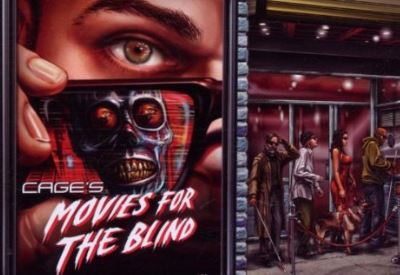
Retrospective Review: Movies for the Blind, by Cage

by Dustin

mftb

Halloween is always a fun time of the year. The kiddos are out in spooky costumes collecting enough candy to become diabetic at eight years old, young adults are out in costumes slutty enough to make a stripper wince, and everyone is generally just out to have a good time. More importantly for this site however, there’s also a huge array of horror themed hip-hop out there to fit the mood of the season. We’re not talking about struggle-Juggalo horrorcore however. What we want to discuss is the artists that went deeper, combining horror elements with conventional hip-hop to create near-movie like albums.

Welcome to Extraordinary Nobodies’ first ever Halloween Week, where we will have a look at four of our favorite horror inspired albums for an entire week leading up to Halloween (though surely you have figured that out by now).

The first album on the menu is perhaps the least Halloween-flavoured of the bunch, but it’s got one foot firmly planted in the horror genre. Cage’s Movies for the Blind, released in 2002, combined shock rap with New York hip-hop in a way not many had attempted. Though he’s probably most notorious for a short lived beef with rap megastar Eminem, Cage’s first two releases are regarded by many as underground classics. Movies for the Blind started it all, and it’s a record that will leave you feeling utterly disgusted in the best way possible.

Lyrically, Movies for the Blind is the ultimate channeling of rage, drug abuse, and mental illness into bar after bar of tantalizingly shocking lines. Setting the tone is an album opener with Cage expressing an unbridled affinity for PCP and destruction. The album doesn’t quit either, with jump-scare like lyrics woven into even the most New York sounding tracks to keep you on edge. No content is off the table on this record. Murder, suicide, and violence find themselves as staples on what is a freak-show of atrocities. Dips into the norm are rare, but when they do happen it serves as a necessary break from the amazingly grotesque images Cage paints with his words.

Blue collar to corporate blessed the unfortunate,
Like when I put my foot down that bitch still aborted it,
Stuck the canister under my jacket like the lucky one,
‘Uh, sir you can’t leave with that,’ bitch this my fucking son!
(Too Much)

Unlike Hell’s Winter, which saw Cage take a more introspective approach to his music, Movies for the Blind lacks any form of self-awareness. It is an album with an emcee at his most unhinged, unloading rage and hate at anyone who will listen. It’s beautifully executed, and forces you to feel a level of discomfort that most horrorcore albums simply haven’t been able to achieve.

His charisma is also undeniable. It gets to the point that he nearly comes across as a sociopath.

I’m a suicidal failure, look my life’s a failure,
I can’t make it in rap, even my birth’s an error,
Do what I can to catch a quick death,
But I’m meant to be here and that’s the fuckin’ hell I live with.
(Suicidal Failure)

Interestingly, the production on Movies for the Blind is relatively subdue and typical for the underground New York scene at the time. The album featured production primarily by DJ Mighty Mi, but also the likes of El-P, Necro, and Camu Tao (plus a handful of others). With the lineup, it’s no surprise that the sound is so distinctly east coast. Movies for the Blind fools you into nodding along with the gritty production, while throwing lines about suicide and death in your face. The contrast is absolutely wonderful to experience; moreover, the instrumentals are brilliantly cohesive throughout.

Movies for the Blind may not be the ultimate Halloween record, but there are qualities to it that definitely make it a terrifying listening. It’s quite interesting how this album plays out like a series of short snuff films. It’s more disturbing than scary, but it remains as grimy today as it was 14 years ago upon release. Movies for the Blind is also a gem from a time where Definitive Jux and Eastern Conference (the latter of which would release the album) were just beginning to take over the New York underground scene. Whether you’re interested in records from that era, or just looking for something gory to celebrate Halloween, Movies for the Blind remains an underground classic that is wholeheartedly recommendable.

Not for the faint of heart, however.

The Media That Refuses to Die: Cassette

by Dustin

cassette

“What is that?” my buddy asks as I pull another parcel from the mailbox, “don’t tell me you’re still collecting music”.

You see, my friend doesn’t quite understand the point of collecting physical media when it comes to music. He sees CDs and vinyl as a waste of money when I’ve already got a Spotify subscription. The argument that I want better sound quality usually shuts him up, since streaming can be questionable at times in that regard.

Unfortunately that argument will not work with this shipment.

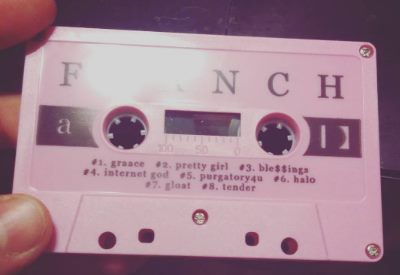
My friend remains interested as I rip apart the yellow envelope from Darling Recordings. I explained to him that the album is by a really cool experimental group called FLANCH. He seems interested in the sound and implies that he would like to listen to it once I finish my painfully slow unwrap job; however, his interest turns to confusion as I reveal the contents of the envelope.

He looks at me and his face screws up into an indescribable expression. In a moment of baffled realization he asks the question, “is that a fucking cassette?”

cassette2

Though this may sound ridiculous to some, cassette has seen a huge resurgence in the past couple years via the independent scene. The companies which produce cassette tapes are reportedly having their best years since the 1960s. For example, the National Audio Company reportedly produced over ten million cassettes in 2014 alone. For something once considered defunct this is a huge comeback, and it is almost rooted entirely in the independent music scene.

But why? To help answer that question we touched base with Nick Faidley. Nick is the founder of independent label Darling Recordings, an outfit which has released multiple cassettes (including FLANCH, mentioned earlier in this article). He offered up the following insight as to why cassettes have seen such a heavy revival:

Darling Recordings has turned to tapes for the many of the same reasons as other independent labels and musicians: cassettes are low cost, low hassle, and easy for bands to use on the merch table. For us it’s really that simple. Tapes are affordable at low quantities, unlike vinyl (incredibly expensive) and CDs (large minimum orders), and they can be completely DIY.

Darling runs its cassette manufacturing with a wonderful company out of Ohio called A to Z Audio.

As Nick stated, cost is a huge factor. Unlike major outfits, most independent labels only do limited releases for physical editions of records. These are generally in the 20-100 copies range. The price per unit for limited runs is cheaper on cassette than any other physical media; moreover, a price per unit quote (on a 100 album order) from a Canadian duplication company shows that the difference is extreme:

CD with Jewel Case and Insert: $4.90/each
Vinyl Record with Colour Cover: $9.00/each
Cassette with Clear Case and J-Card Insert: $1.85/each

Cassette is the clear cut choice based on cost alone, and for small independent labels every dollar counts. Perhaps physical media is no longer a necessity with the rise of digital distribution, but fans will always be looking to get their hands on merch. Cassettes are a cost effective way to provide this to fans (whether it be online, in a record store, or at a show). In addition to it being good for the label, cassette releases are generally cheaper for the consumer as well. It’s very much a win-win for those interested.

Though more subjective, there’s also a collectible feel to cassettes that seems to offer up a lot of appeal. There’s certainly a degree of nostalgia involved to a particular generation, but to others they just seem “cool”. They’re just so much different when compared to CDs and vinyl. Cassettes have a particular minimalistic and rugged appearance that seems to draw a certain crowd in. Even the listening experience, though maybe not the best in terms of sound quality, is incredibly unique. The tape hiss, the sound of the cassette deck mechanism, the sudden jarring click when a side runs out…

It’s something that can’t really be compared to anything other music media, for better or worse.

Interestingly, this wave of cassette revival has become big enough that some major labels have started to jump on the bandwagon. A recent example of this is Shady Records re-issuing Eminem’s major imprint debut, The Slim Shady LP, on a translucent purple cassette. To no ones surprise, the re-issue was incredibly popular. It doesn’t seem like this will be a regular trend such as vinyl releases, but it definitely speaks to the size of cassettes resurgence.

For all intents and purposes cassette should be dead, but it’s not. They’ve found their way back into the music scene by carving a niche which no other media can really occupy. What cassette lacks in sound quality it more than makes up for in affordability, making them the ultimate budget merchandise. It’s a revival that maybe no one expected, but it’s working out beautifully for artists around the globe.

So, the next time you see a cassette just remember: your uncle who owns a Mustang from the 1980s with a tape-deck isn’t the only person looking to buy cassettes anymore.

Apu Rambles: Hip-Hop, my Replacement Girlfriend

by Apu

rex1

Schoolwork, internet connectivity issues that prolong the time it takes to do said schoolwork, a keyboard meltdown, and other things I can use as weak excuses for my inactivity… none of which could keep me from procrastinating and listening to hip hop. Hip hop has been essentially the only part of my personality that I think is appealing in any way at all. However, believe it or not, there was once a time when I wasn’t into the genre, and hardly knew anything about it at all. Can you believe it?! Well, unluckily for you, this half-assed intro leading into a very long piece about me and hip hop is almost done. It’s story time!

Before I really got into hip hop music, I had heard a few songs, but for the most part it was more of what my parents wanted to listen to. So it was classic rock when my dad was driving and pop when my mom was driving. The only hip hop song that I really properly remember is “Gold Digger” by Kanye. I had heard it when it was on the radio once, so it must have been in mid-to-late-2005. None else really stick out in my head, but I do know I had heard some. Those that I did hear, I didn’t really think anything of. They were alright, but I didn’t like them any more than the songs that my dad would play (my mom’s taste in music is garbage). I didn’t really connect with the genre until the summer of 2006.
A friend of mine in the neighborhood who obviously later became a massive fuck-up showed me the song “When I’m Gone” by Eminem. I remember when I heard it, I thought to myself “I’ve never heard a song like this before, what the fuck is this?” It was like a movie in my head, which is something that I had never really experienced when listening to a song at that point in my life. I had never really been so drawn to the lyrics of a song before then. Of course, now, I don’t like the song very much, but back then it was something totally new.

All my life, I’ve been a loser who lives under a rock, so I didn’t know who Eminem was back then. Over the course of the next week or two (or more, who actually remembers details like that?), I was on YouTube looking for more of Em’s music. I think I had found songs like “Without Me”, “Mockingbird”, and “Lose Yourself”. I do also remember hearing “You Don’t Know”, but according to the ever-reliable Wikipedia, that came out in November of 2006, so I guess my memory is hazy on the timeline regarding that. Also, fun fact, I didn’t know he was white until after almost 2 months of listening to loose tracks, after seeing one of his music videos.

Anyways, I was pretty enraptured by the guy’s music. No artist had ever really made music that stuck with me the way his did. Later that summer, I went on vacation to see some family. When I was visiting my mom’s side of the family, I was playing Super Mario Bros. with my uncle and I started telling him about how I liked Eminem. Sometime during that week I was there, he gave me his copy of The Eminem Show, which was the only Em album he felt comfortable showing me at that age, although he still did it with a “don’t tell your mom.” I stuck it in his CD player and started listening to it. I enjoyed the holy hell out of that CD. I must have listened to it 3 times straight while my parents, grandparents, and aunts thought I was playing video games with my uncle and brother.

When listening to it, I noticed that there were other people on the songs. Using the booklet with the lyrics, I matched the voices to the names (I don’t recall the back cover having the features listed so I didn’t know that the songs would have other people on them). I liked them, but the ones who really stood out to me were D-12. I think the only reason I was able to do what many other Eminem fans can’t and actually recognize each member is because I spent so much time staring at the lyrics in the booklet. At first, I didn’t really understand why it said “featuring D-12” but then had the verses preceded with the members’ names…I guess I didn’t put together the fact that they’re a group. Anyways, I told my uncle “wow these D-12 guys are awesome, do they have music out?” Of course, he had the Devil’s Night CD. That one was one that he really wasn’t sure he wanted to let me have. I’m sure a decade later, he regrets it. Too bad.

That CD flipped everything that I thought I knew about the world on its head, then face fucked it.

That is the CD that shaped nearly everything about my attitude in the years to come, and totally warped my sense of humor.

It was that CD.

When I listened to Devil’s Night, it was the first time I had ever heard anything that even approached something that vulgar. I was a kid who was an idealist and thought everything in the world was great. Listening to that album shattered that. I was entranced by how this group of 6 guys was just spewing venom at everything they didn’t like, and at some stuff that they did like. Some people lose their innocence when a loved one dies, some lose it when they accidentally walk in on their parents having sex…I think I lost mine when I listened to this CD. With Bizarre being a member, I don’t think I could have avoided it.

So after that I listened to the rest of Em’s discography, I listened to the other D-12 album, then started looking into Shady Records. I really, really enjoyed Obie Trice once I started listening to him. Cheers is still to this day one of my favorite albums and probably the 2nd best non-Em album to be released by Shady, in my opinion (the first being Devil’s Night). I started looking into Proof’s discography too, and listened to Searching For Jerry Garcia. After hearing a couple of verses by Royce da 5’9” on Em’s music, I started looking into his music. For about a year, I was listening mainly to that little circle of 8 Detroit artists.

Obviously, when you listen to early Shady Records albums, you’re bound to hear more and more of Dr. Dre. That led me to checking out his albums. From there, I started listening to more west coast hip hop artists. I don’t really remember who I was listening to though, because I don’t really listen to many of them anymore, but I do remember that I listened to some Snoop Dogg music. That’s where I really started enjoying the G-funk style present on Doggystyle, which I actually quite recently gained a new appreciation for as being possibly the only style of hip hop from the 90s that still sounds like it could have been produced today. I hold the entirely non-unique and pretty basic, pumpkin spice latte/Ugg boot level opinion that Doggystyle is the best-produced hip hop album of all time. Dre and Daz are geniuses for that.

Of course when you listen to the west coast, you’re bound to find 2Pac’s music. I had heard and read about 2Pac, but had never really listened to. I think he was the first artist since I listened to Em who had given me the same sort of feeling as Em did. There’s nothing that I can really say about 2Pac that hasn’t been said a million times before, but he did really make music that painted incredibly vivid scenarios, and his delivery would fall on you and cave in your chest. I know that I mainly listened to All Eyez On Me and the Makaveli album, because I liked the production on those more than I did on his pre-Death Row music, probably because it was more like the production I was used to hearing. My uncle later gave me his copy of All Eyez On Me, probably sometime like 2010 when I had already been listening to the album for a while. The 7 Day Theory is actually the first CD I bought for myself…in other words, spent my parents’ money on.

It wasn’t long after that when I sort of slowed down with hip hop. I had started to hear more and more of the crunk/snap music that was dominating the game in the mid-2000s. With social media and the internet not being as popular as it is today, it was a little harder to find acts that didn’t take up all the radio play, so I can understand why the whole “hip hop is dead” thing ended up happening, when it never really died if you take a look back at some artists that were out but not being pushed the way a Lil Jon or whoever else was. I certainly felt like that. I sort of stopped looking for new artists to listen to for a good year. I thought I had tapped into everything that hip hop really had to offer. If only I could beat the living shit out of my younger self.

I forget how, but I discovered Redman, the Wu-Tang Clan, and Busta Rhymes all sometime in mid-2009. I think it was a combination of seeing Raekwon’s Only Built 4 Cuban Linx 2 and Busta’s Back On My B.S. on the iTunes store, and finally looking up who Em was talking about when he mentioned “Reggie” on “TIl I Collapse.” I saw the cover of Dare Iz A Darkside and figured it looked wacky enough to listen to (fuck you, young Apu…even though that’s still a personal top 5 album).

That album is what got me into the east coast sound. It totally changed everything that I was looking for in the music that I liked. I think the fact that it was dark, which was sort of the sound I was into at the time as a rebellion to the ignorantly happy crunk era, is what made that album click instantly with me. It was almost like Devil’s Night and The Marshall Mathers LP in the sense that it had a lot of humor on it but at the same time it had pretty dark music. It managed being funky as fuck, funny, and witty, yet dark, hazy, and gritty (BARZ!), which to this day is something that really impresses me, because I don’t think there is anyone else who can marry those two sounds the way Red did on that album.

Hearing those guys from the east got me more interested in digging into east coast hip hop. I found guys like Pharoahe Monch, Nas, Biggie, and DMX. There was something about the east sound that I started to really connect with. I think it was the rougher sound, which again, was in such stark contrast to the crunk shit turning trap (which I don’t dislike by any means at all, certainly not the way I do crunk). It was different from the polished sound of the west, where even when the music gets aggressive or dark it does so with a sort of sense of style that the east generally forgoes. I told Dustin recently that it’s almost like the musical styles match the climates; the west is warmer and has more beaches and shit, and the people are wearing summer clothes year round so the music has that sort of style, whereas the east gets a shit-ton colder so people are running around in the streets of New York wearing jeans, hoodies, jackets, and Timberland boots, which is reflected in the rugged sound. That was a massive tangent that didn’t need to be made at all, but yeah.

In 2010 I started going through a horrorcore phase. I discovered Tech N9ne through the Seepage EP, which is some of his darkest material to date. From there, I discovered Brotha Lynch Hung, and I rediscovered King Gordy. Now, until I heard Gordy’s verse on “Horns”, I had thought he was a blues singer from Detroit. The only time I had heard him was on hooks for Proof and D-12, on songs like “No. T. Lose” off Searching For Jerry Garcia, and “I Am Gone” and “Mrs. Pitts” off Return of The Dozen Vol. 1. It wasn’t a too far-off conclusion to come to, as he draws quite a bit of inspiration from blues artist Howlin’ Wolf. How fucking wrong I was. I’m not really into horrorcore much anymore, but I still enjoy Gordy and Lynch a lot. Gordy is to this day one of the most unique hip hop artists I’ve ever heard.

Getting into King Gordy is what got me back into Detroit hip hop. I started listening to his group, Fat Killahz, and then guys like Elzhi and Black Milk (who later ended up getting me into Sean Price, through Random Axe). As time would go on I would become a fan of Danny Brown’s as well. I also tried listening to more southern artists because at one point I felt like I was starting to neglect them. I became a big fan of Scarface.

My taste in music stayed relatively unchanged for the next 3 or 4 years, and that leads into about now. I would start listening to other acts, like The Roots, but I didn’t really focus on expanding. But this is also around the time I started talking to Dustin, and he was constantly expanding his tastes (read: constantly becoming more and more of a hipster). But he managed to get me to start listening to Run The Jewels about a year and a half later than everyone else did. Around the same time, I also started to get familiar with Prof before becoming a massive fan of his, and because of the Rhymesayers connection and a push from Dustin, I’ve started getting into Aesop Rock. I’m still looking for other artists to listen to as well.

I’ve left out a lot of the artists that I listen to, primarily because I’m a scatterbrained fuck, but that is basically the main gist of it. Hip hop has basically shaped me into who I am now. I don’t think there’s much that I have a passion about the way I do hip hop. The more time goes on, the more I that passion grows. For the longest it was about how I connected to the music. Then I started to take into account lyricism. Lately I’ve been getting very into the production side. Not in practice, since I’m nowhere near creative enough to do that, but just listening to things as closely as I can to hear how things are put together. I think that’s why recently I’ve gained such an affinity for Just Blaze, aside from the fact that he makes killer beats. The way he pieces some of his beats together amazes me sometimes. I’ve always liked him, but the more I try to dissect in my head what he does, the most I find what he does to be so impressive.

But yeah. I’m basically pussywhipped for hip hop. I don’t see myself losing the passion I have for it any time soon. Fuck it, I’m about to go listen to some right now.

The end. Thanks for wasting your time reading this.

Album Review: Ka – Honor Killed the Samurai

by Dustin

HKTS

8.75/10

It seems as if Ka has been on a roll since his debut solo album release in 2008. The gritty Brownsville emcee has totaled three solo albums (prior to Honor Killed the Samurai), two extended plays, and a collaborative album under the name Dr. Yen Lo. All have been met with positive critical reviews, and have garnered him an impressive underground fan base. As mentioned, he’s recently released Honor Killed the Samurai. This is his first full length solo album since 2013’s The Night’s Gambit, but he’s kept fans eagerly anticipating it with collaborative efforts and a handful of singles.

It’s finally here however, and it definitely lives up to the standard Ka has established throughout his discography.

When approaching any of Ka’s work, it should be expected that you will have to rewind and replay tracks multiple times to catch all the little details. This is true for Honor Killed the Samurai. With the focus being primarily on story telling lyrics, it isn’t the type of album that one can digest quickly. There is a lot of meat to chew on, and honestly this makes it quite wonderful to revisit. Ka’s presence on the album is most similar to that of a spoken word poet.

I strained to obtain so I could give more,
Most dangerous when there was nothing to live for.
(Conflicted)

Additionally, the production on Honor Killed the Samurai provides a splendid backdrop. The instrumentation feels relatively minimal; however, it’s quickly evident that it was the perfect choice for the overall feel of the album. There’s a degree of consistency to the production that creates a wonderfully cohesive environment behind Ka’s vocals. Though the production is minimalistic, it is a beautiful simplicity. All the tracks sound smooth, there is not an abrasive moment in the duration of Honor Killed the Samurai.

At the end of the day, Ka is the definition of a rapper’s rapper. Those obsessed with storytelling and complex (yet coherent) rhyme schemes will fall in love with this album. He’s immensely talented at painting a vivid scene, and he oozes technical writing ability. That being said, if you’re looking for an absent minded listen (which there is absolutely nothing wrong with), this is not the album for you. The focus is so narrowed on vocals that the listener has to be prepared to pay attention. It’s a rewarding listen, but not an easy one.

So I stood on mine, during the hoodest time,
Was a nightmare, felt like life here was as good as dying,
We was born in the thorns, few arose,
Once a town’s noose, now in soundproofs pursuing golds.
(Mourn at Night)

In a moment of stunning unprofessionalism, it seems fitting to close this with a statement aimed at the New York Post. If you cannot separate the music of a highly regarded story-teller from their personal lives, that is your issue. Do not attempt to write a smear piece on the artist. Simply because Ka writes about things street relate (perhaps things he’s seen, or grown up around), does not make him any less of a firefighter. He’s doing a job most are not brave enough to do, and should be celebrated as such. Not shamed for producing art that many love.

To the fans who voiced their displeasure, kudos. The author at the New York Post showed so little journalistic integrity, and it was beautiful to witness fans standing up for an artist over an injustice. Hopefully those who stood up for Ka also go out and support this project. Honor Killed the Samurai is very much worth the purchase.

Retrospective Review: A History of Violence, by Kuniva

by Apu

HOV

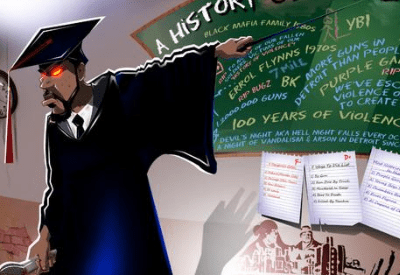
On December 16, 2014, Kuniva released his official debut studio project, A History of Violence. It followed a long stream of mixtapes (Retribution, the Midwest Marauders series, and the Lost Gold mixtape). Unlike the music that was on the mixtapes, Kuniva used all original production (primarily handled by Block Symfany, a production team composed of Rio Da Ghost and T.Boyd out of Michigan), and made actual fleshed-out songs, rather than just long verses and freestyles. Overall, it’s a very solid solo offering. It set the stage for him to grow and dig deeper in his later material.

The best part of this project to me is how Kuniva put it together. It sort of sounds like he sequenced the album very deliberately. The first 4 tracks seem like they’re from the perspective of a younger, more rowdy Kuniva. Those tracks tend to celebrate the street life. It opens up with the posse cut “Michiganish”, featuring Aftermath artist Jon Connor, Mass Appeal’s Boldy James, and Detroit legend Guilty Simpson. It starts things off fairly simply, being a competitive cypher of sorts. The following few songs, “Born Like This”, “Where I’m From”, and “Baileys In Bangkok,” all have a similar sort of vibe. They’re cocky and rowdy. They sound a little ironic and tongue in cheek, almost as though Kuniva was trying to rap the way a younger kid would rap. The content and the way it’s done makes me think he was talking about the street life, from the perspective of a kid living it, rather than someone reflecting on it.

Then comes “Derty Headz”, which is a very powerful song dedicated to fans of his and D-12. It has an anthemic hook and verses that drop all sorts of history about his career. He talks about Proof recruiting him for the group, the beef they’ve had, and the adversity they’ve faced from within since Proof passed. This song is the major turning point in almost every way. Here, flashes of reflection and maturity start to show up. From track 6 onwards, it seems to shift to his perspective now as a man nearly 40 years old after having seen massive success with his group, mournfully reflecting on the hard times in life but looking ahead with a drive to keep moving now that he’s out. “Light Work” and “Where The Hoes @?”, both offer fiery production and strong verses delivered with the hunger and confidence of a man who has seen his fair share of hardship. The title track, which is quite possibly the most personal and poetic song Kuniva has ever released, has him speaking on his past up to the point when Proof was murdered in chilling, almost uncomfortably rich detail, his voice oozing pain over him reflecting on it, and the album ends on “Shoutout”, which sounds like where he’s at now, looking forward into the future with hope after everything he’s been through.

The music on this project is good. There’s no denying that Kuniva is a strong rapper and has been doing nothing but improving since D-12 World. His delivery has become a lot more convincing and his writing has gotten sharper. The production is great too. Block Symfany (and Enrichment, on the title track) were able to provide Kuniva with a backdrop that deviated from the typical D-12 sound. It gave Kuniva the chance to step out of that style and develop his own identity, which is something that he hasn’t had the chance to really do much in the past outside of his Retribution mixtape. I think the first half of the album is a little shaky and unfocused at points, but every song from “Derty Headz” onwards is great. The title track might be one of my favorites of the entire year of 2014, period.

However, what really makes the album good is how it lives up to its name of being a “history”. Kuniva put the album together to actually make it almost like a song-by-song history of his life, from rapping competitively at the Hip-Hop Shop and living in the streets, to when D-12 were at their peak, and ending it with an adult perspective on life. It’s really special, because oftentimes artists don’t do that kind of thing when putting their projects together. You generally hear about Kendrick and the like putting their albums together in a manner like that, but honestly, Kuniva managed to pull off an album concept as well as anybody else. Even if it wasn’t fully intentional, he still clearly had an idea of progressing the sound and content of the project in a way that made sense, as opposed to putting the songs together in an arbitrary order and releasing it onto iTunes. That, to me, is what really makes it good, and not just another hip hop album.

Apu Rambles: Sex, Money, & Drugs

by Apu (yeah, he’s alive)

rhh

Well shit, it’s been a while. I’m sure most of the readers of this little blog here were pretty happy with not having the site polluted with my awfulness for the last 3 months or so…I really just didn’t have any motivation to write anything. Maybe it’s because I mentally checked out after school ended, and now that I’m back in a course I’ve got more activity happening in my brain, thus creating the desire to write. Although the more likely explanation for my writing tonight is probably liquor. Regardless, I’ve got something new for you to read and roll your eyes at. Although it might be shorter than normal so there’s that.

As I may or may not have talked about at some point in any one of my fairly insignificant additions to this blog, I started listening to hip hop music around the time of Youtube’s creation. It was pretty good for me, as a person who had next to nobody to discuss hip hop music with. I spent a lot of time on Youtube looking for more music to listen to. At the beginning, I spent my time listening to a lot of Eminem and D-12. Over the next couple of years I did branch out to others like 2Pac, Nas, and others who I could list if I didn’t want to just shut up and get on with my story. While viewing videos (which were usually just audio with stills of incorrect album covers) by the artists I was listening to, I would find myself going down into the comment section. I started to notice a certain pattern in the comments to the artists I was listening to. There would be one comment that would almost always pop up. It’s a statement that I have nightmares about that involve knives, lube, and Mountain Dew. It’s what you’ll probably see coming from “real hip hop” heads. It’s toxic.

“He raps about real life and struggle, not bitches, drugs, and money like everyone else does!”

Jesus Christ, I hate myself for just typing that.

Now, I’m not going to lie and say I didn’t agree with that for a period of time. For a good 3 or 4 years I had that same sort of mindset. But now that I’m not a shitty 15 year old kid anymore, I realize how stupid it is to not listen to some rappers or songs because they’re not meaningful.

NOT EVERYTHING NEEDS TO HAVE MEANING TO IT.

Crazy, right?

I don’t know. I guess I understand the reasoning behind the idea that music needs to be deep. A lot of the time when I’m in a shitty mood (so most of the time) it’s nice to listen to something with a message behind it that I can relate to. Actually, it’s also pretty nice to listen to a song that I can’t relate to, but can still feel bitter over. It sort of validates the way I’m feeling or the way I think I’d feel if I were in a certain situation. It creates a sort of bond between listener and artist that makes the listener feel like he or she (hooray for gender equal descriptions!) is less alone. I get it. I’ve felt that, plenty of times. It’s definitely something that should be encouraged, as it’s almost a more intimate bond than any friendship or other sorts of relationships can create, because it’s your own raw emotion that you can feel and express without any fear of judgement from others, since there’s nobody else involved in listening to a song. I can’t tell you how often I will sometimes randomly just get misty-eyed for no reason, just because I’m still not the most mentally healthy person in the world and I hear something in music that triggers a raw emotional response.

However (I’ll say it again for extra emphasis since I’m terrible at getting my point across with all the tangents I can’t help but take), that doesn’t mean that all music needs to have a meaning to it. Far from it, actually.

Remember when I did that article on Prof and mentioned how I was going through shit? One of the reasons I gravitated towards Prof almost exclusively for 4 months or so is because he made a tone of ignorant music that I could just listen to, chill to, chuckle to, and ignore my pain to. Sure, Prof releases a lot of emotional shit. “A Month From Now” still puts me in a trance every time I listen to it, and it’s been at least 3 months since I first discovered it. But a lot of the time, I’ll throw on “Apeshit” or “Roughneck” when I’m feeling shitty instead. I don’t need to constantly be reminded how fucked up my mood is by listening to a song that matches it. Sometimes I need to just listen to something that has absolutely nothing to do with anything, just because it’s fun. How does keeping myself down with sad and dark music help me in any way move on?

Whatever happened to “laughter is the best medicine”? Does that suddenly stop applying when it comes to hip hop? This genre is absolutely incredible and I’ll love it forever, but I swear, some of the fans are just fucking idiots. It’s like they want to wallow in their own misery with the artists they listen to, or reinforce the fact that the world is totally and completely screwed and that we’re headed towards destruction (a topic that I can probably talk about forever, but doesn’t apply to this piece much more than that one sentence).

I don’t know where this “ugh this has no substance” mindset came from, and I wish I did. Not everything needs to make you think. I don’t really care if my opinion on this matter makes me come off as even stupider than you all probably already thought I was, but I’d rather read if I wanted to think (and trust me, I read plenty, I love reading). People can tell me that’s retarded all they want, because I’m sure that those same people probably don’t fucking read to begin with. If I’m really, really sad, I’ll listen to something that I can relate to, something powerful that’s cathartic for me to listen to. But if I’m just feeling down like normal, I probably want to listen to something that’ll get me in better spirits and uplift me.

It’s almost sad how much people hate to listen to lighthearted, meaningless music. People will essentially dismiss artists like Lil Wayne, not because of skill levels or anything (I’m not the biggest Wayne fan in the world but the man can fucking rap), but because of the type of music he makes. People talk about how he doesn’t make real shit, and it’s all vapid, and shit like that. Well, my question is, why the fuck do you care? So what if he makes vapid music? How does it affect you as a person, when you just have the option to not listen and choose something else instead of complaining?

And it’s not even really about that, either. What really amuses me about the hatred of new-school hip hop is how these so-called old-school fans, these “real hip hop heads”, say that the only hip hop that’s good is the deeper shit, and that’s why new shit sucks. These fucking mongoloids seem to forget that hip hop was founded on celebratory music. It was music that people danced and partied to. Shit, break-dancing is supposed to be one of the main pillars of hip hop, isn’t it? To my knowledge, the socially-aware aspect of hip hop didn’t become something that was really widespread until the late ‘80s. Before then, it was primarily partying, having a good time, bragging about how good you are, and topics of that sort. Why is it that hip hop can’t still occasionally be about that just because something new was introduced to it? Now, the keyword here is “occasionally”. I’m not saying that the only hip hop that’s worth a shit is empty nonsense. I’m just saying that that sort of music should be able to co-exist with the realer shit, too.

Somewhat related, I would like to also ask…why is it that rappers who sound like they’re being lyrical as shit and socially conscious by essentially just rhyming a lot and using metaphors that reference current social issues, while actually saying nothing but gibberish, get so much more praise than those who are upfront about the fact that they say nothing of importance? I personally find when a rapper is talking irreverent shit about having fun to be better than when a rapper just rhymes a lot of nonsense while trying to sound deep. At least the fun rapper is actually saying something, as opposed to masticating the English language until it becomes almost caveman-like just to fool people into thinking that they’re really good at rapping. They’re not trying to pretend to be anything that they’re not. They’re just having a good time while the “lyrical” rappers are just acting like they’re fucking messiahs to the people, because that’s how their audience treats them for being able to relate something to a truck running over people in France while rhyming every other word, even if they’re made-up words. Hip hop fans for some reason have got some over 4 hour long Viagra hard-ons for rhymes that sound intelligent while being unintelligible, and they need to get over it. But again, a topic of discussion for another time.

All I’m saying is that life isn’t all about staying paranoid and keeping up with the latest conspiracies that rappers are coming up with to try to make themselves seem smart (I’m looking at you, Immortal Technique). There are several aspects of life, and one (or more) of those aspects is enjoying yourself. At the end of the day, being alive really has absolutely no reason behind it. The least you can do is embrace and enjoy the absurdity of life. In our modern society, I believe part of that is listening to absurd, vapid music. All you’re doing is removing yourself from a part of your life that is pretty essential to living with at least somewhat decent mental health. You’re not fooling anybody by listening to so-called “smart” music.

I really don’t know where to go from here. I’m on the verge of writing about how life is essentially meaningless so there’s no reason why music can’t be meaningless as well, but I feel like that’s a pretty bad idea, so I’ll sign off and send this to Dustin. I think I’ve made my point, but if not, I’ll do a tl;dr version of it right here: Stop being a pretentious fuckwad and enjoy some music to party to. It’s not a bad thing to actually enjoy yourself, you delusional masochists