Understanding the Necessity and Shortcomings of Music Streaming

by Dustin

streaming

Though streaming hasn’t been a dominant form of music distribution for very long, the idea took root over fifteen years ago with Napster and MusicNET. These services were met with criticism, rejection, and (in the case of Napster) legal issues. Flash forward to today, the service options are different but many of the issues remain the same. However, in the modern era of music, it appears to be that streaming is becoming a necessity.

To understand the need for streaming, one can simply examine the consequences of out right rejecting these services. To speculate on how severe these consequences could be, a simply case study from another industry can be used: Sears.

Sears resisted adapting their catalogue system for far too long. Though the demand for online sales was ever increasing from many loyal consumers, Sears remained set in their ways. This would prove to be a critical failure as the company lost a huge consumer base; moreover, a later attempt to move into the online world would prove futile with the rise of Amazon. Sears had also not exactly been a darling financially, and this failure to adapt proved to be nearly fatal for the company. Over one hundred and twenty Sears stores closed in the year of 2011 alone, and they’ve never quite recovered from the lost business.

Of course this isn’t a perfect comparison for the music industry and streaming. Yet, it illustrates how devastating it can be to ignore the demand for change. Digital sales occupied this space for years, but now the consumers are leaning towards streaming. The music industry as a whole cannot got out of business like a retail chain; however, it can see artists and labels forced into a position where profit is simply not possible if consumer demand isn’t facilitated.

Fortunately, the industry has shown a willingness to adapt before. Whether it be physical media changes, or moving into an online space, music distribution has been fluid. Streaming could also prove to be attractive in its own right.

Streaming offers many advantages for both artists and labels. A 2015 study by Aguiar and Waldfogel (for the European Commission) showed that an increase in streaming correlates to a noticeable drop in music piracy. There is also appeal in how simple it is to get music onto streaming services. For small scale artists, being able to manage their own music on Spotify or Apple Music is often times a simpler process than landing a distribution deal. It has also created a new job space, with online distributors cropping up in order to help musicians get their product to these services.

From the standpoint of the consumer, streaming is a powerhouse. Rather than spending ten dollars for every new release, huge libraries of new and old music are available on demand at a single monthly fee. Audiophiles may take issue with the lack of control over sound quality and song tagging, but for the casual listener streaming services simply makes sense. These services are often incredibly portable, making it far easier to bring your music from desktop to mobile device. As a whole, it is easy to see why streaming is immensely popular with your average listener.

One may wonder why there is still such a resistance to streaming within the music industry, considering these positives. The answer to that is relatively simple: streaming is a necessary, but highly flawed, service.

I gave up and became a Spotify-er,
Paying myself a fraction of a penny playing “Qualifiers”.
(Open Mike Eagle – Dark Comedy Late Show)

Even though streaming has reduced piracy rates, it has also negatively impacted digital download sales (such as those provided by iTunes and Bandcamp). This ultimately reduces the positive impact it has on the music industry; moreover, this is a genuine issue due to the minuscule payout received by artists and labels per stream. Until the problem of royalties can be sorted, music streaming is going to be a somewhat problematic service.

There are of course other issues, such as fragmenting subscribers with service-specific exclusives. Perhaps the most prevalent cases of this was Kanye West’s The Life of Pablo fiasco. The album experienced abnormally high piracy rates due to its chaotic and exclusive release through the Tidal streaming service. Exclusives are certainly an interesting way to attempt to attract new subscribers, unfortunately it also seems harmful to the long term viability of streaming.

Spotify, Apple Music, Tidal, and Google Play give music an accessibility that the world has never seen before. It stands to reason that there will be kinks to work out along the way. Though it’s been close to fifteen years since the idea of streaming started gaining traction, we still exist in the early years of services attempting to do things legally. One can see the clear benefits and necessity of streaming services, but it appears that it will still be a while longer before they are agreeable for everyone.
Album Review: clipping. – Splendor & Misery

by Dustin

sm

8.5/10

It definitely seems as if we’ve written about clipping. a lot, but they’re one of the most active and unique rap groups out current. Who can blame us? Anyway…

To say that Daveed Diggs is popular right now would be an understatement. Fortunately, for fans of the Los Angeles based experimental rap trio clipping., he’s not abandoned his work in the world of weird. With an EP (Wriggle) already under their belt for the year, clipping. is back again with a full length followup to 2014’s CLPPNG. Released under Sub Pop Records and popular experimental outfit Deathbomb Arc, Splendor & Misery looks to keep clipping.’s hot-streak of releases at full steam.

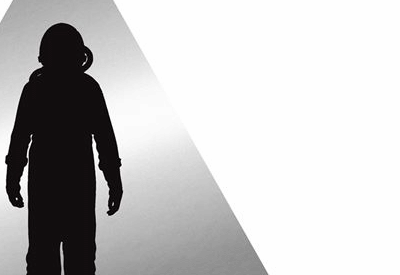
With Splendor & Misery, clipping. took a step in a different direction from previous releases. The album follows the story of the sole survivor of an uprising, his life on an interstellar transport ship, and his relationship with the on-board computer. The concept is unique, and provided Digg’s the opportunity to flex his storytelling ability at every turn. He flawlessly maneuvers over the wild production, proving time and time again that he is one of the more versatile emcees in hip-hop. Tracks like “Baby Don’t Sleep” are beautifully unnerving, and it big part of this is Daveed’s vocal control and delivery. All in all, a wonderful vocal performance throughout the entirety of Splendor & Misery.

No home, you’ve been there,
Clearly off safety,
No destination,
No time for waiting,
Saviors are fiction,
Memories fading,
like ghosts, ghosts, go.
(Baby Don’t Sleep)

The production is basically what is to be expected from a clipping. album. It’s abrasive, loud, and fuzzy. The main difference on Splendor & Misery is that the instrumentals tend to be more spaced out than a lot of their previous work. Given the concept of the album, this is completely understandable and sets a well defined mood behind Deveed’s vocals. Atmosphere is the main strength of the production on this album. Though it might not necessarily carry that touch of traditional hip-hop the group is known for, the instrumentation is well execute. Hudson and Snipes rarely disappoint.

Though the album is a fantastic piece of art-rap, Splendor & Misery does have one minor flaw. There was a single moment which did not feel as though it fit the overall sound of the record. “Story 5” . Coming off a long run of incredibly cohesive work, the acapella felt very out of place. Unlike the previous “story” tracks on clipping. releases, it was not a standout track; regardless, It is still a pleasant listen and quite interesting, but in the grander picture of Splendor & Misery it was a jarring shift in sound.

Listeners who go into Splendor & Misery expecting the heavy hitting blend of conventional rap and noise may be in for a bit of a shock. This album is definitely a departure from the norm for clipping. as a group. Splendor & Misery should be approached as a conceptual art album, and not put in the same category as their previous works. Fortunately, for those who find themselves missing the sounds clipping. played with on previous releases the EP from earlier this year is jam packed with heavy, easier to digest songs.

This ain’t healthy to be held to blame,
Once you help me, now you abandon me,
What you’re tellin’ me by not tellin’ me?,
Anything, anything,
I’d give anything if you’d say my name,
Don’t you play with me, it’s an emergency.
(Break the Glass)

Don’t discredit Splendor & Misery for that reason, however. This album seems to be the moment that clipping. really discovered who they are as artists. From a conceptual standpoint this is the groups strongest effort. It was an absolute treat to see them tapping into some hidden potential. They took a risk with a release that is unconventional even for clipping., and it paid off with a solid final product.

Album Review: Ka – Honor Killed the Samurai

by Dustin

HKTS

8.75/10

It seems as if Ka has been on a roll since his debut solo album release in 2008. The gritty Brownsville emcee has totaled three solo albums (prior to Honor Killed the Samurai), two extended plays, and a collaborative album under the name Dr. Yen Lo. All have been met with positive critical reviews, and have garnered him an impressive underground fan base. As mentioned, he’s recently released Honor Killed the Samurai. This is his first full length solo album since 2013’s The Night’s Gambit, but he’s kept fans eagerly anticipating it with collaborative efforts and a handful of singles.

It’s finally here however, and it definitely lives up to the standard Ka has established throughout his discography.

When approaching any of Ka’s work, it should be expected that you will have to rewind and replay tracks multiple times to catch all the little details. This is true for Honor Killed the Samurai. With the focus being primarily on story telling lyrics, it isn’t the type of album that one can digest quickly. There is a lot of meat to chew on, and honestly this makes it quite wonderful to revisit. Ka’s presence on the album is most similar to that of a spoken word poet.

I strained to obtain so I could give more,
Most dangerous when there was nothing to live for.
(Conflicted)

Additionally, the production on Honor Killed the Samurai provides a splendid backdrop. The instrumentation feels relatively minimal; however, it’s quickly evident that it was the perfect choice for the overall feel of the album. There’s a degree of consistency to the production that creates a wonderfully cohesive environment behind Ka’s vocals. Though the production is minimalistic, it is a beautiful simplicity. All the tracks sound smooth, there is not an abrasive moment in the duration of Honor Killed the Samurai.

At the end of the day, Ka is the definition of a rapper’s rapper. Those obsessed with storytelling and complex (yet coherent) rhyme schemes will fall in love with this album. He’s immensely talented at painting a vivid scene, and he oozes technical writing ability. That being said, if you’re looking for an absent minded listen (which there is absolutely nothing wrong with), this is not the album for you. The focus is so narrowed on vocals that the listener has to be prepared to pay attention. It’s a rewarding listen, but not an easy one.

So I stood on mine, during the hoodest time,
Was a nightmare, felt like life here was as good as dying,
We was born in the thorns, few arose,
Once a town’s noose, now in soundproofs pursuing golds.
(Mourn at Night)

In a moment of stunning unprofessionalism, it seems fitting to close this with a statement aimed at the New York Post. If you cannot separate the music of a highly regarded story-teller from their personal lives, that is your issue. Do not attempt to write a smear piece on the artist. Simply because Ka writes about things street relate (perhaps things he’s seen, or grown up around), does not make him any less of a firefighter. He’s doing a job most are not brave enough to do, and should be celebrated as such. Not shamed for producing art that many love.

To the fans who voiced their displeasure, kudos. The author at the New York Post showed so little journalistic integrity, and it was beautiful to witness fans standing up for an artist over an injustice. Hopefully those who stood up for Ka also go out and support this project. Honor Killed the Samurai is very much worth the purchase.

Album Review: deM atlaS – mF deM

by Dustin

mfdem

6.75/10

Among alternative hip-hop heads, MF DOOM is basically a household name. Though the rapper and producer has been relatively quiet for years, most fans still eagerly anticipate new material from the vaudeville villain no matter how rare. Apart from a handful of features, DOOM’s last release of substance was his production work on NehruvianDoom alongside young rapper Bishop Nehru… Don’t get too excited however, as mF deM is a bit of a tease in these regards. All DOOM instrumentation on this release has been heard before.

Don’t let that discourage you though as this project also has an emcee delivering brand new bars. This of course is Minnesota native and Rhymesayers Entertainment signee, deM atlaS. DeM draws influence from a wide variety of musical artists, and really has the potential to create a unique sound. He’s young, but he’s already got a vocal presence on the mic that can’t be matched by some veterans.

So what happens when pairing him with production, albeit previously released, by a hip-hop legend? You get a release with some really lovely highs.

deM atlas seems to be at his best on this tape when utilizing his singing voice. There’s something about deM that feels similar to Camu Tao’s later works at times. On tracks like “Grbge Trsh” he’s energetic, expressive, and stays engaging by conveying emotion excellently. There are many moments on mF deM that are in line with this stylistically. “Nervosa” and “Its Over, Im Dead” being two of the key high points. Even when not singing deM maintained his vocal presence over the majority of this release. When he’s on his game, he’s an absolute pleasure to listen to and super unique.

Unfortunately consistency seemed to be an issue.

Tracks fell flat during moments when deM slipped back into a more conventional delivery; moreover, there were times where he felt quite derivative of other Minnesota based rappers. These songs are still quite listenable, but the stood out as a step below some of the other material being offered up over the course of the album.

To put it in the most cliche way possible, the production is what it is. There’s not really much more to say about these instrumentals that hasn’t already been said, since they’ve been available since the beginning of time itself. Some are fantastic, some are fairly repetitive; basically there’s nothing out of the ordinary for DOOM production.

deM’s voice worked quite well on most of the beats, but it definitely felt as if he was forced to carry the album due to the instrumentation being fairly played out. As a full listen, this album will feel much more fresh if you’re not familiar with MF DOOM’s production catalogue.

Perhaps deM atlaS didn’t “find himself” on this project, but he did a good job of creating songs that are pleasant listens. His potential definitely shows, and deM seems like an artist to watch going forward. Don’t let the score at the top of the page put you off of listening, either. It seems like the kind of album that will have a decent amount of replay value, even if not the most consistent.

Apu Rambles: Sex, Money, & Drugs

by Apu (yeah, he’s alive)

rhh

Well shit, it’s been a while. I’m sure most of the readers of this little blog here were pretty happy with not having the site polluted with my awfulness for the last 3 months or so…I really just didn’t have any motivation to write anything. Maybe it’s because I mentally checked out after school ended, and now that I’m back in a course I’ve got more activity happening in my brain, thus creating the desire to write. Although the more likely explanation for my writing tonight is probably liquor. Regardless, I’ve got something new for you to read and roll your eyes at. Although it might be shorter than normal so there’s that.

As I may or may not have talked about at some point in any one of my fairly insignificant additions to this blog, I started listening to hip hop music around the time of Youtube’s creation. It was pretty good for me, as a person who had next to nobody to discuss hip hop music with. I spent a lot of time on Youtube looking for more music to listen to. At the beginning, I spent my time listening to a lot of Eminem and D-12. Over the next couple of years I did branch out to others like 2Pac, Nas, and others who I could list if I didn’t want to just shut up and get on with my story. While viewing videos (which were usually just audio with stills of incorrect album covers) by the artists I was listening to, I would find myself going down into the comment section. I started to notice a certain pattern in the comments to the artists I was listening to. There would be one comment that would almost always pop up. It’s a statement that I have nightmares about that involve knives, lube, and Mountain Dew. It’s what you’ll probably see coming from “real hip hop” heads. It’s toxic.

“He raps about real life and struggle, not bitches, drugs, and money like everyone else does!”

Jesus Christ, I hate myself for just typing that.

Now, I’m not going to lie and say I didn’t agree with that for a period of time. For a good 3 or 4 years I had that same sort of mindset. But now that I’m not a shitty 15 year old kid anymore, I realize how stupid it is to not listen to some rappers or songs because they’re not meaningful.

NOT EVERYTHING NEEDS TO HAVE MEANING TO IT.

Crazy, right?

I don’t know. I guess I understand the reasoning behind the idea that music needs to be deep. A lot of the time when I’m in a shitty mood (so most of the time) it’s nice to listen to something with a message behind it that I can relate to. Actually, it’s also pretty nice to listen to a song that I can’t relate to, but can still feel bitter over. It sort of validates the way I’m feeling or the way I think I’d feel if I were in a certain situation. It creates a sort of bond between listener and artist that makes the listener feel like he or she (hooray for gender equal descriptions!) is less alone. I get it. I’ve felt that, plenty of times. It’s definitely something that should be encouraged, as it’s almost a more intimate bond than any friendship or other sorts of relationships can create, because it’s your own raw emotion that you can feel and express without any fear of judgement from others, since there’s nobody else involved in listening to a song. I can’t tell you how often I will sometimes randomly just get misty-eyed for no reason, just because I’m still not the most mentally healthy person in the world and I hear something in music that triggers a raw emotional response.

However (I’ll say it again for extra emphasis since I’m terrible at getting my point across with all the tangents I can’t help but take), that doesn’t mean that all music needs to have a meaning to it. Far from it, actually.

Remember when I did that article on Prof and mentioned how I was going through shit? One of the reasons I gravitated towards Prof almost exclusively for 4 months or so is because he made a tone of ignorant music that I could just listen to, chill to, chuckle to, and ignore my pain to. Sure, Prof releases a lot of emotional shit. “A Month From Now” still puts me in a trance every time I listen to it, and it’s been at least 3 months since I first discovered it. But a lot of the time, I’ll throw on “Apeshit” or “Roughneck” when I’m feeling shitty instead. I don’t need to constantly be reminded how fucked up my mood is by listening to a song that matches it. Sometimes I need to just listen to something that has absolutely nothing to do with anything, just because it’s fun. How does keeping myself down with sad and dark music help me in any way move on?

Whatever happened to “laughter is the best medicine”? Does that suddenly stop applying when it comes to hip hop? This genre is absolutely incredible and I’ll love it forever, but I swear, some of the fans are just fucking idiots. It’s like they want to wallow in their own misery with the artists they listen to, or reinforce the fact that the world is totally and completely screwed and that we’re headed towards destruction (a topic that I can probably talk about forever, but doesn’t apply to this piece much more than that one sentence).

I don’t know where this “ugh this has no substance” mindset came from, and I wish I did. Not everything needs to make you think. I don’t really care if my opinion on this matter makes me come off as even stupider than you all probably already thought I was, but I’d rather read if I wanted to think (and trust me, I read plenty, I love reading). People can tell me that’s retarded all they want, because I’m sure that those same people probably don’t fucking read to begin with. If I’m really, really sad, I’ll listen to something that I can relate to, something powerful that’s cathartic for me to listen to. But if I’m just feeling down like normal, I probably want to listen to something that’ll get me in better spirits and uplift me.

It’s almost sad how much people hate to listen to lighthearted, meaningless music. People will essentially dismiss artists like Lil Wayne, not because of skill levels or anything (I’m not the biggest Wayne fan in the world but the man can fucking rap), but because of the type of music he makes. People talk about how he doesn’t make real shit, and it’s all vapid, and shit like that. Well, my question is, why the fuck do you care? So what if he makes vapid music? How does it affect you as a person, when you just have the option to not listen and choose something else instead of complaining?

And it’s not even really about that, either. What really amuses me about the hatred of new-school hip hop is how these so-called old-school fans, these “real hip hop heads”, say that the only hip hop that’s good is the deeper shit, and that’s why new shit sucks. These fucking mongoloids seem to forget that hip hop was founded on celebratory music. It was music that people danced and partied to. Shit, break-dancing is supposed to be one of the main pillars of hip hop, isn’t it? To my knowledge, the socially-aware aspect of hip hop didn’t become something that was really widespread until the late ‘80s. Before then, it was primarily partying, having a good time, bragging about how good you are, and topics of that sort. Why is it that hip hop can’t still occasionally be about that just because something new was introduced to it? Now, the keyword here is “occasionally”. I’m not saying that the only hip hop that’s worth a shit is empty nonsense. I’m just saying that that sort of music should be able to co-exist with the realer shit, too.

Somewhat related, I would like to also ask…why is it that rappers who sound like they’re being lyrical as shit and socially conscious by essentially just rhyming a lot and using metaphors that reference current social issues, while actually saying nothing but gibberish, get so much more praise than those who are upfront about the fact that they say nothing of importance? I personally find when a rapper is talking irreverent shit about having fun to be better than when a rapper just rhymes a lot of nonsense while trying to sound deep. At least the fun rapper is actually saying something, as opposed to masticating the English language until it becomes almost caveman-like just to fool people into thinking that they’re really good at rapping. They’re not trying to pretend to be anything that they’re not. They’re just having a good time while the “lyrical” rappers are just acting like they’re fucking messiahs to the people, because that’s how their audience treats them for being able to relate something to a truck running over people in France while rhyming every other word, even if they’re made-up words. Hip hop fans for some reason have got some over 4 hour long Viagra hard-ons for rhymes that sound intelligent while being unintelligible, and they need to get over it. But again, a topic of discussion for another time.

All I’m saying is that life isn’t all about staying paranoid and keeping up with the latest conspiracies that rappers are coming up with to try to make themselves seem smart (I’m looking at you, Immortal Technique). There are several aspects of life, and one (or more) of those aspects is enjoying yourself. At the end of the day, being alive really has absolutely no reason behind it. The least you can do is embrace and enjoy the absurdity of life. In our modern society, I believe part of that is listening to absurd, vapid music. All you’re doing is removing yourself from a part of your life that is pretty essential to living with at least somewhat decent mental health. You’re not fooling anybody by listening to so-called “smart” music.

I really don’t know where to go from here. I’m on the verge of writing about how life is essentially meaningless so there’s no reason why music can’t be meaningless as well, but I feel like that’s a pretty bad idea, so I’ll sign off and send this to Dustin. I think I’ve made my point, but if not, I’ll do a tl;dr version of it right here: Stop being a pretentious fuckwad and enjoy some music to party to. It’s not a bad thing to actually enjoy yourself, you delusional masochists

Singer/Producer SWISH discusses breaking expectations, influences, and dream collaborations

by Dustin

swish

Sometimes an artist has something about them that causes your ears to perk up. A unique sound, or perhaps some extra creative flavor to their music that you can’t ignore. SWISH is one of these artists. Her music is soulful, fun at times, and rich. Behind her powerful voice is a colourful offering of wonderfully complimentary self-produced instrumentation that will keep you coming back for more.

We were turned onto her music by KashJordan, who we interviewed earlier this year. Immediately after hearing the first track, we knew we had to have her for an interview – and we think you’ll find her to be something quite special.

So head over to SWISH’s soundcloud (and check her new sounds), follow her on the Twitters, and then read our interview below!

EN: First I’d like to say thanks for doing this! I’ll move right into the questions. Do you produce all your tracks yourself? If you do, what’s your audio program of choice to work on?

SWISH: Yeah, I produce all my tracks on Logic.

EN: How long ago did you start making your own music?

SWISH: I’ve been writing since I was 5. I remember the first time I wrote a song was this cheesy C-A minor-G-F chord progression on the piano about how shitty my brother was, but I wasn’t serious about it until 6th or 7th grade when I started playing guitar.

EN: That’s awesome [laughs]. I like how it all started with classic sibling hate. Other than guitar and piano, do you play any other instruments?

SWISH: Bass and ukulele are pretty instinctual. I wanna learn how to play the trumpet or flute, but I don’t have enough money to buy an instrument has the potential to end up dusty in the corner of my room.

EN: Do you try and incorporate the live instruments you can play into your production or do you prefer plug-ins and sampling?

SWISH: It just depends on how I’m feeling or what I think will best reflect my vision, but for the most part I use both equally when I produce.

EN: When Kash introduced me to your music he described you as Kanye meets SZA, how do you feel about that comparison, musically?

SWISH: I understand it. I could see where he got Kanye, because all I do is make art and I see myself as a creator. And SZA has this style that is super apparent right now with female singers. It’s so rich and juicy that I can’t help but be a part of myself. The first couple songs I showed Kash were really SZA type songs, but as a singer I feel more connected to Amy Winehouse.

She’s 100% my biggest influence as a singer and I’d like to think it shows. But in my unreleased shit I could definitely see [that
comparison].

EN: It’s funny you mention Amy Winehouse because I was going to ask if she was one of your musical influences. On that topic, who else do you draw inspiration from musically?

SWISH: These days it’s definitely Amy Winehouse and Billie Holiday. It sounds weird, but I used to be super self conscious of the fact that I was a good singer because a lot of people I listened to didn’t need to be good singers because of their lyrical content and whatnot. Every singer I heard had weak lyrics because their voice could do all the work.

I [didn’t] wanna be another singer with weak-ass lyrics, but then I listened to Amy Winehouse’s first album Frank. She’s no Bright Eyes or Kendrick with words but
she could communicate emotion in ways that no other artist could because of what she was vocally capable of. She was so fuckin’ honest, it’s incredible. It changed the way I make music forever.

Billie holiday is just dope. Whenever I listened to her time slows down. She has this one quote that gave me more confidence as a singer too, “if I I’m going to sing like someone else then I shouldn’t sing at all”. That changed me for sure.

EN: When we were checking out your music prior to this interview, our editor pointed right away how prominent your vocals are in your music (unlike some artists who let it sink into the instrumental). Is this a conscious thing you do to make sure you’re properly heard by the listener?

SWISH: I guess that’s a part of it… I think I just denied the singer part of me for a while in fear of being put in a box. I realized how dumb that was because I couldn’t be all that I was, so I couldn’t grow. Now when I sing in my music it feels relieving and free of whatever limitations I or anyone else have tried to enforce on me.

I feel like I’m Julie Andrews on those grass hills in the beginning of sound of music. I guess when I record I can’t help but run for the hills or whatever [laughs]. I just get so caught up sometimes in that feeling.

EN: Do you think it’s harder for women to be respected as writers and lyricists in music? I see a lot of discussion about it being more difficult, especially for artists pushing the boundary of what’s expected.

SWISH: One hundred per-fucking-cent, dude. Yes! I mean, there’s a blatant segregation between male rappers and female rappers. Like if “male rappers” are just “rappers” then what does that make “female rappers”? Like we have to have that female stamp to put us back in our place or some shit. Especiallyin hip-hop, because that shit is fucking bursting at the seams with misogyny.

Plus people just think disrespecting women is cool so off the bat they’ll probably not wanna give me a chance for to gain their respect [musically] as much as they would a man
Also, if you’re a man you can be butt-ass ugly and still be respected. People value women based on their appearance whether they [realize] it or not. Sometimes I think it doesn’t matter at all what kind of dope ideas I have for shit.

Sometimes I think well I’m not fucking Trixie Tang, so there goes my career. Y’know?

EN: Do you ever find motivation from wanting to break these expectations and barriers of what’s expected by female artists?

SWISH: Sometimes. Other times I just don’t give a fuck about it. Like, gender roles play too much of a role in our day-to-day it’s fucking obnoxious and played out. I’m a huge feminist, but it all gets exhausting most of the time. I just wanna be able to exist as the androgynous-ass bitch that I am without having to deal with societal pressures and people being douche-bags.

EN: That’s a respectable approach to it. So if you don’t mind me asking, do you have any plans for any project releases in the future?

SWISH: Yeah, I actually have a whole track list ready, cover art, and music videos planned. I just need to get more resources and more of a reputation before I put this out. It’s too fire to just release to my hundred something followers.

EN: Would you describe it as similar sonically to the releases on your Soundcloud?

SWISH: Nah, it’s nothing like “Just One” or “Warm Milk”… Maybe “Grown Woman”, but I don’t know. The stuff on my Soundcloud was right when I was starting to find out what I was doing. I knew I was about to find what I had been looking for, and I wanted to nurture whatever that was. So I’ve been in my garage for like a year and a half trying to figure out who SWISH is, and just making gold.

The stuff on my Soundcloud you could feel a little something something in every song.. . And I feel like it makes you be like “oh, who’s this SWISH bitch?”, but with this new shit you hear it and you know exactly who SWISH is.

EN: So you believe that you’ve found a sound very definitive of who you are as an artist right now?

SWISH: Definitely.

EN: If you could pick five collaborations with active artists, who would you pick?

SWISH: I’d probably say Chance, Kanye, Kali Uchis, Kaytranada and J. Cole… Thinking about it, I don’t even know what I would do if I got in a studio with any of them… Like, that’s just a crazy thought.

EN: I imagine it’d be quite the experience. Being that your production is quite strong, would you ever consider collaborating in the producers role even if you didn’t appear on the track?

SWISH: Oh yeah, totally. I wanna do that more often actually. I gave this rapper Kwazee a beat today that I’ve been holding onto, and I’m stoked on it. I wanna see my name attached to as many titles as possible, whatever that means. It just feels good to stick your flag in the ground like that with any piece of art.

EN: That’s awesome. To kind of revisit that topic from earlier, it feels like there’s also like… I don’t know how to word this so much, but a distinct lack of female producers especially. Would you agree with that? I know there’s a handful of them, but it seems to be a role that’s particularly male dominated… You’d be like an extension of the first wave of female producers getting into it.

SWISH: Oh hell yeah dude, that shit is wild to me and I can’t really figure out why… Maybe because a lot of the money in women is being the face of an operation rather than behind the scenes. That’s why I like Janet Jackson so much because her production is wild and I know she was pretty involved in that aspect of it.

Janet Jackson is like a female pioneer to me, a huge inspiration. Missy as well.

Album Review: Blueprint – Vigilante Genesis

by Dustin

VG

8/10

How suitable that we’d close out May with a review of a new Blueprint project. Blueprint, of course, was our featured artist at the start of the month. The veteran underground emcee has teamed up with longtime collaborator Aesop Rock to deliver this brand new EP, Vigilante Genesis.

Though it weighs in at a modest nineteen minutes, Vigilante Genesis is anything but short on content. Rather than being a collection of assorted songs, this project is basically a miniature concept album. Taking elements from hip-hop culture and the murder mystery genre, Vigilante Genesis follows a story of a graffiti artist looking to bring justice upon those who mistakenly murdered a fellow tagger. Each track adds a piece to the tale, building a world much like an old-school story-based radio show.

When these greedy motherfuckers try to take what I love,
I write ‘greed’ in red ink, let it drip like blood,
Punk-ass security, they circle in shifts,
Seemed like five minutes but I time it at six,
And I done come too far to go out like a bitch,
So I chill behind a dumpster, hit my target, and dip.
(Vigilante Genesis)

Putting the story aside for a moment, Blueprint as a rapper shows up as sharp as ever. He felt very engaged in the story, providing a fitting first person narrative to match the tone of the story. As a general rule Blueprint is quite charismatic on the mic, and this is true for Vigilante Genesis. His writing was sharp, but at the same time never detracted from the concept just to complete a grander rhyme scheme. He’s straightforward in all the proper ways, which lead to a simple-to-follow listen.

Abstract has a longstanding place in hip-hop, but the route Blueprint took definitely worked most efficiently for this kind of concept.

He tearing up like “oh shit, I thought you was dead”,
Nah man, you and your mans killed the wrong kid,
I could kill you now for the sake of revenge,
Or you can come with me and tell the cops what you did.
(Ten Paces)

Aesop Rock provided the production for Vigilante Genesis, and those familiar with his instrumental work would be able to recognize this instantly. The beats feel like they could fit seamlessly within either of his last two solo releases. The production matches very well with Blueprints vocals, and maintains consistency throughout the entirety of the EP.

Aesop did a lovely job at setting the mood, and Blueprint knocked it out of the park with his slick story telling.

As a whole, this is a can’t-miss EP if you’re a fan of Blueprint’s work. Perhaps it’s a little bit of an adventure away from what he usually does as an artist, but he pulls it off well. General hip-hop fans will most likely enjoy this tape as well. The story is easy to understand, but interesting enough to hold the listeners interest; moreover, this is probably Blueprint’s most accessible tapes in terms of overall sound. Give it a listen, it may just be one of the top projects of 2016 by year’s end.

KashJordan (of Weirdo) Interview on Hip-Hop, Experimentation, and Social Expectations

by Dustin

kash

The hip-hop collective Weirdo might not be a household name just yet, but they’ve got massive ambitions. KashJordan, a founding member of the experimental “punk-trap” group, took the time to speak with us about these goals, his views on the changing landscape of hip-hop, and the social expectations that limit progression.

Weirdo’s music can be found via their SoundCloud and their BandCamp, Kash’s twitter can be found here, and the interview can be found directly below!

EN: First I’d like to ask a bit about Weirdo. Where did you guys meet and when did you decide to form a hip-hop collective?

KashJordan: I started Weirdo in 2013. I met with Wasif and Davey through Twitter and we made a couple songs together. We shot the video for Red, and I was like let’s call each other Weirdo. At first I hated Wasif and I thought he couldn’t rap. Then he rapped his verse on Red and I was like shit, this is guy is great. I was rapping alone before Weirdo too, but nothing was ever working out like Weirdo did.

EN: For you guys as a group who would you say are your biggest influences musically?

KashJordan: Hmm. I’d say guys like Kanye, Death Grips, Young Thug, Future, and Lil B.

EN: I noticed on your SoundCloud the group is described as experimental. How important do you think experimentation is to hip-hop as a genre?

KashJordan: Oh god, very important. I feel like I’m not going to invent a new sound right now, but I do want to experiment with different sounds, flows, and sub-genres of rap [to] make something cool and new, but also familiar.

EN: Who do you think is the most innovative in hip-hop in the context of pushing the boundaries and creating their own sound?

KashJordan: Hmm. Right now I feel everyone’s sound is collective. Everyone’s sound is borrowed from different things to create their [style]. I haven’t heard anyone lately that’s truly original and brand new… Except Lil B, maybe [laughs].

EN: That being the case, what do you think of the state of hip-hop currently? I spoke with a former Sony A&R who believes artists aren’t pushing boundaries enough, do you agree with that?

KashJordan: I love the state of hip-hop. Everyone is so weird now. Before the hyper-masculinity robbed niggas of expression. I feel like a lot of people are pushing boundaries, just no one is really listening, or holding what they’re doing to a higher standard.

Young Thug for example dresses how the fuck he wants, makes fucking cool-ass music, and has taken flows to a whole new level. Rae Sremmurd doesn’t even rhyme sometimes. Swae Lee’s verse in We is art, it didn’t rhyme at all and still slapped.

EN: I’d like to expand on one of your points there, you think it was important for hip-hop artists to lose the obsession with hyper-masculinity in order for the genre to progress the way it has?

KashJordan: Yes, I do. Rap is riddled with, like, hyper-masculinity, and misogyny. I even used to contribute to that in my older shit. It stifles you. Everyone’s the biggest macho-man they can be, everyone loves women but also hates women, and don’t really refer to them as people but kind of like prized pets and shit. It’s weird.

Niggas can’t express them selves because they’re so scared to break away from social norms of what masculinity is. Hyper-masculinity robs men of being in touch with a lot of emotions, touch, colors, clothes, and even some foods. Dudes won’t eat [something] because its not “manly”. I saw a dude call a bowl of fruit gay [laughs], that shit’s lame now.

EN: Do you hope that yourself, and Weirdo as a collective, can help contribute to this shift away from hyper-masculinity in rap?

KashJordan: Dude, for sure. I’m going to make sure we do. Like, shit’s fucked up and a lot of men are really fucking weird because of societal pressures. I won’t stop until all the homies can eat fruit, wear pink, and not view femininity as inferior (because that pretty much reflects their view on women as inferior). Does that make sense?

EN: It makes a lot of sense. I respect the fact that you’ve got your eyes on the bigger picture and not just your music.

KashJordan: Oh, for sure. Not even just that, I plan on doing a lot with my platform. I’m gonna kick the fucked up prison systems’ ass. I’m gonna kick white supremacy’s ass. I’m gonna kick systematic racism’s ass. I’m gonna kick classism’s ass. I’m gonna kick transphobia’s ass. I’m gonna kick xenophobia’s ass. I’m gonna fix the world, we all gonna be okay after I’m in this. I just gotta get on.

I wanna be on Fox News son-ing everybody.

EN: Back on the topic of your music for a minute, what’s next for Weirdo? Do you guys have plans for a new album, mixtape, EP, or anything of the sort?

KashJordan: I’m currently in California. I got fed up with my life [so] I quit my job, sold all my shit, and moved here last month. I’m gonna do a little solo thing, but Weirdo is still my backing and shit. Wasif will do the same over in North Carolina. After both our solo joints are out we’ll put out the hardest Weirdo project yet.

Also, I hate the word mixtape right now becauce it turned into a derogatory term. It’s [become] synonymous with being a lame no-where rapper, so EPs or projects is the word I’d use.

EN: What’s your solo project going to be like? Are you thinking of something similar in sound to what you’ve done with Weirdo?

KashJordan: Its gonna be weird. I’ve had this internal complex about how I wanna make fun trap music like Yatchy, Thugger, and Uzi… And then I wanna make deep dark experimental art shit. Neither of those really fit with Weirdo, so the project won’t be like our last joint eh *shrugs shoulders*.

It’ll be my first project alone, even thought I’ve been making music for like three years.

EN: That’s awesome. I’m excited to hear it. Okay, I’ve just got a couple of general questions for fun before we wrap this up. What are your top five favorite albums, all time, across all genres?

KashJordan: From Under the Cork Tree by Fall Out Boy, James Blake’s first album, Toro y Moi’s Anything in Return, Yeezus, and Future’s Monster.

EN: Which artist would you consider to be your dream collaboration?

KashJordan: James Blake, for sure.

Artist of the Month: Blueprint

by Dustin

Blueprint

It’s time to have that startling realization that it is already May. What a lovely month. It’s finally warm enough to wear shorts without looking as if you’ve got no social awareness, but it isn’t hot enough to be drenched in sweat five minutes into your commute to work. More importantly however, it also means it’s time for another Extraordinary Nobodies’ artist of the month. The most prestigious hip-hop award on our entire website.

It’s also the only hip-hop award on our entire website, but that’s not the point.

The artist of the month for May is independent hip-hop artist, Blueprint. Blueprint has long been associated with many of the independent greats such as Aesop Rock, Atmosphere, and Eyedea & Abilities just to name a few. In addition to his lengthy underground hip-hop career, he’s more recently began to establish himself as an author.

Blueprint very much feels like a hidden gem of the styles established by Rhymesayers Entertainment and Definitive Jux throughout the 2000s. His discography is extensive, and very consistently solid. Around the time of Adventures in Counter-Culture he really began to create a sound quite unique to himself. He often handles his own production, and his instrumentals are really quite nice. He tends to nicely blend a classic boom-bap sound with spacey instruments, which compliments his poetic, near spoken word style of vocal delivery.

Lyrically he’s a classic emcee. Blueprint might not get caught up in over-the-top rhyme schemes or extreme syllable placement, but very rarely does he pen something without reason. With that in mind, he’s versatile enough topically that he can flawlessly switch to classic braggadocio when the music is calling for it.

Ah, whatever the language, Blueprint freaks it well,
From Visual Basic down to Speak & Spell,
I’ll even battle these weak emcees with braille,
Not to be fucked with any emcee can tell.
(Hold Mine)

Blueprint is an important member of the Columbus hip-hop scene. Along with a handful of others, he may be considered one of the flagship artists for the area. Right before the turn of the millennium, Blueprint and a few friends established Weightless Recordings, a Columbus based independent record label which focuses on promoting local music. Though the label has seemingly slowed down in recent years, it still plays home to both Blueprint and Illogic (as well as their group effort, Greenhouse).

His solo discography is also complimented by involvement in multiple hip-hop groups. Most notably he is the emcee in Soul Position alongside well known producer RJD2. As mentioned, he is also a member of Greenhouse (formerly Greenhouse Effect) with Illogic. Blueprint was also at a time a member of one of the more intriguing indie rap super-groups, The Orphanage. The group, consisting of Aesop Rock, Slug, Eyedea, Blueprint, and Illogic, appeared on a handful of tracks but never came together for a full project, and likely never will with Eyedea’s tragic passing in 2010.

I thought that we would go first and you would tell our story,
Maybe make a movie about the Rhymesayers rise to glory,
The classic albums, the fanfare, the world tours,
So it’s kind of weird I’m here now telling yours,
I’ve been losing people my whole adult life,
Never been one to exploit my pain in a song,
I wish this was one I didn’t have to write,
But until I do, I’ll never get a chance to mourn,
So what you’re hearing now is way more than a song.
(Great Eyedeas Never Die)

If you’re not sold on Blueprint yet for whatever reason, his personality might just do it for you. He can often be found on Twitter interacting with fans, discussing music, and talking about ways to stay focused in life. His positivity is seemingly boundless, and he often goes out of his way to thank fans who express an interest in his music or writing. If you’re one of those listeners who have a hard time separating the music from the person, have no fear. Blueprint is about as down to earth as they come.

As always, the complete archive of Artist of the Month articles can be found here. Stay tuned for June!

Album Review: Mr. Lif – Don’t Look Down

by Dustin

mmrlif

7.5/10

Mr. Lif, one of the earliest members of the now defunct Definitive Jux record label, has been on somewhat of a hiatus… His last solo release came way back in 2009, but the time is finally right for his return to hip-hop. He has found a new home on the independent powerhouse Mello Music Group, which plays host to his fourth solo album, Don’t Look Down.

Lif has a reputation of quality, with all of his prior releases receiving critical acclaim. While many musicians lose a step when being away from their art for an extended period of time, Don’t Look Down continues this trend of excellence from Mr. Lif. The underground veteran has seamlessly picked up where he left off, delivering a pleasurable listen.

Don’t Look Down may not knock your socks off, but you will not walk away from it disappointed.

Well I’m sitting at my table now, hands crossed, blast off,
Thinking about some opportunities that I had passed on,
Hindsight is 20/20, thinking isn’t helping any,
Drinking will just serve to end me.
(Everyday We Pray)

Lif’s rapping was really enjoyable on this album. His writing is as strong as ever, and can be quite unique in structure. He’s not afraid to switch between poetic approaches, personal analysis, and even to delve into the more abstract. Don’t Look Down is the type of album that deserves multiple listens, if for no reason other than to digest the lyrics. As is the case with most emcees who came up in the same scene as Mr. Lif, his style can be pretty dense; moreover, Don’t Look Down has relatively quick pacing, so there will undoubtedly be things you miss on the first play-through.

That is to say, if the record doesn’t click with you on the first listen, don’t be afraid to give it another chance. It may only be 36 minutes long, but Mr. Lif packs an incredible amount of content into this running time.

I used to look up at night and see the sky,
Now I am the sky,
Now the planets I,
Used to use a telescope to see,
Are a part of me,
I’ve got Saturn in my arteries.
(Don’t Look Down)

Some of the production on this record is very reminiscent of the early 2000s Definitive Jux sound. “Whizdom” in particular has a wonderfully unorthodox instrumental. It manages to be head-nodding and addictive while simultaneously sounding like an ink-jet printer grinding out a thirty-two page university paper. That being said, Don’t Look Down does take on a more conventional approach at times as well. There is enough variation to keep the album sounding fresh throughout while not losing cohesion.

It should also be mentioned that every single instrumental compliments Mr. Lif’s vocals nicely. He clearly had a concrete direction in mind during beat selection, and it shows in the final product.

While Don’t Look Down may not exactly be comparable to I Phantom, it is a glimpse at a more mature Mr. Lif and should be approached with that in mind. It’s a very easy album to enjoy. Don’t Look Down is short, content dense, and while it’s certainly alternative, it still seems like an easy album for new listeners to jump into. For longtime fans, it will be a pleasure to hear new material after a long hiatus, especially since he delivers so well with this release.

Welcome back Mr. Lif.