Album Review: Nocando – Severed

by Dustin

Severed

3.5/10

Those who have followed Los Angeles’ amazing alternative hip-hop scene will recognize the name of Hellfyre Club. Through the early 2010s, Hellfyre Club was an independent powerhouse that played home to a mass of independent mainstays. Busdriver, Open Mike Eagle, milo, VerBS and Anderson .Paak are just a few of the names to have been associated with the label’s roster alongside rapper and founder, Nocando; however, things started to go awry for the label in 2014. Dozens of fans didn’t physical copies of releases ordered through Hellfyre’s Bandcamp and took to review boards to voice their concerns. Additionally, tensions between milo and Nocando allegedly began to boil over when the label failed to compensate the young artist for his album A Toothpaste Suburb. This lead to the departure of most of the outfit’s main acts, such as Open Mike Eagle, Busdriver, and milo himself. The trio would release a free “farewell” EP, The Catcher of the Fade, with a handful of ex-Hellfyre Club musicians (with no involvement from Nocando) before moving onto greener pastures to continue crafting their art.

While the majority of the former members never spoke out against Hellfyre Club personally, there was a clear distancing from Nocando and the label. Busdriver once mentioned over Twitter that the vision of the label had died and that it was time to move on. The label sat in static, halted to indefinite hiatus after the release of Nocando’s 2014 album Jimmy the Burnout. Like most things however, Hellfyre Club was not allowed to stay as a memory. In early May of 2017 the label would see its first release in over three years with the very quiet release of The Life I Live EP by Cadalack Ron.

Flash forward less than a month, and Nocando has decided to release his first album in three years, Severed, under the Hellfyre Club moniker as well.

As an emcee, Nocando really doesn’t offer up a lot of versatility or creativity behind the mic. He’s pretty decent at what he does – which is a very punchy, sometimes crude, and simplistic throwback approach to rap – but seems to confine himself to his comfort zone. This really does not change on Severed either. Nocando does what he’s always done, and after a while the verses begin to feel like a bit of a homogeneous blob. He’s got an incredibly grating, gruff delivery on this release that feels incredibly out of place on some of the production. It’s as if Nocando is angry for the entire duration of the album, even when the overall tone of a song is nowhere near that emotion. He attempted to make up for a lack of personality by sounding aggressive, and to be honest itt did not work at all.

To make matters worse, nearly every feature outshone Nocando on this record and most of them weren’t even that interesting. Slug dropped a really nice verse on the song “Useless” (which also had one of the best instrumentals on Severed), which is well worth hearing. Aside from that though, no one really stood out. They just happened to be better than a very underwhelming lead emcee.

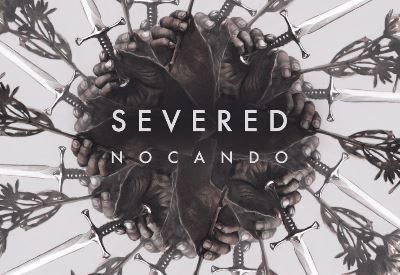
On a more positive note, the album art is really cool. But also, Severed feels much more focused than Nocando’s previous work. For example, Jimmy the Burnout felt like an incredibly scattered release. It listened more like a up-and-coming rapper’s debut mixtape than a studio album by a veteran underground emcee. Severed on the other hand, while boring at times, is quite cohesive. There seems to be an attempt at establishing an overarching sound for the album, which is something Nocando has struggled with in the past. It was a a bit of a surprise, but most certainly a pleasant one.

Unfortunately this has more to do with the production than his rapping. The instrumentals on Severed are actually pretty cool for the fast majority of the album. There’s a lot of trap flavor to the production, and tracks such as “Villain” certainly have a unique sound. What really is a bother however, is the absolutely dreadful mixing on this tape. The vocal volumes are all over the place from track to track. For example, “Useless” is significantly louder than its follow up song “Villain”. Add in frequently cracking “s” sounds and instrumentals that are way too quiet, and you’ve got a release with technical issues so severe that it detracts from the listening experience. Not good. The departure from Daddy Kev as an engineer was a very poor decision.

Overall this is a pretty weak release that ultimately feels unnecessary. Outside of the context of his once amazing underground collective, Nocando is just another rapper. He’s at his best when surrounded by talent with more charisma than himself, such as his group work with Busdriver as Flash Bang Grenada. On his own, he lacks the ability to create a great album. This was much of the issue with Severed. It was just so overwhelmingly generic and poorly handled. It’s a shame too, because there did genuinely seem to be some good ideas behind the album, Nocando just dropped the ball when it came to executing them in a way that makes for an enjoyable listen. He’s failed to address his shortcomings as a rapper, and they’ve only began to compound and worsen.

It’s hard to see the appeal in Severed unless you’re a big Nocando fan or desperately clinging onto the nostalgia of Hellfyre Club. A label that should’ve been allowed to rest permanently after the mistreatment of fans and artists around the time of its initial demise.

Album Review: Walter Gross – Super Basic

by Dustin

superbasic

8/10

Ah, Walter Gross. One of the most creative noise-based musicians alive. A little early this year we took a look at his Black Box Tapes release, Vestige. An album which was, and still is, one of the best releases to date in 2017. Moving with the swiftness of a sparrow Walter Gross has already ventured into another release, Super Basic. This release isn’t a really a follow up to Vestige, instead it is a collection of material recorded between 2015 and 2017 (according to his BandCamp page) being released completely DIY both digitally and on cassette. These sorts of beat-tape releases can be slightly unpredictable; however, when they’re from an artist known for experimenting with sound they’re usually worth checking out. They’re unrestrained and free from the need to fit an overarching sound, and usually loaded with interesting tidbits and lost cuts.

Walter Gross is exactly that type of artist, and Super Basic is a very interesting tape.

Super Basic feels like a cutting room floor of ideas, experiments, and loose ends that make up Walter’s progression as a musician. The songs have this loose quality to them that definitely feels like an assortment of not entirely fleshed out thoughts. The track names lend to this rough cut experience, with titles such as “Party Loop”, “Cut I”, and “Cut II” feeling as unpolished as the songs themselves; the ruggedness of Super Basic is not a negative quality by any means however. It leads to somewhat of a scattered experience, but it makes it feel as if the listener is being granted insight into the method behind the madness of Walter Gross.

Even the packaging of the cassette release is a little rough around the edges (in the best way possible). There’s some previews up on BandCamp of the physical release, and it really adds an element to the aesthetic. The digital art (as seen above) is similarly simplistic yet beautiful. The way he’s crafted all elements of this album by hand is admirable, to say the very least.

As far as the music goes, there are some genuinely beautiful moments on Super Basic. The vocal melody on “Cookie” for example is absolutely gorgeous and has this delicious contrast with the noisy, glitchy, sauntering drum line. “Hierophant I” is another stunning piece on this album. It has this crunchy distorted wall of noise at the forefront of the song, with a very subtle meditative nearly-angelic sound slipping through the cracks (and eventually closing out the track). That’s not to say that the rest of the tape isn’t also very cool – which it is – but hearing these moments of blissful relaxation hidden in the noise is breathtaking. It provides a wonderful balance, and gives weight to the most abrasive moments on Super Basic.

There’s also a really nice amount of variation on this beat tape. There are looping moments that drone on, hellishly insane noise tracks, and even some bits that feel hip-hop influenced. It gives one a sample of the range Walter Gross is capable of playing with.

Super Basic may not quite be the powerhouse album that Vestige is, but it’s really not intended to be. Walter’s assortment of sounds on this project are the ultimate fanfare. Even though Super Basic shows off his varying styles, it most likely would not be the best jumping off point for a new listener. That being said, as an established fan this tape is a seductive sampler platter featuring everything lovable about his music. Super Basic totally encapsulates the do-it-yourself and gritty nature of Walter Gross. Perhaps it’s even safe to say that this is him in his rawest form; dirtied up, a little bit chaotic, but an absolute blast to sit through.

Album Review: Kendrick Lamar – DAMN.

by Dustin

damn

4/10

There are two things hip-hop fans get excited for every couple of years: a Kendrick Lamar release, and the Anthony Fantano review of the aforementioned Kendrick Lamar release. Two years after the release of his masterpiece record To Pimp a Butterfly, K. Dot has returned to the forefront of rap with his new album DAMN. This was an exciting release first and foremost because Kendrick has been on one hell of a hot streak since he smashed through with Good Kid, Maad City. Two amazing albums and an amazing collection of rough tracks launched him into mega-stardom. Who could blame fans for getting their hopes up? With such an amazing track record, you’d be safe to assume that Kendrick was going to drop another album of gold, right?

Wrong. This is not a good album. DAMN. is actually painfully underwhelming, and this is for a variety of reasons.

Let’s start by talking about the rapper himself. Unlike on his last two albums, Kendrick Lamar sounds scarily disinterested throughout the majority of DAMN. Though it is conceivable that his delivery choices were used to emphasize the overall tone of defeat and depression, they just came across as uninspired. His usual plethora of voices, inflections, and flows was replaced instead with a muddy, slow, and monotone delivery most of the time. His writing isn’t terrible throughout (although he did struggle to piece together a consistent concept even slightly), but it’s hard to even care about what’s being said, because it’s being delivered in such an uninteresting way.

Even worse is Kendrick’s singing throughout DAMN. For whatever reason, he decided that he wanted to sing a whole bunch on this album. Now, he doesn’t have the worst singing voice in the world, but it gets grating really fast. The song “LOVE.” is especially guilty of this, and probably one of the worst songs to be released by a major hip-hop artist in the last five years.

Perhaps the most jarring change on DAMN. compared to Kendrick’s previous work though is the defeatist mentality. The overarching idea that his struggles as a human are due him straying from God’s message – though left fairly ambiguous throughout the record – can be tiring. The moodiness is far removed from the hood documentary narrative on Good Kid, Maad City and pride inspiring social awareness on To Pimp a Butterfly. It feels like an album attributing every injustice against minority groups as an act of God, to serve as punishment for these groups losing their godly roots. This is particularly clear in the multiple references to Book of Deuteronomy. It feels incredibly out of character to hear this sort of broken, defeated, mindset on DAMN.; though it may have been able to work as a concept if executed better, this record is far too scattered for it to have any sort of poignancy.

Plus it honestly seems damaging to blame these issues on a higher power. It takes away the importance of fighting the societal issues which allow these injustices to happen. Kendrick, who has presented himself as a very socially aware human to this point, should know better than this. Why push an album working directly against the causes you’ve backed? It doesn’t make sense.

The production on DAMN., to put it lightly, is absolutely terrible. There are maybe three beats throughout its run-time that don’t feel like stale rehashes of gutless trap bangers and RnB backtracks. It’s really evident when you start to compare this album to his last two full-length releases. It feels as though Kendrick has stepped down two or three tiers of beat selection, and it is really quite disappointing. Sure, “DNA.” is a monstrous track and 9th Wonder’s contribution to “DUCKWORTH.” is gorgeous, but two instrumentals couldn’t salvage the whole record. Honestly, with better attention paid to instrumental selection DAMN. could have been a significantly better album. It’s easier to look past conceptual and vocal flaws when the rest of the album sounds nice. DAMN. does not sound nice. Not even slightly.

He even managed to pick a boring Alchemist beat. When you’re using Alchemist as a producer, picking a bad beat should be a difficult thing to do; however, in this particular instance he picked a seven minute instrumental with the same short sample playing repeatedly. It would have sounded great on a shorter song, but it was used on a marathon. After the second minute it loses all appeal instantaneously.

In spite of these issues, DAMN. is a record with a few bright spots. The song “DNA.” shines the hardest with its infectious energy and absurdly smooth Kendrick flows. It definitely seemed to be the initial standout. “DUCKWORTH.” is also a very solid track with an interesting (albeit odd) story and one of the few nice instrumentals.

Unfortunately, like most iconic musicians, this album’s critical reception will be highly inflated by Kendrick’s hype-beast status. Reviews dropping near minutes after its release were trigger-happy to drop another perfect score. Reading fan discussion proves quickly that this is a highly polarizing package of music. Honestly, listen to the record and form your own thoughts and opinions on it. You’d probably be better off picking up the new Oddisee or Quelle Chris, but DAMN. is definitely one of those albums that you’ll need to experience for yourself to see where you stand.

We can all agree that the album art is horrible though. Every single human on earth can agree with that.

EP Review: Spocka Summa – The Progression 001

by Dustin

progression

8/10

It has been an abysmal month as far as producing new content on Extraordinary Nobodies. Between everybody here drowning under a mountain of work, school, illness, life, more illness, and general procrastination, April has been… underwhelming. This review, for example, was supposed to be released nearly a month ago. Then a bunch of things happen, and instead, it is coming out now. In the middle of April. Yes.

Moving on.

Spocka Summa was introduced to us by Michael at FilthyBroke Recordings. And for that alone we have to say thank you to Michael, because holy shit, this guy is a creative force to keep an eye on. Following a conceptual theme (more on this later), The Progression 001 is an immense listen packed into a short and sweet extended play. It’s even available for free streaming on his SoundCloud. We had no idea what to expect with this record, as (unfortunately) Spocka wasn’t a household name for our writing staff yet. Now he is, and here is a little bit on why he caught our attention.

First and foremost, Spocka Summa himself on The Progression 001 is a very interesting emcee. He’s got a natural charisma about him that really helps carry his delivery. From a technical standpoint he may not be the flashiest, but his lyrics are solid (and more importantly they stick closely to the concept of the EP, big ups for that) and he has some vocal flair. His storytelling abilities far exceed that of many underground emcees. Honestly, it is hard to analyze his performance on The Progression 001 without spoiling bits and pieces of the story being created. To keep it short, sweet, and spoiler free. He did well. Very, very well.

We’re not going to quote lyrics either, because that would be spoilers. Listen to the damn EP, ya’ bums. It’s not long, and it’s worth it!

The production on this EP is really consistently sturdy. There isn’t anything overly experimental or ambitious, but the beats are very nice. The Last Child (who produced the entirety of The Progression 001) has a sound that blends eastern sounding boom-bap with the west’s lighter sounding beat scene, creating a vibe that nearly anyone could vibe with. The amount of variation in the instrumentation was actually quite surprising for such a short extended play. For example, “001” sounds like something straight from the alt-Los Angeles scene, and then “What the Hell” plays like a soundtrack to a Spiderman boss level on the PlayStation 2 (in the best way imaginable). Despite this wide range of sounds and artistic influences, the production works well together and suits the concept of the project nicely; moreover, the range of flavors help create an incredibly engaging listening environment on The Progression 001.

It’s also notable how the EP progresses sonically throughout its duration. The instrumentation (and in turn, rapping) is much lighter and happier at the beginning. By the end, it has twisted itself into a darker, heavier piece of music. This was a lovely addition to the changing mood, and really helped to drive home the storytelling. The decision to stick with one producer for every song was quite smart.

This EP is additionally coupled with a comic book released on Spocka’s website. The book is only a few pages long at the present, but is an interesting and ambitious DIY effort to extend the story in his music. Similar to much of The Progression 001, it is topically focused on breaking away from technological dependence and the dangers of placing too much trust in multiple forms of media. These concepts are presented in a very interesting futuristic dystopian setting. The visual art is not “professional” levels of perfect, but it’s relatively solid, visually appealing, and quite endearing to see someone attempting to turn their music into a comic.

Plus, if you think about it, hip-hop and comic books have been intertwined forever. From MF DOOM’s levels of comic villain nerdiness to the marvel comic hip-hop cover variants. This is a classic pairing, and Spocka Summa has continued to push that envelope forward.

Overall, The Progression 001 is a very cool EP and the prospect of it feeding into further releases in the future is quite promising. Much like Blueprint’s Vigilante Genesis extended play from last year, the short-format works marvelously for serialized stories. Taking that idea and merging it with a comic book added a little creative flair that helps set this apart from its contemporaries. The Progression 001 is well worth a listen, especially if you enjoy dystopian themed music.

EP Review: CURTA – CLICK BAIT

by Dustin

clickbait

7.75/10

CURTA is a two man band consisting of CURTA on the mic and 4Digit on the instrumentals. Are you confused yet? Don’t be. Much like many assume Slug’s stage name is “Atmosphere” (poor Ant), the same situation happened with CURTA. People saw an emcee jumping around on stage an it was assumed he was the only one under the namesake. So he adopted the name, and his excellent producer took on the title of 4Digit for easier crediting. It’s a beautiful compromise, and they do create all CURTA music together as a team. Truth be told, the music is a thousand times more notable than the slightly tricky name situation for one simple reason: it is really good. Their new EP – coming via FilthyBroke and Hello.L.A – is no exception to this either.

Also, it’s called CLICK BAIT, which is potentially the most culturally relevant album name in the last couple of years.

The production on CLICK BAIT is its most intriguing, and difficult to describe, feature. The overall vibe is inherently hip-hop, but the instrument selection is some sort of delectable electronic chaos. It feels reminiscent of Hellfyre Club’s sound through their early 2010s reign, or perhaps the long lost sonic cousin of 2005 Definitive Jux. It is strange. For instance, the song “Sky High” featuring Serengeti’s alter-ego Kenny Dennis (which should be noted as an amazing feature) has an instrumental that sounds like an acid trip through the scariest carnival imaginable; moreover, every single track on CLICK BAIT has a beat that is equally as interesting. On a short listen like this, that is a wonderful thing to be able to claim. It makes the overall listen feel much more fleshed out than one would expect from a six track release and aids in listener engagement.

With such involved production, there is always a worry about the emceeing on top of it; artists run a very real risk of their voice getting lost behind the lush backdrop. This is not the case on CLICK BAIT however, the rapping is charismatic and manages to blaze its own trail. This is a band, after all, and they’ve got the chemistry to back up that label.

With that in mind, the rapping on CLICK BAIT isn’t going to blow you away with technical prowess or hyper-intricate eight syllable rhyme patterns. Nor are you going to find disgustingly catchy hooks on this project. Let’s be honest though, that style of delivery would be way too boring over 4Digit’s darting electronic production style. Instead, the CURTA style is one of a smooth-yet-strained emotional punchiness. His intensity matches that of the instrumentation, the lyrics hit surprisingly hard, and very rarely does he misstep. His rap style shares similarities with that of an artist like Soul Khan, and has a palpable tension behind every line. His rapping is the exact style this sort of music calls for, and the complimentary nature between instrumentals and their paired vocals is a delight.

As with most EP releases, the only real issue with CLICK BAIT is that it is a bit of a musical cock-tease. The songs plow full steam ahead, but never quite take flight like you would see in a long-play album. This isn’t a criticism of the music itself, quite the opposite actually; the tracks on CLICK BAIT are so enjoyable that it is nearly disheartening when it ends. As mentioned, this is standard drawback for any really good EP, but it is worth noting nonetheless.

At the very least, this small packet of music from CURTA is more than enough to spark interest in the duo. It might end just a little sooner than one would like, but every moment on the release is enjoyable and well worth the listen.

Album Review: Jonwayne – Rap Album Two

by Dustin

rapalbumtwo

8.5/10

For a handful of years Jonwayne was an incredibly prolific underground artist. As an instrumental genius he dropped wave after wave of beat tapes, video-game inspired soundtracks, and rare odds-and-ends that fans happily ate up. Once moving into the rap scene, his series of Cassette mixtapes sparked interest among the alternative rap community; Jon’s rich voice and subdued delivery paired excellently with his Dilla-inspired production. Stonesthrow, his label at the time, seemed like the perfect home for his style. This culminated in his 2013 debut studio rap album, accurately named Rap Album One. Though it seemed as if Jon was still finding his voice on that record, the potential was evident and it was met with generally positive reviews. It seemed as though Jonwayne was destined for big things.

However, not all career paths can be so beautifully lineal. Jon’s mental health and lifestyle choices, namely those involving alcohol, quickly caught up to him. Things soured at Stonesthrow, leading to his departure. After battling through these issues and bringing a semblance of order back to his life, Jon would reintroduce himself to the music scene in 2015 with Jonwayne is Retired and Here You Go. A rap extended play, and a two part beat tape series respectively. After a little more waiting and teasing Rap Album Two found its way to eager ears on February 17th 2017.

As it turns out, the delay for Rap Album Two was well worth it. This record is easily Jon’s most personal work, and the lyrics offer a deep insight into his emotions, feelings, and the struggle of someone recovering from addiction. Though these are topics that have been explored extensively in various genres, Jonwayne makes it special by offering a sense of solidarity to those dealing with the same issues as himself; the most impressive part of this is that Jon manages to present what he went through without seeming as if he was purely seeking sympathy. The lyrics on Rap Album Two are bluntly honest, and he puts his own faults and shortcomings on full display.

The writing style on this album is also quite unique. There are times where Jon abandons conventional rap structures and is more in line with written and spoken poetry. The rhyme structures aren’t always laid out in a simple couplets patter, and his focus is very rarely on multi-syllable schemes. This can take a bit to get used to, but ultimately it’s a refreshing journey away from the expected.

And on the way I know I gave away some friends,
And every day I wish that we could speak again,
But every time I wanna make it right I freeze up,
and the visions of the shadows of my demons who went out of sight,
They went out of sight,
Until now.
(Out of Sight)

Unsurprisingly, the instrumentation on Rap Album Two is superb. Jonwayne established himself long ago as one of the many talented producers to build on the influence of Dilla. The thriving west coast beat scene offered the perfect incubation environment for his style, and it has blossomed on this album. Jon’s production has always had experimental elements mixed in with more classic hip-hop sounds, but he’s finally achieved a sense of balance between the two. The beats are rustic glory updated for modern times. They fit his spoken poetic rap style wonderfully,

And that’s the thing about Rap Album Two. None of the tracks on this album jump out as better than the rest of the group. They all pay together perfectly, and the album is best experienced as a long play. Every song has its place, and they transition very well.

I just cancelled my tour,
I just woke up in bed,
I had last nights dinner on the sheets,
I had a burning in my throat I couldn’t swallow,
I had shuffled to the mirror and saw death over my head,
If i was sleeping on my back I would’ve died,
Jameson in my blood,
Jameson in my eyes,
Jameson on my mind,
I know I need to stop,
But if I’m flying, it’s Jameson on the ride,
This how I’m making money but a cost to my life.
(Blue Green)

There are some moments on Rap Album Two that feel slightly out of place. “LIVE From The Fuck You” and “The Single” in particular are uncharacteristically humorous in the midst of an incredibly serious album. That being said, they do serve a bit of necessary comic relief to cut the tension. Aside from that, Rap Album Two is a juggernaut of cohesion. Jonwayne’s all encompassing creative control shines through on this album, and a meticulous attention to detail is evident. Though none of the songs really jump out on their own, Rap Album Two is a powerful complete listen. It’s the kind of album that seemingly needs to be listened to in its entirety; moreover, it’s also the perfect length for this sort of release at 44 minutes.

Rap Album Two feels like a modern album that captured some of the magic of rap’s golden era. The emotional connection Jonwayne is able to establish with the listener far outweighs any of his technical flaws on the mic. If you’ve been through any kind of struggle in your life, which most have, this album will offer some degree of solace. And it is an absolutely gorgeous listen, if not one that is a little challenging. Welcome back, Jon, and thank you for the album.

Album Review: Walter Gross – Vestige

by Dustin

wgv

9/10

After a decade and a half in the scene, it’s safe to say that Walter Gross is a well-seasoned veteran when it comes to do-it-yourself music. He’s also an artist who has gone through some very interesting times recently. In his released statement about Vestige – the album which this review is tackling – he spoke on the circumstances that gave birth to this album. Moving from America to Berlin, losing the source material in an equipment failure, and creating art in circumstances less than ideal. The end result is this album. An album that serves as an exercise in growth for an artist, and perhaps even somewhat of a musical rebirth.

As a side note, this album is coming via Black Box Tapes. That might not exactly be a household name at this point, but it’s a label run by a classic figure in the underground hip-hop community, Sole. Those who are hugely into rap (and read this site) might find it interesting to know what he’s up to these days… Anyway, onto Walter Gross’ absurdly powerful record!

Vestige sounds like the demented stepchild to post-rock. Walter Gross has blended the melodic evils of groups such as Godspeed You! Black Emperor and Viet Cong (now known as Preoccupations) with his classic breed of experimental electronic to create a unique beast. The instrumentation on this album hits like a noisy wall of sound; while it is probably more accessible than much of Walter’s work, Vestige is in no way an easy album to sink your ears into. While a song such as “Naked Lunch” may have a delectable, head bobbing bass-line, there are copious noise elements happening simultaneously. This leads to a wonderfully challenging listen; moreover, Vestige feels like an album that will retain replayability as there will always be new elements to discover within songs. Amazingly the stylistic differences between tracks – which at times can be quite vast – don’t hurt the cohesiveness of the album. Every song has its place within the environment of Vestige.

A prime example of this is the punk-chant “Fixated on the Light” coming immediately after a much more hip-hop oriented ending to “Window.” Their sounds couldn’t exist in further worlds, yet Walter Gross found a way to bring them together and make it work in a way which felt entirely natural.

The focus on vocals is also very intriguing for a Walter Gross album, and to be completely honest it was refreshing and worked flawlessly. In true post-punk fashion, the vocals are often muddy, aggressive, unnerving, and hidden back slightly in the tracks. They’re unconventional, but so is the entirety of Vestige. Even when the vocals exist purely in a murky haze of words, the way they compliment the instrumentation is gorgeous. They’re not technical darlings, yet they work well.

It’s reminiscent in ways to how Ian Curtis made imperfect singing sound cool in Joy Division. It just fits the atmosphere and tone of the music exceptionally well.

While Walter Gross has been a mainstay figure in the do-it-yourself music community for years, he has reached a new level on Vestige. While it might not be quite as consistently unnerving as some of his releases (such as Goner, for example), it is a mind-melting play-through. The elements of noise, post-rock, punk, hip-hop, and genres yet-to-be named laced throughout are an absolute treat to listen to. Sure, this album may not be a mass-consumable brand of music (and let’s be honest, Walter’s records never will be), but that’s exactly how it should be. The lack of pressure to stay chained to a particular sound has granted the freedom for a record like this to exist. Vestige is a prime example of the power behind the do-it-yourself route in music. There’s something special in the clarity of an artist making the kind of music they want to make, and hitting a sort of full musical realization. That holds true in spades for this release. Vestige is the type of album that should (but won’t) get consideration on top album lists when the year comes to a close.

Also, it should be mentioned that the mixing sounds great. Shout-out to Michael J. Collins of FilthyBroke Recordings (who we interviewed a little earlier this month).

Seriously, if you want to listen to some genre-bending futuristic-but-retro post-punk-yet-electronic (hyphens, so many goddamn hyphens) massive tunes then keep your eye on this record. This is the type of pallet-cleansing releases that are an absolute joy to experience for the first time. The physical release isn’t quite here yet (that tape looks beautiful, though), but it can be streamed/downloaded on Walter Gross’ BandCamp right this very moment.

Album Review: V8 – One Dog Night

by Dustin

odn

8/10

Welcome, ladies and gentlemen, to our very first review of 2017. This is actually a very special review for us, as it’s the very first piece of “early press” we’ve been able to contribute. When our friends at Filthy Broke Recordings agreed to send us a press kit, we were absolutely overjoyed. Though we didn’t get this out as early as we would have liked (stupid actual job causing mayhem), it has still been a pleasure.

Now, onto the review itself. You may be asking, “what album are they so hyped up about?” The answer is One Dog Night, by alternative rapper V8.

The first thing that stands out about One Dog Night is that V8’s vocal performances are really quite monstrous. You won’t find raps full of quotable punches and one-liners on One Dog Night, but it remains an unapologetically gripping listen. V8 has a charming gravel to his delivery on this album, coupled with a wonderful willingness to explore a range of vocal inflections. Whilst drawing you in with what he’s saying, V8 simultaneously begins to construct this dark-sounding environment vocally. The rasp and strain to his voice perfectly sets the atmosphere for what is a grungy album.

Buckle up, because the concept of musical atmosphere and environment are going to be overwhelmingly prevalent while discussing this album.

Backing up his vocals is an assortment of absolutely grimy production that feels nostalgic, yet fresh. One Dog Night’s instrumentation draws inspiration from a wide variety of sources, and it is ever changing throughout the duration of the tape. It’ll have you jamming to a powerful boom-bap beat, then immediately slap you over the head with something completely out of the box and experimental. To be frank, any attempt to verbally explain how diverse-yet-cohesive the production is on One Dog Night will not do it justice. That filthy grunge sound kicked into motion vocally was really well supplemented by the production on this album. A seamless marriage, if you will.

That filth (said affectionately) is further built upon by the usage of interview, news, and other samples between tracks. Though the frequency in which these appear is jarring at first, it quickly becomes a necessary part of One Dog Night.

One Dog Night is the kind of tape that taps into the essence of indie hip-hop that was established through the late nineties and early two-thousands. Those who grew up fascinated by the likes of Myka 9, Radioinactive, Busdriver, and any artist from the Project Blowed heyday will find a welcoming comfort in this album. It’s not the most accessible hip-hop release, but it’s not supposed to be. There are times where One Dog Night almost feels like too much at once; however, the energy and thought that is evident on this album rivals early indie-scene juggernauts, ultimately leading to an incredibly satisfying record. V8 goes against the grain, and his efforts serve as a reminder that abrasiveness can be done tastefully.

Those looking for something to throw on in the background will probably not enjoy this record, and it is beautiful in that way. One Dog Night forces you to pay attention with an in-your-face confidence that many would not be able to pull off.

The cassette release, coming via Filthy Broke, also looks quite intriguing. It is on top end of price point for a tape, but every order comes with a handmade leather case, so the dollar amount is definitely understandable. If you’re a cassette collector looking for something quite unusual, it might be worth having a look at. The cases are super unique, and it’s cool to witness an artist doing something out-of-the-box for a physical release. Really, it’s about as true to the indie mindset as you can get.

Though, they could be gone at this point as only a handful were created. So, you may just be shit out of luck. If that be the case, we sincerely apologize (just kidding, if you snooze you lose).

Album Review: Run the Jewels – Run the Jewels 3

by Dustin

rtj3

9/10

Twas the night before Christmas and all through the house, not a creature was stirring… Aside from Killer Mike and El-P, who decided to surprise release Run the Jewels 3 as a Christmas present to their fans! For those unaware, Run the Jewels is the collaborative effort between Atlanta based emcee Killer Mike, and New York’s own producer-slash-alternative-rapper El-P. The duo worked together on Killer Mike’s 2012 solo album R.A.P. Music, before releasing the first Run the Jewels album in 2013. Run the Jewels 2 would come roughly a year later, and the jewel runners have been preoccupied selling out shows and touring the world ever since.

But after more than two years the third installment is finally here. The main question most will probably be asking is, “was this really worth the extended wait”? The answer is a simple and sweet “hell yes”.

The atmosphere on Run the Jewels 3 is truly terrifying. Mike and El take all the anger of the current social climate and twist them into songs that knock hard enough to give a listener whiplash. Though the album definitely has tongue-in-cheek moments, and hilarious one liners at times, the overlying tone is one of bottled rage being unleashed upon the world. Even the tracks that fall more in line with classic brag-rap have politically based lines tucked in ever so cleverly; moreover, none of the social commentary on Run the Jewels 3 seems forced. Killer Mike and El-P did an excellent job of making sure that lines actually fit where they’re placed, and don’t detract from the overall vibe of a song.

We return from the depths of the badland,
With a gun and a knife in our waistband,
Went to war with the Devil and Shaytan,
He wore a bad toupee and a spray tan.
(Killer Mike on Talk to Me)

Run the Jewels do show their emotional range at times too. For instance, the song “2100” delivered a beautifully sad-yet-uplifting anthem of solidarity for trying times. “Report to the Shareholders” and “Down” also take on a much more mellow sound, breaking up the waves of braggadocio and fury.

Features on this album are used relatively sparingly. For the most part, guest artists are limited to a hook or the odd short singing verse (mainly Tunde Adebimpe on “Thieves!”). Danny Brown provided an absolutely insane and hard hitting feature on “Hey Kids (Bumaye)”, as one would expect. There’s also a special unlisted guest feature who absolutely shredded their verse (but we won’t spoil the surprise, so you’ll just have to listen and find out). Overall, all the features were wonderful and added positively to the songs on which they appeared.

Good day from the house of the haunted,
Get a job, get a house, get a coffin,
Don’t stray from the path, remain where you at,
That maximizes our profit,
Is that blunt?,
Oh well, hell, so’s this boot,
We live to hear you say “please don’t shoot”.
(El-P on Don’t Get Captured)

El-P’s production on Run the Jewels 3 is a treat to the ear. Everything felt much more true to the style he’s developed over the years, in comparison to the stripped down instrumentals on the first two group albums. Some of the beats on this record feel absolutely enormous, and dense to the point that one can pick up a new sound upon every subsequent listen. Fans of El-P’s solo discography will notice that some instrumentals almost feel like throwbacks to his previous works; however, everything has progressed into a heavy, angry, bass intensive style that fits perfectly under he and Mike’s vocals.

It needs more time to digest, but Run the Jewels 3 may have the most enjoyable production of the three records. Given how acclaimed the instrumentals from the first two are, that is saying a lot.

There’s really not much else to say to sum up Run the Jewels 3. It’s a face-melter album that may just make you want to punch a hole in a wall. Killer Mike and El-P closed the year by surprise dropping one of the best albums in 2016. They also released it for completely free, so really there’s no excuse: check this out as soon as you can. Even if you’ve never been a Run the Jewels fan before, do it. Do it right now.

Album Review: Fatt Father – Veteran’s Day

by Apu

ff

8/10

Last week was a weird goddamn week. Without going into politics too much because a lot of people seem to get more offended by other people’s political views than they do at an insult directed towards their family, a lot happened in a pretty short amount of time, most of which I don’t think a large portion of the population were actually seriously prepared for. Considering this, it should go without saying that getting some new music at the end of the week was a welcome respite from the Mr. Krabs meme of a week that the country had to deal with. I was personally most interested in A Tribe Called Quest’s new album, We Got It From Here… Thank You 4 Your Service and Fatt Father’s Veterans Day, which is the album I’m here to talk about.


Veteran’s Day is Fatt Father’s first solo release since 2012’s Fatherhood, a release where I felt like Fatts was starting to establish who he was as an artist. Veterans Day, released on the holiday it’s named after, only serves to further that feeling. Fatt Father came into his own on this release, displaying better than ever who he is as an emcee, as well as the person behind the mic.

The album’s production is handled entirely by D.R.U.G.S. Beats, who you may recognize as a producer on Dr. Dre’s last album, Compton (he produced the “Gone” half of “Darkside/Gone”). Being that he is technically a Dr. Dre-approved producer, this album’s beats are very well done throughout. A pretty big portion of the beats, including “Come On,” “Just Listen,” and “The Greatest” among others, cause involuntary head-nodding, and others like “Shabazz’s Gospel” and “Keep Ya Head Up” create a very tangible mood that draws you in even without having to hear Fatt’s verses. D.R.U.G.S. did a great job at capturing Fatt’s style; the production brings out the best of his distinctive, deep voice, and allows him to explore slightly different deliveries that he hasn’t used as often in the past. The end product is an underground street rap album with production that sounds more professional and sonically pleasing than I’ve found on most projects of its ilk.

Veteran’s Day opens up with a speech by someone who seems to be a war vet, detailing emotions that could be construed as something that’s almost like PTSD. That transitions to the first song, “Shabazz’s Gospel,” a song where Fatt Father, a bit like the vet from the intro, goes into detail about the traumas he faced in his past, from the separation of his parents to the deaths of his brother and his close friend Big Cobb. From there, Fatts goes into topics such as his childhood, love and women’s insecurities, police brutality, loss, and his life in current times.

Crack fiend, crack house, 8 ball, quarter ounce,
Death toll moving up, decent folk moving out,
Lost souls searching for boss roles to shoot it out,
Heart cold, traveling dark roads to move about,
Homicide, gather the yellow tape, spool it out,
Mama’s tears falling on cotton blends in huge amounts.
(Mama’s Words)

What I found to be the biggest strength on this project, as I alluded to earlier on, is Fatt Father’s delivery. He’s always had a voice that stood out; it’s deep and it cuts through a record in a very unique way. He sort of reminds me of a mix of Biggie and Scarface in some ways, the latter having a delivery that very much falls under the description I just gave. But on this album, Fatt Father started to adapt it a bit. He really let his emotion, whether positive or negative, bleed through his vocals on this album. It made the emotional songs hit harder, and the lighter songs like “K.A.M.M.H.” and “Come On” much more fun to listen to. It boils down to Fatt Father’s range as an artist expanding. He was always more willing to explore different topics and styles as a member of the Fat Killahz, but as a solo artist he always kept it gutter as shit. He does that on this album too, but he seems more flexible with what he’s willing to talk about and do.

Of course, as with any album, there’s music that are a little less content-heavy, and more for just vibing to. Some serve as great pump-up songs, such as “Just Listen,” “K.A.M.M.H.” with Ro Spit (this one’s my favorite song off the album), and “The Greatest” featuring killer verses from Fatt Father and Kuniva, and a fairly good verse from Royce da 5’9” that I felt fell a bit short of the energy that was coming from the rest of the track. Then there are songs like “Everybody” and “Never Die” featuring strong verses from Fat Killahz members Marv Won, Bang Belushi, and a too-over-the-top-for-me verse from King Gordy, both of which (besides Gordy’s verse) you can just chill to, listening to some nice verses and smooth beats that would sound awesome on a car stereo system. There is a nice display at diversity while keeping to a general sound on this album.

Overall, I’m very happy with Veteran’s Day. I love to see an artist who’s sort of an underdog the way Fatt Father is make an album that displays the sort of effort that a lot of so-called top artists don’t have in their music. Hearing a rapper older than most of the kids coming out make an album that displays hunger that they can’t muster up is just so satisfying to me, and reminds me that even though sometimes bullshit (from both the mainstream and underground) may get frustrating to always have to hear, good music will always be made because there will always be someone who cares. This album just solidifies why I place Fatt Father in my list of rappers who I take a personal responsibility for when it comes to spreading their music.